Issue · Environment

Environment

Every environment bill, vote, and legislator stance in United States, automatically classified by Maddy, our AI policy reader.

Total bills
2,003
119th Congress
Top supporter
Aisha Wahab
100% support rate
Top opponent
Marsha Blackburn
11% support rate
Ranked legislators
10
5 support · 5 oppose
Key legislators

Who's moving environment in United States

Legislators moving environment in United States
Legislator Party Stance Support rate Decisive votes
Aisha Wahab
Aisha Wahab House · District 14
D
Strong +
100% 7
Everton Blair Jr.
Everton Blair Jr. House · District 13
D
Strong +
89% 9
Martin Heinrich
Martin Heinrich Senate
D
Strong +
84% 37
Adam B. Schiff
Adam B. Schiff Senate
D
Support
79% 53
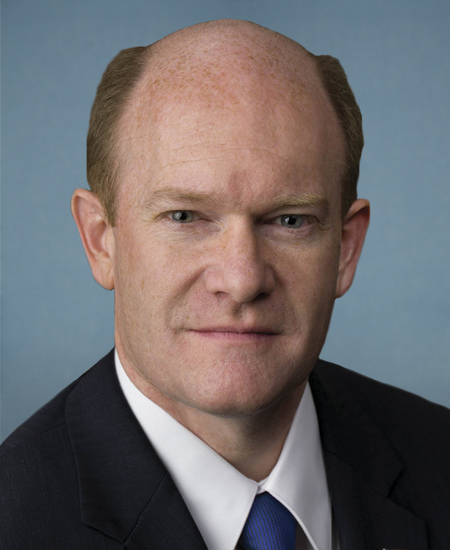
Christopher A. Coons
Christopher A. Coons Senate
D
Support
79% 52
Marsha Blackburn
Marsha Blackburn Senate
R
Strong −
11% 36
Ted Budd
Ted Budd Senate
R
Strong −
20% 40
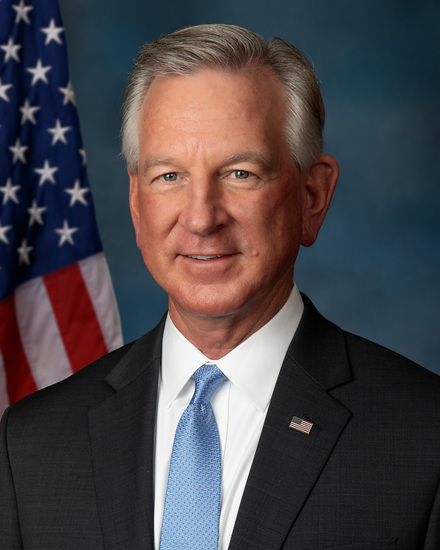
Tommy Tuberville
Tommy Tuberville Senate
R
Oppose
21% 53
Bill Cassidy
Bill Cassidy Senate
R
Oppose
22% 54
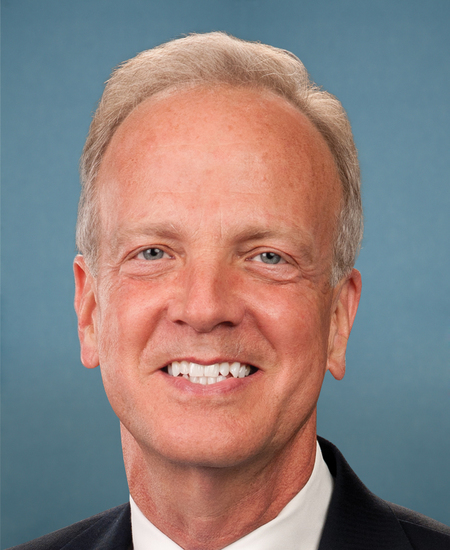
Jerry Moran
Jerry Moran Senate
R
Oppose
23% 53
Showing 1,191–1,200 of 2,003 bills

All environment bills

in committee · United States · House Oct 28, 2025

HR 5857: FARM Act

The FARM Act requires farm equipment manufacturers (OEMs) to provide owners and independent repair shops with repair parts, tools, software, documentation, and farm equipment data on "fair and reasonable terms." This means OEMs cannot impose unreasonable restrictions (like forcing repairs through authorized dealers) or charge excessive fees for these materials. The law also prohibits manufacturers from disabling safety features or enabling modifications that would violate emissions or safety standards. The Federal Trade Commission enforces these requirements, with penalties up to $5,000 per day for violations.
Tags Agriculture
in committee · United States · House May 13, 2025

HR 3376: Water Affordability, Transparency, Equity, and Reliability Act of 2025

HR 3376 creates the Water Affordability, Transparency, Equity, and Reliability Trust Fund, funded by increasing the corporate tax rate from 21% to 24.5% starting in 2025, with annual funding capped at $35 billion or 1/20th of 20-year infrastructure needs. The bill allocates funds to clean water programs (42%), safe drinking water programs (42.5%), household water well systems (1%), colonias assistance (0.5%), and Indian health services (3%), requiring specific prioritization of low-income and minority communities for many programs. It mandates an EPA study on water affordability, discriminatory practices, and civil rights violations in water service, including data collection on service disconnections affecting vulnerable populations. The bill also includes provisions for lead service line replacement, PFAS contamination response, and job training grants for water system operators with specific requirements to prioritize low-income communities.
in committee · United States · Senate Feb 6, 2025

S 439: Incentivizing Readiness and Environmental Protection Integration Sales Act of 2025

This bill excludes capital gains from the sale of certain property rights when sold to organizations participating in the Department of Defense's REPI program. The REPI program helps military bases protect environmentally sensitive land while maintaining training readiness. Landowners selling qualifying property - including full ownership, remainder interests, or perpetual land use restrictions - to REPI-participating organizations can exclude the sale profit from taxable income. It directly affects property owners who sell to REPI programs, with specific rules for family-owned entities.
in committee · United States · House Jan 27, 2026

HR 7249: Bond Improvement and Reclamation Assurance Act of 2026

This bill updates bond requirements for coal mining permits under the Surface Mining Control and Reclamation Act of 1977. It requires mining operators to post performance bonds calculated based on specific site conditions (like geology, topography, and reclamation difficulty), with a minimum bond amount of $52,593 (adjusted annually for inflation). The bonds must cover all reclamation costs if a mine closes early or operations are abandoned, and must be recalculated when permits are transferred, renewed, or site conditions change. This directly affects coal mining operators and state/federal regulatory agencies responsible for enforcing reclamation.
in committee · United States · House Mar 27, 2025

HR 2401: Urban Waters Federal Partnership Act of 2025

This bill establishes the Urban Waters Federal Partnership Program to improve coordination among federal agencies working on urban waterways. It designates specific urban areas (particularly overburdened or economically distressed communities) as "partnership locations," requiring each to have a local "Urban Waters ambassador" to coordinate projects. Key mechanisms include a federal steering committee (led by EPA) to guide priorities, a "Learning Network" for sharing best practices, and $10 million annually for program administration through fiscal years 2026-2030. The program aims to advance projects improving water quality, recreation, community engagement, and infrastructure in designated urban watersheds, while requiring annual congressional reports on progress.
in committee · United States · House Jan 16, 2025

HR 527: Strengthening Wildfire Resiliency Through Satellites Act of 2025

This bill creates a federal grant program to fund state wildfire agencies' use of advanced satellite technology for wildfire monitoring. It authorizes $20 million annually (2026-2028) for up to three competitive grants to eligible entities like state foresters or emergency managers. Grantees must use funds to purchase high-resolution satellite imaging capabilities and analyze data to monitor active fires, assess burn severity, guide prescribed burns, and support post-fire recovery. The program requires grantees to report on applications, outcomes, and recommendations for long-term implementation. The bill directly affects state wildfire management agencies through new funding for specific satellite-based monitoring tools.
in committee · United States · Senate Mar 27, 2025

S 1188: FLARE Act

S 1188, the FLARE Act, allows oil and gas companies to immediately deduct 100% of the full cost of installing systems that capture, use, or combust natural gas emissions (flaring/venting) from their operations. These systems must process natural gas into usable forms like fuel, electricity, petrochemicals, or digital assets. The tax benefit applies only to systems placed in service after December 31, 2025, and excludes property owned by designated "foreign entities of concern." This policy directly affects oil and gas operators investing in emission-reduction technology by reducing their upfront tax burden.
Sub-Topics Oil & Gas
in committee · United States · Senate Mar 13, 2025

S 1026: Tar Sands Tax Loophole Elimination Act

This bill amends the tax code to close a loophole that previously allowed certain tar sands oil to be taxed differently than conventional crude oil. It expands the definition of "crude oil" under federal excise tax rules to explicitly include oil derived from tar sands, bitumen, and oil shale. This change directly affects oil producers and refiners handling these specific unconventional oil sources, requiring them to pay the standard crude oil excise tax. The key mechanism is the updated tax code definition, which also grants the Secretary regulatory authority to include other pipeline-transported petroleum products meeting specific environmental risk criteria.
in committee · United States · House Jan 9, 2025

HR 262: Disaster Reforestation Act

This bill amends the tax code to create a special rule for deducting losses of uncut timber (timber not yet cut for sale) from disasters like fires, storms, pests, or drought. It requires taxpayers to base deductions on the timber's pre-loss appraised value minus salvage value, using a certified appraiser's assessment within one year. Crucially, taxpayers must reforest the affected area with hardwoods or softwoods within five years to keep the tax benefit; failure to reforest results in recapturing the deduction. The rule applies only to timber held for sale in an active business, excluding passive activities. This changes how businesses can claim tax deductions after timber losses while linking the benefit to reforestation efforts.
in committee · United States · House Oct 3, 2025

HR 5686: Battery Fire Prevention Act

The Battery Fire Prevention Act creates a 30% tax credit for businesses purchasing battery detection devices (using technologies like X-ray or AI) for recycling operations, directly affecting recycling companies. It imposes a 5% tax on battery sales by manufacturers and importers, with the revenue funding a new trust to support nationwide lithium battery recycling. The trust will finance a program offering financial incentives to individuals who turn in used batteries and requiring federal agencies to prioritize buying from approved recycling facilities. These provisions take effect for taxable years and sales after December 31, 2025.
Showing 1,191 to 1,200 of 2,003 bills