Issue · Environment

Environment

Every environment bill, vote, and legislator stance in United States, automatically classified by Maddy, our AI policy reader.

Total bills
2,003
119th Congress
Top supporter
Aisha Wahab
100% support rate
Top opponent
Marsha Blackburn
11% support rate
Ranked legislators
10
5 support · 5 oppose
Key legislators

Who's moving environment in United States

Legislators moving environment in United States
Legislator Party Stance Support rate Decisive votes
Aisha Wahab
Aisha Wahab House · District 14
D
Strong +
100% 7
Everton Blair Jr.
Everton Blair Jr. House · District 13
D
Strong +
89% 9
Martin Heinrich
Martin Heinrich Senate
D
Strong +
84% 37
Adam B. Schiff
Adam B. Schiff Senate
D
Support
79% 53
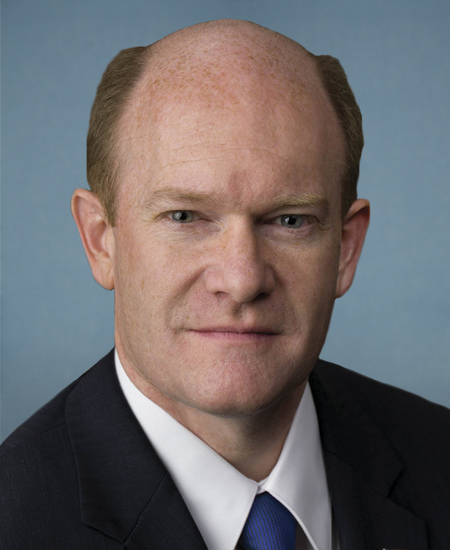
Christopher A. Coons
Christopher A. Coons Senate
D
Support
79% 52
Marsha Blackburn
Marsha Blackburn Senate
R
Strong −
11% 36
Ted Budd
Ted Budd Senate
R
Strong −
20% 40
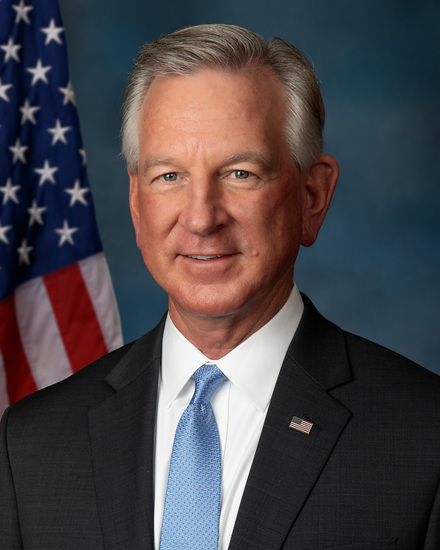
Tommy Tuberville
Tommy Tuberville Senate
R
Oppose
21% 53
Bill Cassidy
Bill Cassidy Senate
R
Oppose
22% 54
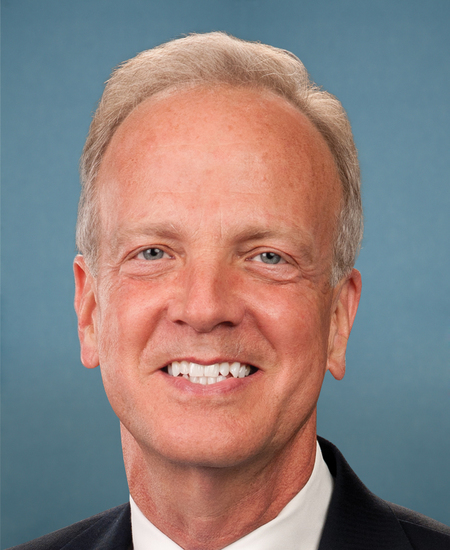
Jerry Moran
Jerry Moran Senate
R
Oppose
23% 53
Showing 1,121–1,130 of 2,003 bills

All environment bills

in committee · United States · House Jun 26, 2025

HR 4180: Canyon’s Law

HR 4180, "Canyon’s Law," prohibits the use of M-44 devices - predator control tools containing highly toxic sodium cyanide - on public lands managed by federal agencies like the National Park Service, Fish and Wildlife Service, and Forest Service. The bill requires all federal, state, and county agencies to remove existing M-44 devices from public lands within 30 days of enactment. It directly affects agencies and land managers who previously deployed these devices, which have caused human poisonings (including incidents involving children), killed over 50 family dogs, and harmed endangered species. The law aims to eliminate the risk of accidental exposure and non-target wildlife deaths by banning the devices' use on public lands.
in committee · United States · Senate Feb 12, 2025

S 541: ELITE Vehicles Act

The ELITE Vehicles Act repeals three key tax credits for electric vehicles under the Internal Revenue Code: the clean vehicle credit (Section 30D), the credit for previously-owned clean vehicles (Section 25E), and the credit for qualified commercial clean vehicles (Section 45W). It also excludes electric vehicle recharging property from the alternative fuel vehicle refueling credit. These changes directly affect individuals and businesses purchasing new or used electric vehicles, as well as those installing EV charging infrastructure, by eliminating the associated tax benefits. The repeal applies to vehicles purchased or under binding contract after 30 days following the bill's enactment.
in committee · United States · Senate Dec 17, 2025

SRES 564: A resolution recognizing the ability of solar, storage, and wind to quickly and cheaply meet United States power demand growth.

This is a symbolic Senate resolution (SRES 564), not a bill with enforceable policy changes. It recognizes that solar, wind, and battery storage are the most cost-effective new power sources in the U.S., noting they made up 93% of new capacity in 2024 and 95% of projects awaiting grid connection as of 2025. The resolution cites data showing renewables now produce more electricity than coal and that delaying renewable deployment could cost ratepayers over $3 billion annually. It does not create new laws, funding, or regulations - only expresses the Senate's view that accelerating renewable energy is essential to meet growing power demand.
in committee · United States · House Apr 24, 2025

HR 3003: Restore M–44 Act

This bill rescinds a 2023 wildlife damage management agreement between the Interior and Agriculture Departments, restoring the use of M-44 devices (sodium cyanide ejectors) and compound 1080 for wildlife control. It directly affects the U.S. Department of Agriculture (USDA), allowing the Secretary to purchase, deploy, and train third parties on these devices without congressional reporting requirements. The key provision removes a prior prohibition and eliminates the need to submit implementation updates to congressional committees. This changes USDA policy by enabling the routine use of these tools in wildlife management programs.
Sub-Topics Wildlife
in committee · United States · House Sep 26, 2025

HR 5610: Improving Drought Monitoring Act

This bill extends the deadline for improving the U.S. Drought Monitor from 2023 to 2030 and establishes an interagency working group to enhance the data used in the Monitor. The working group, including representatives from USDA, NOAA, the National Drought Mitigation Center, and state mesonet programs, will develop methods to include more ground-based data, address access barriers to existing datasets, and create transparent vetting processes for remote sensing data. Within one year, the group must submit recommendations to federal agencies and congressional committees, after which the Secretary of Agriculture will incorporate feasible changes. Additionally, the Farm Service Agency and Forest Service must align their drought response efforts, including using the U.S. Drought Monitor for consistent decisions and information sharing with stakeholders.
Sub-Topics Forestry
in committee · United States · House Jun 26, 2025

HR 4192: the Military PFAS Transparency Act of 2025

HR 4192, the Military PFAS Transparency Act of 2025, requires the Department of Defense to publicly report on its cleanup efforts for PFAS (toxic chemicals used in firefighting foam) at military installations. It mandates annual reports to Congress detailing site-specific funding, progress, and delays in PFAS remediation, plus a public online dashboard showing site-by-site spending, timelines, and community contact points. The bill also requires a remediation acceleration strategy prioritizing sites based on health risks and environmental impact. This directly affects military installations with PFAS contamination and the surrounding communities relying on affected water sources. The law focuses solely on increasing transparency and accountability in existing cleanup efforts, not on new funding or policy changes.
Sub-Topics Drinking Water
in committee · United States · Senate Mar 26, 2025

SJRES 39: A joint resolution providing for congressional disapproval under chapter 8 of title 5, United States Code, of the rule submitted by the Internal Revenue Service relating to "Section 45Y Clean Electricity Production Credit and Section 48E Clean Electricity Investment Credit".

SJRES 39 is a joint resolution seeking congressional disapproval of an Internal Revenue Service (IRS) rule interpreting the Clean Electricity Production Credit (Section 45Y) and Clean Electricity Investment Credit (Section 48E) tax provisions. If passed, this resolution would nullify the IRS rule, directly affecting businesses and individuals claiming these clean energy tax credits. The resolution uses the Congressional Review Act process to block the rule from taking effect, without altering the underlying tax code. This is a procedural disapproval measure, not a substantive policy change.
Sub-Topics Renewable Energy
in committee · United States · House Apr 8, 2025

HR 2727: Pecos Watershed Protection Act

HR 2727, the Pecos Watershed Protection Act, designates approximately 11,599 acres in New Mexico's Pecos Watershed as the Thompson Peak Wilderness Area and withdraws that federal land from new mining and mineral leasing. It directly affects federal land management in the Pecos Watershed by blocking new mining claims, mineral leasing, and mineral development on the designated wilderness area. The bill incorporates the area into the National Wilderness Preservation System under the Wilderness Act, maintaining existing grazing rights and state authority over fish and wildlife management. It also clarifies that nonwilderness activities outside the area (like logging or recreation) can continue without restriction based on proximity to the wilderness boundary.
in committee · United States · House Mar 5, 2025

HR 1865: Mining Waste, Fraud, and Abuse Prevention Act of 2025

The Mining Waste, Fraud, and Abuse Prevention Act of 2025 fundamentally changes hardrock mining regulations on Federal land. It closes all Federal land to new mining claims under the general mining laws, requires new permits for exploration and operations, and establishes new royalty rates for mineral production. The bill creates a financial assurance requirement for reclamation costs and directs revenues to fund the Abandoned Hardrock Mine Reclamation Program. It also establishes a small miner's lease program with lower fees and no royalties for qualifying small-scale operators.
in committee · United States · Senate Jul 23, 2026

S 1787: Dolores River National Conservation Area and Special Management Area Act

This bill establishes the Dolores River National Conservation Area (approximately 52,872 acres) and Dolores River Special Management Area (approximately 15,452 acres) in Colorado to protect natural, cultural, and recreational resources along the Dolores River. It requires the development of management plans for both areas, creates an advisory council with specific representation from agricultural interests, conservation groups, recreation stakeholders, local governments, and tribal nations, and ensures protections for existing water rights and tribal treaty rights. The bill prohibits new road construction and motorized vehicle use in sensitive areas while allowing reasonable access to private property adjacent to the conservation areas. These designations will be managed by the Bureau of Land Management and Forest Service to conserve the river's ecological and recreational values.
Showing 1,121 to 1,130 of 2,003 bills