Issue · Energy

Energy

Every energy bill, vote, and legislator stance in United States, automatically classified by Maddy, our AI policy reader.

Total bills
886
119th Congress
Top supporter
Martin Heinrich
75% support rate
Top opponent
Marsha Blackburn
26% support rate
Ranked legislators
10
5 support · 5 oppose
Key legislators

Who's moving energy in United States

Legislators moving energy in United States
Legislator Party Stance Support rate Decisive votes
Martin Heinrich
Martin Heinrich Senate
D
Support
75% 24
John W. Hickenlooper
John W. Hickenlooper Senate
D
Support
74% 38
Frederica S. Wilson
Frederica S. Wilson House · District 24
D
Support
74% 34
Brendan F. Boyle
Brendan F. Boyle House · District 2
D
Support
73% 49
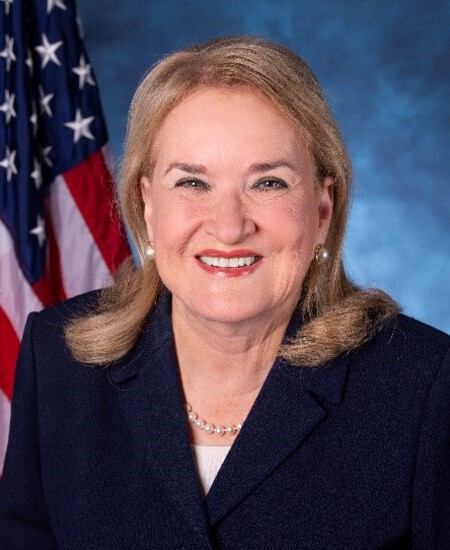
Sylvia R. Garcia
Sylvia R. Garcia House · District 29
D
Support
72% 47
Marsha Blackburn
Marsha Blackburn Senate
R
Oppose
26% 23
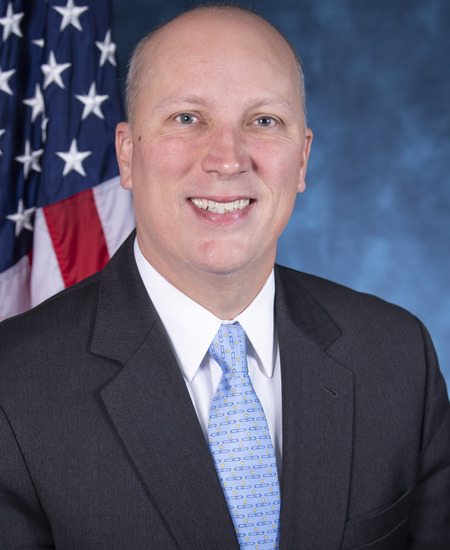
Chip Roy
Chip Roy House · District 21
R
Oppose
27% 52
Ted Budd
Ted Budd Senate
R
Oppose
27% 26
Gregory F. Murphy
Gregory F. Murphy House · District 3
R
Oppose
28% 46
Mike Johnson
Mike Johnson House · District 4
R
Oppose
28% 46
Showing 601–610 of 886 bills

All energy bills

failed · United States · House Feb 10, 2026

HRES 1042: Providing for consideration of the bill (H.R. 2189) to modernize Federal firearms laws to account for advancements in technology and less-than-lethal weapons, and for other purposes; providing for consideration of the bill (H.R. 261) to amend the National Marine Sanctuaries Act to prohibit requiring an authorization for the installation, continued presence, operation, maintenance, repair, or recovery of undersea fiber optic cables in a national marine sanctuary if such activities have previously been authorized by a Federal or State agency; providing for consideration of the bill (H.R. 3617) to amend the Department of Energy Organization Act to secure the supply of critical energy resources, including critical minerals and other materials, and for other purposes; and for other purposes.

HRES 1042 is a procedural resolution that establishes the rules for considering three separate bills in the U.S. House of Representatives. It provides for the consideration of H.R. 2189 (which would modernize federal firearms laws to account for new technology and less-than-lethal weapons), H.R. 261 (which would amend marine sanctuary rules to streamline authorization for undersea fiber optic cables), and H.R. 3617 (which would amend energy laws to secure critical mineral supplies). The resolution waives points of order against these bills and sets specific debate time limits and procedures for their consideration. This resolution itself does not change laws but enables the House to move forward with debating and voting on the three substantive bills.
in committee · United States · Senate Apr 3, 2025

S 1276: American Innovation Act

The American Innovation Act (S 1276) authorizes multi-year funding for key federal science and technology agencies, including the National Science Foundation, Department of Energy's Office of Science, Department of Defense science programs, National Institute of Standards and Technology, and NASA's Science Mission Directorate. It sets specific annual funding levels from fiscal years 2026 through 2035, with automatic annual increases starting in 2036 based on the Consumer Price Index to adjust for inflation. The bill also exempts these appropriations from automatic budget cuts (sequestration) under the Balanced Budget Act. This funding directly affects the operations and research capabilities of these federal agencies.
Sub-Topics State Budget
in committee · United States · Senate Dec 11, 2025

S 3437: Office of Fusion Act of 2025

The Office of Fusion Act of 2025 establishes a new Office of Fusion within the Department of Energy to accelerate the development and commercial deployment of fusion energy technology. The Office will coordinate public-private partnerships, build domestic supply chain infrastructure, and work toward the goal of starting construction on more than one private-sector fusion power plant by December 31, 2028. It requires the Department to submit a detailed commercial deployment roadmap to Congress within 180 days of enactment, with updates every four years, outlining barriers and strategies for advancing fusion energy. The bill also creates a Fusion Innovation Center, based at a national laboratory or university with proven fusion expertise, to lead these efforts.
Sub-Topics Nuclear
in committee · United States · Senate Sep 3, 2025

S 2693: Biobased Market Expansion Act of 2025

The Biobased Market Expansion Act of 2025 amends federal procurement rules to increase government purchases of biobased products. It requires federal agencies to annually raise their biobased product procurement targets, promote domestically produced biobased items, and establish price preferences for these products. Agencies must also provide staff training, update procurement catalogs to clearly identify eligible biobased products, and report compliance details. The bill directly affects federal procurement offices and biobased product manufacturers, with a Comptroller General review mandated within two years to assess implementation and recommend improvements.
in committee · United States · Senate Jul 29, 2025

S 2505: Primacy Certainty Act of 2025

The Primacy Certainty Act of 2025 sets clear deadlines for the EPA to review state applications for primary control over Class VI wells (used for carbon dioxide storage). It requires the EPA to provide detailed written explanations if it misses a 180-day deadline for reviewing applications, and automatically approves applications if the EPA fails to act within 30 days after that deadline. States seeking control must already have primary enforcement authority for other well types, and the bill mandates EPA transfer of pending permits to states once approval is granted. This directly affects states applying to manage Class VI well regulations, reducing uncertainty in the approval process.
in committee · United States · House Nov 20, 2025

HR 6177: Grid Research and Development Act

The Grid Research and Development Act (HR 6177) requires transmission utilities and grid operators to report standardized data to the Federal Energy Regulatory Commission (FERC) on transmission projects, including costs, project timelines, system performance, and interconnection expenses. FERC must create a public, searchable data repository and an Interconnection Data Dashboard displaying real-time queue data, project statuses, and system costs to improve transparency. The Department of Energy will use this data to research transmission cost drivers, efficiency, and affordability, publishing annual reports on grid investment impacts. These requirements directly affect transmission utilities, grid operators, and ratepayers by standardizing reporting and enabling public analysis of grid investments.
passed · United States · House Jan 15, 2026

HR 4593: SHOWER Act

The SHOWER Act updates the federal definition of "showerhead" in the Energy Policy and Conservation Act to align with the ASME A112.18.1-2024 industry standard, while explicitly excluding safety showerheads. This change clarifies which showerhead products must comply with federal energy efficiency regulations, directly affecting manufacturers and sellers of standard showerheads. The bill requires the Department of Energy to revise relevant regulations within 180 days of enactment to match this new definition. As a result, safety showerheads will no longer be subject to the same energy efficiency standards as typical residential showerheads.
Sub-Topics Energy Efficiency
in committee · United States · House May 7, 2025

HR 3231: American Energy Act

HR 3231, the American Energy Act, streamlines oil and gas drilling permit processing by requiring the government to approve applications even during pending lawsuits (unless a court has already canceled the lease), and limits court challenges to lease sales. It sets a four-year expiration for drilling permits and bars courts from halting development or lease awards based on environmental lawsuits (like those under NEPA) after bids are opened, unless imminent environmental harm is proven with no other remedy. This directly affects oil and gas companies seeking permits, federal agencies managing leases, and courts handling related litigation. The bill changes procedural rules for permits and lease sales without altering environmental standards.
in committee · United States · House Jan 31, 2025

HR 112: FUEL Reform Act

HR 112, the FUEL Reform Act, repeals bioenergy subsidy programs established under the 2002 Farm Security Act. This bill directly affects farmers and bioenergy producers who currently receive federal subsidies for renewable energy projects under these programs. The key mechanism is removing the specific provisions (Title IX of the 2002 Act) that authorized these subsidies from federal law. The bill eliminates existing financial support for certain bioenergy initiatives without creating new programs or requirements.
Sub-Topics Renewable Energy Tags Rural Communities
in committee · United States · Senate Mar 10, 2025

S 913: Return to Sender Act

This bill repeals sections 70002 and 70003 of the Inflation Reduction Act (Public Law 117-169) and rescinds all unused funds allocated under those sections as of its enactment date. It directly affects the federal government's budget by canceling unspent money that was previously set aside for climate and energy programs. The key mechanism is a simple fiscal correction: it removes the authority to use those specific funds and redirects them away from future spending. This is a procedural budget adjustment with no direct impact on citizens or businesses.
Showing 601 to 610 of 886 bills
Previous 1 60 61 62 89 Next