

Enhanced Iran Sanctions Act of 2025 This bill imposes sanctions on certain foreign persons (individuals and entities) that are involved in Iran's petroleum sector as well as certain associated persons. The bill also requires or authorizes actions to facilitate the enforcement of sanctions on Iran. Specifically, the bill requires the President to impose visa- and property-blocking sanctions on any foreign person that, after the bill's enactment, knowingly engages in any transaction related to the processing, export, or sale of oil, condensates, gas, liquefied natural gas, or other petrochemical products in whole or in part from Iran. The President must also impose sanctions on certain foreign persons associated with a sanctioned individual or entity. For example, the President must sanction the subsidiaries and corporate officers of a sanctioned business. The bill provides certain exceptions to these sanctions, including specifying that sanctions do not apply to the importation of goods or to conducting or facilitating transactions for humanitarian assistance. The Department of State must establish an interagency working group that shall seek to establish a multilateral contact group to coordinate international efforts to enforce sanctions on Iran. The bill expands the State Department rewards program to authorize a reward payment to any individual who furnishes information leading to the identification of a person (1) subject to sanctions under this bill, or (2) that has attempted or is attempting to evade sanctions under this bill.
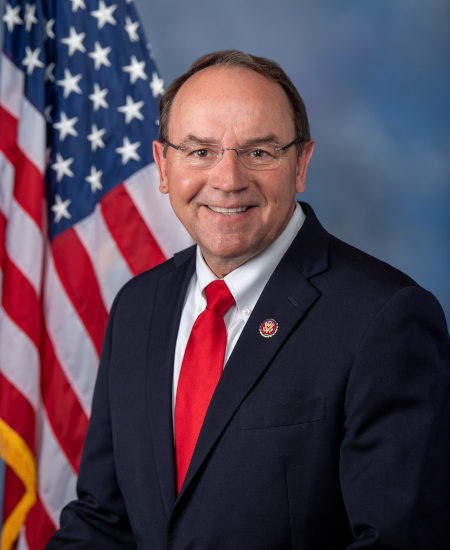
Rep. Thomas P. Tiffany
Sponsored bills
Maddy summaryHR 7640, the "Shut Down Sanctuary Policies Act of 2026," requires state and local governments to cooperate with federal immigration enforcement by mandating that law enforcement agencies comply with federal requests to hold individuals for immigration status checks and share related information. It overrides state or local laws that restrict such cooperation, with non-compliant jurisdictions losing eligibility for specific federal law enforcement grants (like Byrne JAG funds) and facing potential lawsuits if released immigrants commit crimes. The bill creates a private right to sue state/local entities that fail to honor federal detainers, allowing victims of crimes committed by such individuals to seek damages. This directly affects state and local governments, law enforcement agencies, and jurisdictions with "sanctuary" policies that previously limited immigration cooperation.
Maddy summaryThis bill establishes the Red Star Service Banner as an officially recognized symbol to honor U.S. service members and veterans who died by suicide, as well as first responders who died by suicide. The banner features a white field with a blue border and a single red star, and it may be displayed at private residences, workplaces, public buildings, community spaces, and other appropriate locations to recognize the sacrifice of those who died and support their families. The legislation clarifies that displaying the banner does not create new eligibility for benefits, requires VA approval for individual display, or establish any legal status beyond recognition. It also allows the Secretary of Veterans Affairs to promote awareness of the banner in coordination with the Department of Defense without requiring additional funding.
Maddy summaryThis bill, known as the Dalilah Law, would restrict commercial driver's licenses to U.S. citizens, lawful permanent residents, and holders of specific work visas. It requires states to verify the citizenship or visa status of all CDL applicants and renewals within 180 days of enactment, while also mandating English language proficiency testing for all license holders. States that fail to enforce these requirements or issue licenses to ineligible individuals risk losing federal transportation funding. The law also imposes lifetime disqualifications for operating commercial vehicles without proper immigration status.
Maddy summaryThis bill, titled the One Nation, One Visa Policy Act, would require all Chinese nationals to have a valid visa before being allowed entry into the United States. It directly affects Chinese citizens and passport holders by prohibiting their visa-free admission and directing the Department of Homeland Security to stop using funds for any Chinese participation in existing visa waiver programs. The legislation explicitly includes Hong Kong and Macau under the definition of the People's Republic of China for the purposes of this restriction. The bill would remove the ability of Chinese nationals to enter the country without a visa under current waiver arrangements.
Maddy summaryThis bill, titled the Securing Our Streets Act of 2026, directs the Attorney General to distribute federal grants to states that implement specific criminal justice policies aimed at reducing repeat offenses. To qualify for funding, states must adopt laws requiring repeat offenders to serve at least 85 percent of their sentences, mandate pretrial detention for violent offenders posing a clear threat to public safety, and impose life imprisonment for individuals convicted of three distinct violent crimes. The grants, totaling up to $10 billion over five years, can only be used to build secure correctional facilities, expand incarceration capacity for violent offenders, and train correctional staff.
Maddy summaryHR 7678, the Gun Owner Registration Information Protection Act, prohibits federal funding for state or local databases that track lawfully owned firearms or their owners. The bill allows federal funding for databases recording lost or stolen firearms but bans it for databases listing legal gun ownership. This means states cannot use federal money to create or maintain systems that compile information about legally owned guns. The bill directly affects state and local governments that rely on federal funds for firearm ownership databases.
Law-Enforcement Innovate to De-Escalate Act This bill removes less-than-lethal projectile devices (e.g., certain TASERs) from regulation under the Gun Control Act. The term less-than-lethal projectile device means a device that (1) is not designed or intended to expel (and may not be readily converted to discharge) commonly used ammunition or projectiles exceeding a velocity of 500 feet per second; (2) is designed and intended to be used in a manner not likely to cause death or serious bodily injury; and (3) does not accept (and cannot be readily modified to accept) an ammunition feeding device. The bill also requires the Bureau of Alcohol, Tobacco, Firearms and Explosives to determine whether a device satisfies the definition of a less-than-lethal projectile device within 90 days of a request.
Maddy summaryThis bill renames "Apostle Islands National Lakeshore" as "Apostle Islands National Park and Preserve," creating two distinct areas within the same unit. The Park (with stricter rules) prohibits hunting/trapping except under tribal agreements, while the Preserve maintains existing hunting, fishing, and trapping rules from before the bill. Boundaries are defined by a specific map, and the National Park Service must add interpretive signage about regional history and tribal connections at visitor centers. Tribal treaty rights to hunt, fish, and gather remain fully protected under this law.
Maddy summaryThis bill prohibits federal officials from using settlement agreements to direct payments to third parties unless those payments directly compensate for actual harm caused by the defendant or pay for services rendered in the case. It prevents the government from creating slush funds through settlements that benefit unrelated organizations or individuals beyond the scope of direct restitution. Federal agencies must annually report to the Congressional Budget Office on settlement payments that meet the new criteria, while agency inspectors general must audit and publicly report any violations. The reporting and audit requirements are set to expire seven years after the law takes effect.