Maddy summaryThis resolution (HRES 610) is a ceremonial House of Representatives measure commemorating the 72nd anniversary of the Small Business Administration (SBA), established in 1953. It formally recognizes American entrepreneurs and small businesses for their economic contributions, citing statistics on their role in job creation, innovation, and national resilience. The resolution has no policy changes or direct effects; it solely expresses Congress's symbolic approval of the SBA's anniversary celebration and acknowledges small businesses' importance to the U.S. economy.
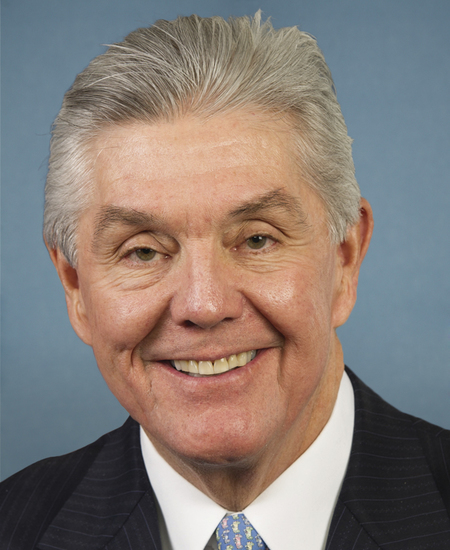
Rep. Roger Williams
Sponsored bills
Maddy summaryThe PRIME Act exempts custom slaughter facilities from federal meat inspection requirements when they follow state laws and sell meat exclusively within the same state. It specifically allows facilities to slaughter animals and prepare meat without federal oversight if the products go only to household consumers or local businesses (like restaurants, hotels, or grocery stores) serving consumers directly in that state. The bill clarifies that this exemption does not override stricter state regulations governing custom slaughter or meat sales. This primarily affects small-scale slaughter operations and local food businesses operating within a single state's borders.
Maddy summaryThis bill (HR 4677) renames a U.S. Postal Service facility in Amarillo, Texas (located at 505 East 9th Avenue) as the "Mayor Jerry H. Hodge Post Office Building" to honor the late mayor. It updates all official U.S. government references to the building to reflect this new name. The bill has no policy impact beyond this ceremonial designation and affects no specific legislation or funding.
Maddy summaryHR 4735, the Business of Insurance Regulatory Reform Act of 2025, clarifies that the Consumer Financial Protection Bureau (CFPB) cannot enforce federal consumer financial laws over companies already regulated by state insurance departments for their insurance activities. The bill amends Section 1027(f) of the Consumer Financial Protection Act to explicitly state that the CFPB lacks authority to regulate insurance products or services when a company is subject to state insurance regulation. It also requires the CFPB to broadly interpret its authority in favor of state insurance regulators for such entities. This directly affects insurance companies operating under state oversight, preventing overlapping federal enforcement. The change focuses on defining regulatory boundaries, not altering insurance product rules.
Veterans' Assuring Critical Care Expansions to Support Servicemembers Act of 2025 or the Veterans' ACCESS Act of 2025 This bill addresses the administration of the Veterans Community Care Program (VCCP) and other Department of Veterans Affairs (VA) health care matters. Among other provisions regarding the VCCP, the bill establishes in statute access standards that determine when a veteran is eligible to receive non-VA care through the VCCP, requires the VA to notify veterans regarding their eligibility for care within two business days after the VA is aware the veteran is seeking care, and extends the deadline for the submittal of claims under the VCCP by health care entities and providers. The VA must address its mental health treatment programs by establishing a standardized screening process to determine whether a veteran satisfies criteria for priority or routine admission to a mental health residential rehabilitation treatment program or a program for residential care for mental health and substance abuse disorders, tracking the performance of medical facilities and Veterans Integrated Service Networks in meeting the requirements for mental health treatment screenings and timely admission to treatment programs under such screenings, and establishing an appeal process for when a veteran is denied admission to a covered treatment program or is accepted into a program but not offered bed placement in a timely manner. Additionally, the VA must establish an online self-service module for veterans to request and manage appointments, track referrals, and appeal and track decisions related to requests for care.
Maddy summaryHR 1919, the "Anti-CBDC Surveillance State Act," prohibits the Federal Reserve from developing, testing, or issuing any central bank digital currency (CBDC) or similar digital assets. It specifically bans the Fed from offering direct financial products to individuals, maintaining individual accounts, or issuing CBDCs directly or indirectly through intermediaries like banks. The bill also blocks the Fed from using any digital asset for monetary policy and clarifies that physical currency's privacy protections remain intact. This policy directly affects the Federal Reserve System's ability to create or manage digital monetary tools.
Maddy summaryHR 4474, the Equal Shot Act of 2025, prohibits the Small Business Administration (SBA) from denying financial assistance - such as loans or guarantees - to firearm businesses solely because of their industry. It directly affects firearm manufacturers, distributors, trade associations, and affiliated entities like shooting ranges or training providers. The bill requires the SBA to treat these applicants equally under existing law, removing any policy that would block them based on their connection to firearms. This is a concrete policy change ensuring firearm-related businesses have the same access to SBA programs as other eligible applicants.
Securities Research Modernization Act This bill allows a securities broker or dealer to publish or distribute a research report on a proposed public offering by any issuer without it being considered an offer to sell securities for purposes of registration requirements. Currently, only reports published or distributed regarding a proposed public offering by an emerging growth company fall under this exception.
Maddy summaryHR 4363, the Defend Girls Athletics Act, requires public K-12 schools and colleges to certify annually that they comply with Executive Order 14201, which mandates keeping men out of women's sports. Schools must submit written compliance certifications by August 15 each year (for K-12) or July 1 (for colleges), with states reporting non-compliant agencies to the federal government. Schools or colleges failing to certify or violating the rule risk losing federal education funding, including returning unobligated funds and becoming ineligible for future federal support. The bill directly affects all public schools and colleges receiving federal education funds by tying their eligibility to adherence to this sports participation requirement.
Maddy summaryHR 4367, the Bracero Program 2.0 Act, reforms the H-2A agricultural visa program to improve employer processes and worker mobility. It requires an online portal for employers to file petitions and post jobs (replacing current ad requirements), raises the H-2A wage rate to the state minimum wage plus $2.00 per hour, and creates a 6-year pilot program allowing H-2A workers to move between registered agricultural employers within the same state without restarting visa paperwork. The pilot limits portable H-2A status to 10,000 workers at a time and mandates employers to provide workers' compensation if state coverage doesn’t apply. This directly affects agricultural employers seeking seasonal workers and H-2A workers who may switch employers more easily under the pilot.