Maddy summaryThis resolution formally recognizes July 25, 2026, as "World IVF Day" throughout Pennsylvania. It highlights the importance of in vitro fertilization for helping individuals and couples overcome infertility and acknowledges the critical role embryologists play in the process. The bill does not change any laws or policies; instead, it serves as a symbolic gesture to celebrate advancements in fertility medicine and the millions of babies born via IVF worldwide.
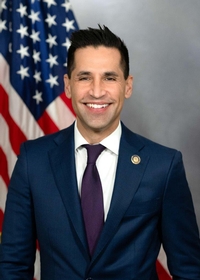
Rep. Tarik Khan
Sponsored bills
Maddy summaryThis bill authorizes the Pennsylvania Department of General Services to transfer a specific parcel of land and buildings in Millersville to Student Lodging, Inc., a nonprofit organization, for a nominal fee of $1. The property, formerly known as the Witmer Infirmary, includes approximately 0.31 acres with existing structures, and the transfer requires approval from the Governor. The legislation includes conditions that prohibit the use of the land for licensed facilities and allows the state to retain certain easements or add restrictions as it sees fit. If the sale is not completed within 24 months, the property may instead be sold through a competitive bidding process, with any proceeds going to the state's General Fund.
Maddy summaryThis bill updates Pennsylvania's 1803 laws to regulate commercial pilots operating in the Delaware Bay and River. It requires individuals wishing to work as pilots to apply for a license from the Navigation Commission, which will evaluate their skills and issue permits based on the size of vessels they can safely navigate. The legislation establishes a six-tiered licensing system where each class corresponds to a specific maximum draft of vessels, ranging from deep-draft ships to smaller boats. Anyone attempting to pilot a vessel larger than one hundred tons without a valid license faces civil penalties and potential jail time. These rules will become effective 60 days after the bill is enacted.
Maddy summaryHB 482 authorizes Pennsylvania to join the Interstate Occupational Therapy Licensure Compact, enabling licensed occupational therapists and assistants from Pennsylvania to practice in other participating states without obtaining separate licenses. The bill establishes mechanisms for mutual recognition of licenses, sharing of disciplinary and investigative data between states, and accountability for practitioners providing services across state lines. It directly affects occupational therapists, assistants, and patients seeking services in multiple states, particularly supporting military spouses relocating and expanding telehealth access. Key provisions include requiring states to participate in a shared data system, defining terms like "Compact Privilege," and preserving each state’s regulatory authority over local practice standards. This is a procedural bill enabling Pennsylvania’s participation in an existing interstate framework, not creating new licensing requirements.
Maddy summaryHB 1286 requires human trafficking awareness training for employees at hotels, motels, and similar public lodging establishments (defined as facilities offering >10 rooms for rent) and for workers contracted by third-party providers serving these locations. It also mandates similar training for short-term rental operators (like Airbnb hosts) and platforms listing such rentals. The training must cover identifying trafficking signs, legal definitions, reporting procedures, and differences between labor and sex trafficking in lodging contexts, with records maintained for two years. The Pennsylvania Commission on Crime and Delinquency will approve and list free training programs online to meet these requirements.
Maddy summaryHB 858 requires Pennsylvania county chief assessors to maintain and annually update a public list of property contact information, including owners' names and addresses. This applies directly to county assessors and ensures property owners' contact details are accessible to the public. The bill also imposes penalties for failure to comply with these requirements, aiming to improve transparency in property ownership records.
Maddy summaryThis bill requires corporations and unincorporated associations in Pennsylvania to report the number of single-family or low-density residential properties they own in their annual filings. It establishes a new chapter in state law that restricts certain entities from owning residential real estate and mandates a waiting period for purchases by covered investors. The legislation allows the Department of State to dissolve or cancel the registration of an entity that violates these property ownership rules at least 10 times within a three-year period. Additionally, the bill grants municipalities specific powers to enforce these restrictions and creates a private right of action for individuals to sue entities that violate the new ownership prohibitions.
Maddy summaryThis bill directs Pennsylvania state agencies to conduct a comprehensive study on how artificial intelligence will affect the state's workforce and submit the findings to the General Assembly within 18 months. The report must identify which industries and worker demographics are most at risk of job displacement, outline the skills and education needed to adapt to this technology, and assess how much relevant workforce data is currently available or privately owned. By requiring collaboration with various stakeholders, the legislation aims to create a proactive plan that ensures access to necessary training and expertise for all segments of the current and future workforce.
Maddy summaryThis bill establishes a new Pennsylvania tax credit program designed to help residents who pay for child and dependent care. It allows eligible taxpayers to claim a state tax credit based on the amount they already claim for the same expenses on their federal tax returns. The credit rate changes over time, starting at 30% for tax years ending before 2023, increasing to 100% for years between 2023 and 2026, and returning to 100% for years after 2026. The maximum credit is calculated on up to $3,000 of expenses for one child or $6,000 for two or more children.
Maddy summaryThis bill is a resolution that formally recognizes June 2026 as Caribbean-American Heritage Month in Pennsylvania. It directly affects state residents and officials by encouraging them to honor the contributions of Caribbean Americans during that month. The resolution cites the historical significance of Caribbean heritage and the positive impact of Caribbean Americans on the nation and the Commonwealth. As a commemorative measure, it does not create new laws or change policies, but rather serves to acknowledge and celebrate cultural contributions.