Issue · Labor & Employment

Labor & Employment (Labor Standards)

Every labor & employment bill, vote, and legislator stance in Pennsylvania, automatically classified by Maddy, our AI policy reader.

Total bills
6
2025-2026 Regular Session
Top supporter
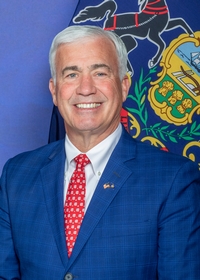
Ben Sanchez
82% support rate
Top opponent
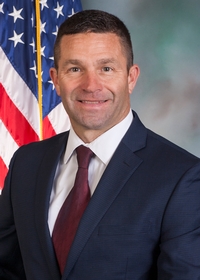
Thomas Kutz
18% support rate
Ranked legislators
10
5 support · 5 oppose
Key legislators

Who's moving labor standards in Pennsylvania

Legislators moving labor standards in Pennsylvania
Legislator Party Stance Support rate Votes
Ben Sanchez
Ben Sanchez House · District 153
D
Strong +
82% 28
Bridget Malloy Kosierowski
Bridget Malloy Kosierowski House · District 114
D
Strong +
81% 27
Jordan Harris
Jordan Harris House · District 186
D
Strong +
81% 27
Abigail Salisbury
Abigail Salisbury House · District 34
D
Strong +
81% 26
Aerion Abney
Aerion Abney House · District 19
D
Strong +
81% 26
Thomas Kutz
Thomas Kutz House · District 87
R
Strong −
18% 28
Jim Struzzi
Jim Struzzi House · District 62
R
Strong −
19% 27
Charity Krupa
Charity Krupa House · District 51
R
Strong −
19% 26
Jamie Barton
Jamie Barton House · District 124
R
Strong −
19% 26
Ann Flood
Ann Flood House · District 138
R
Strong −
20% 25
Showing 6 of 6 bills

All labor & employment bills

in committee · Pennsylvania · Senate Jun 26, 2026

SB 1395: An Act amending the act of January 17, 1968 (P.L.11, No.5), known as The Minimum Wage Act of 1968, further providing for preemption.

This bill updates Pennsylvania's Minimum Wage Act to establish state-level preemption, meaning the state government sets the minimum wage rules that apply to all employers across the state. It prevents local cities and counties from passing their own minimum wage laws that differ from the state standard, with two exceptions: local rules adopted before January 1, 2006, remain valid, and new local rules can still be passed after the bill takes effect. The legislation will become active 60 days after it is signed into law.
in committee · Pennsylvania · House Jun 2, 2026

HB 2585: An Act amending the act of January 17, 1968 (P.L.11, No.5), known as The Minimum Wage Act of 1968, further providing for minimum wages.

This bill amends Pennsylvania's Minimum Wage Act to update provisions regarding training wages for employees under the age of twenty. It allows employers to pay a reduced wage rate during the first sixty days of employment for young workers, provided the employee is informed of their right to the full minimum wage after the training period ends. The legislation also includes a prohibition against hiring new trainees at a lower wage if it results in displacing existing employees through reduced hours or benefits. These changes directly affect employers in the state and young workers entering the workforce, ensuring specific protections while allowing for a temporary training wage structure.
in committee · Pennsylvania · House Mar 13, 2025

HB 903: An Act prohibiting the employment of unauthorized employees; requiring meat packing and food preparation industry employers to verify the Social Security numbers of employees; imposing duties on the Department of Labor and Industry; and imposing penalties.

This bill requires employers in Pennsylvania's meat packing and food preparation industries to verify the work authorization status of their employees using the federal E-Verify system. It applies specifically to businesses with 100 or more employees at a single facility or those licensed under state food safety and meat hygiene laws. Employers must keep verification records for the duration of employment or three years, whichever is longer, and the Department of Labor and Industry will be authorized to investigate complaints and inspect business records for compliance. The legislation prohibits knowingly hiring unauthorized employees and establishes a formal complaint process for individuals alleging violations. Penalties for non-compliance are imposed through existing state legal frameworks.
in committee · Pennsylvania · House Jan 22, 2025

HB 241: An Act amending Title 53 (Municipalities Generally) of the Pennsylvania Consolidated Statutes, in preemptions, providing for employer mandates by municipalities.

This bill prohibits Pennsylvania municipalities from regulating or enforcing mandates related to employer policies or practices (such as wages, hiring, scheduling, or workplace rules) for private businesses. It directly affects private employers across the state by preventing local governments from imposing such requirements. Key exceptions include mandates for municipal employees, provisions under the Pennsylvania Human Relations Act, and collective bargaining agreements. Violating the prohibition after January 1, 2015, voids the ordinance, and affected businesses can seek court-ordered relief, damages, and reasonable expenses like attorney fees.
Sub-Topics Collective Bargaining Labor Standards Tags Local Government
in committee · Pennsylvania · House Jan 16, 2025

HB 160: An Act amending the act of August 15, 1961 (P.L.987, No.442), known as the Pennsylvania Prevailing Wage Act, further providing for definitions.

HB 160 amends Pennsylvania's prevailing wage law by raising the cost threshold for public construction projects subject to prevailing wage requirements from $25,000 to $257,000 (adjusted annually for inflation). The new threshold uses the Consumer Price Index for urban wage earners in Pennsylvania, New Jersey, Delaware, and Maryland to account for inflation each March. This change exempts smaller public projects (under $257,000) from prevailing wage rules, while larger projects remain covered. The amendment applies to contracts entered into 60 days after the law's effective date.
in committee · Pennsylvania · Senate Apr 9, 2025

SB 545: An Act amending the act of January 17, 1968 (P.L.11, No.5), known as The Minimum Wage Act of 1968, further providing for exemptions and for duty of employer.

SB 545 amends Pennsylvania's Minimum Wage Act to exempt minor league baseball players covered by collective bargaining agreements (CBAs) from minimum wage and overtime rules. It adds a specific exemption (Section 5(a)(13)) for players under CBAs detailing their wages and working conditions. The bill also modifies employer recordkeeping requirements (Section 8), exempting these players from needing employers to maintain certain records or allow inspections regarding their pay. This change directly affects minor league baseball teams and players in Pennsylvania under applicable CBAs. The bill takes effect 60 days after enactment.