Issue · Labor & Employment

Labor & Employment (Labor Standards)

Every labor & employment bill, vote, and legislator stance in Pennsylvania, automatically classified by Maddy, our AI policy reader.

Total bills
73
2025-2026 Regular Session
Top supporter
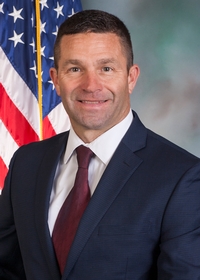
Ben Sanchez
82% support rate
Top opponent
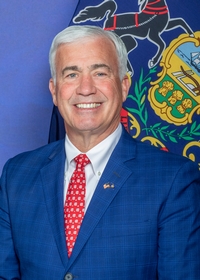
Thomas Kutz
18% support rate
Ranked legislators
10
5 support · 5 oppose
Key legislators

Who's moving labor standards in Pennsylvania

Legislators moving labor standards in Pennsylvania
Legislator Party Stance Support rate Votes
Ben Sanchez
Ben Sanchez House · District 153
D
Strong +
82% 28
Bridget Malloy Kosierowski
Bridget Malloy Kosierowski House · District 114
D
Strong +
81% 27
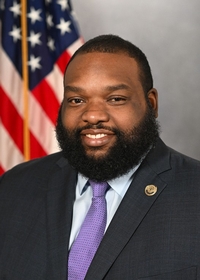
Jordan Harris
Jordan Harris House · District 186
D
Strong +
81% 27
Abigail Salisbury
Abigail Salisbury House · District 34
D
Strong +
81% 26
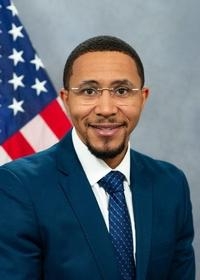
Aerion Abney
Aerion Abney House · District 19
D
Strong +
81% 26
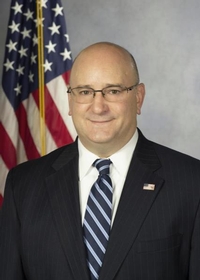
Thomas Kutz
Thomas Kutz House · District 87
R
Strong −
18% 28
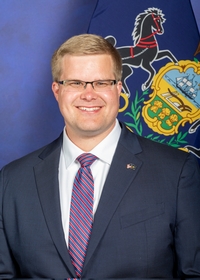
Jim Struzzi
Jim Struzzi House · District 62
R
Strong −
19% 27
Charity Krupa
Charity Krupa House · District 51
R
Strong −
19% 26
Jamie Barton
Jamie Barton House · District 124
R
Strong −
19% 26
Ann Flood
Ann Flood House · District 138
R
Strong −
20% 25
Showing 51–60 of 73 bills

All labor & employment bills

in committee · Pennsylvania · Senate May 2, 2025

SB 651: A Joint Resolution proposing an amendment to the Constitution of the Commonwealth of Pennsylvania, providing for workers' rights.

SB 651 is a joint resolution proposing an amendment to the Pennsylvania Constitution to establish "Workers' rights." This amendment would grant employees the fundamental right to organize and collectively bargain through representatives of their choice regarding wages, hours, working conditions, and workplace safety. It specifies that no law can diminish these rights, including those that prohibit agreements requiring union membership as a condition of employment. If passed by the General Assembly twice, this proposed amendment would then be put before Pennsylvania voters for approval.
in committee · Pennsylvania · Senate Jun 18, 2025

SB 852: An Act amending the act of January 17, 1968 (P.L.11, No.5), known as The Minimum Wage Act of 1968, further providing for definitions, for minimum wages and for preemption.

SB 852 updates Pennsylvania's Minimum Wage Act to establish new hourly wage rates starting in 2026 ($12/hour) and 2027 ($15/hour), with automatic annual cost-of-living adjustments based on the Consumer Price Index beginning in 2025. It clarifies that tipped workers must retain all tips, cannot be required to surrender tips to employers to meet wage requirements, and must be informed in writing about their minimum wage entitlement. The bill also preempts local ordinances, meaning cities cannot set higher minimum wages than this state law. It directly affects all Pennsylvania employers and workers, particularly those in tipped occupations.
in committee · Pennsylvania · House Jun 10, 2025

HB 1586: An Act amending the act of March 4, 1971 (P.L.6, No.2), known as the Tax Reform Code of 1971, in personal income tax, providing for tax paid on overtime wages.

HB 1586 creates a refundable tax credit for Pennsylvania taxpayers who earn overtime wages. It allows eligible workers to reduce their state income tax bill by 100% of taxes paid on overtime wages, calculated using employer-provided documentation (as required by 34 Pa. Code § 231.36). The credit applies to tax returns filed for taxable years beginning after December 31, 2025, and will be integrated into the standard PA 40 tax form. This directly affects Pennsylvania workers receiving overtime pay under the Minimum Wage Act of 1968.
in committee · Pennsylvania · House Jan 16, 2025

HB 160: An Act amending the act of August 15, 1961 (P.L.987, No.442), known as the Pennsylvania Prevailing Wage Act, further providing for definitions.

HB 160 amends Pennsylvania's prevailing wage law by raising the cost threshold for public construction projects subject to prevailing wage requirements from $25,000 to $257,000 (adjusted annually for inflation). The new threshold uses the Consumer Price Index for urban wage earners in Pennsylvania, New Jersey, Delaware, and Maryland to account for inflation each March. This change exempts smaller public projects (under $257,000) from prevailing wage rules, while larger projects remain covered. The amendment applies to contracts entered into 60 days after the law's effective date.
in committee · Pennsylvania · Senate Apr 9, 2025

SB 588: An Act establishing the Prevailing Wage Co-Enforcement Program; and providing for duties of the Department of Labor and Industry and participants in the Prevailing Wage Co-Enforcement Program.

SB 588 establishes a new Prevailing Wage Co-Enforcement Program within Pennsylvania's Department of Labor and Industry. The program authorizes trained volunteers (called "program participants") to monitor public construction projects for violations of the existing Pennsylvania Prevailing Wage Act, which requires contractors to pay local prevailing wages. Key mechanisms include volunteers conducting site visits, interviewing workers, and reporting violations to the Department under strict guidelines (e.g., wearing ID badges, submitting reports within 48 hours, and avoiding union-related activities). This directly affects public construction workers, contractors working on public projects, and the Department of Labor, which oversees the program. The bill does not change prevailing wage rates but creates a new enforcement tool for the Department.
in committee · Pennsylvania · Senate Apr 9, 2025

SB 545: An Act amending the act of January 17, 1968 (P.L.11, No.5), known as The Minimum Wage Act of 1968, further providing for exemptions and for duty of employer.

SB 545 amends Pennsylvania's Minimum Wage Act to exempt minor league baseball players covered by collective bargaining agreements (CBAs) from minimum wage and overtime rules. It adds a specific exemption (Section 5(a)(13)) for players under CBAs detailing their wages and working conditions. The bill also modifies employer recordkeeping requirements (Section 8), exempting these players from needing employers to maintain certain records or allow inspections regarding their pay. This change directly affects minor league baseball teams and players in Pennsylvania under applicable CBAs. The bill takes effect 60 days after enactment.
in committee · Pennsylvania · Senate Apr 28, 2025

SB 19: An Act amending the act of January 17, 1968 (P.L.11, No.5), known as The Minimum Wage Act of 1968, further providing for definitions, for minimum wages and for exemptions; providing for gratuities; further providing for enforcement and rules and regulations, for penalties and for civil actions; repealing provisions relating to preemption; and providing for local option and for taxpayer savings and reinvestment.

SB 19 proposes amendments to The Minimum Wage Act of 1968, directly affecting employees and employers across the state. The bill seeks to increase the minimum wage to $15 per hour starting January 1, 2026, with subsequent annual adjustments tied to the cost of living. It also revises rules for tipped employees, requiring their cash wage to be at least 70% of the minimum wage and clarifying that all gratuities are the property of the employee. Employers would be prohibited from deducting credit card processing fees from employee tips and must pay them by the next regular payday.
in committee · Pennsylvania · Senate Jan 24, 2025

SB 179: An Act amending the act of August 15, 1961 (P.L.987, No.442), known as the Pennsylvania Prevailing Wage Act, further providing for remedies and penalties.

SB 179 amends Pennsylvania's Prevailing Wage Act to strengthen penalties for contractors who intentionally underpay workers on public projects. It establishes tiered debarment periods: 3 years for unpaid wages under $1 million, 5 years for $1-10 million, and 10 years for over $10 million. This directly affects contractors who violate prevailing wage laws, barring them from winning future public contracts during these periods. The bill also authorizes the Secretary of Labor to request the Attorney General to recover penalties for the state. These changes aim to enforce compliance with prevailing wage requirements on public construction projects.
Sub-Topics Labor Standards
in committee · Pennsylvania · House Feb 4, 2025

HB 470: An Act providing for meal breaks or rest periods for employees; and imposing penalties.

HB 470 requires employers with 15 or more employees in Pennsylvania to provide a paid 30-minute meal break or rest period after five consecutive hours of work. This applies to all covered employees, with exemptions for union contracts that already provide equivalent or better break rights and during workplace emergencies. Employers violating the law face penalties of $100-$500 per affected employee per missed break, with additional recovery of lost wages for workers. The bill takes effect 90 days after enactment.
in committee · Pennsylvania · House Sep 2, 2025

HB 1580: An Act providing for regulations for employers to protect employees from heat-related injury or heat-related illness caused by heat stress; imposing duties on the Department of Labor and Industry and the Secretary of Labor and Industry; establishing the Heat Protection Enforcement Fund; and imposing penalties.

HB 1580 requires employers to implement specific heat safety measures, including providing cooling breaks and access to water, to protect employees working in conditions causing heat stress. It directly affects workers in outdoor and high-heat environments, such as construction, agriculture, and manufacturing. The bill establishes a new Heat Protection Enforcement Fund to support Department of Labor and Industry oversight and imposes penalties for non-compliance. Key provisions mandate employer action plans, define heat illness prevention protocols, and assign enforcement duties to the Department of Labor and Industry.
Showing 51 to 60 of 73 bills
Previous 1 5 6 7 8 Next