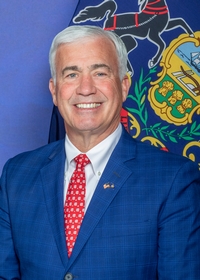
Senate Bill 679 proposes to establish a minimum hourly wage or a living wage for education support professionals in Pennsylvania's public schools, such as aides, custodians, and cafeteria staff. Starting in the 2025-2026 school year, these employees would be paid at least $20 per hour or a living wage, whichever is greater, with overtime at one and a half times that rate. The Department of Labor and Industry would be responsible for determining and annually adjusting the living wage for each school entity. Public school entities would receive supplemental reimbursements from the Department of Education to help cover these increased wage costs, including payments for existing contracts that fall below the new minimum.
This bill amends Pennsylvania's Minimum Wage Act to establish new salary thresholds for employees classified as exempt in executive, administrative, or professional roles, affecting employers and workers in these positions. It defines "executive capacity" as requiring management duties, directing two or more employees, and having hiring/firing authority, with a minimum weekly salary starting at $844 (effective October 2027), rising to $1,128 by 2029, and then adjusting every three years based on Pennsylvania's 10th percentile wage for exempt workers. Employers may meet up to 10% of the salary requirement through nondiscretionary bonuses, incentives, or commissions paid annually. The bill does not alter minimum wage rates for non-exempt workers but clarifies exemption criteria for specific job classifications.
SB 237 amends Pennsylvania's Equal Pay Law to clarify that "wages" include all compensation (salaries, benefits, and supplements) and define "comparable work" as requiring similar skill, effort, and working conditions - not just matching job titles. It strengthens protections by requiring employers to prove pay differences are based on job-related factors (like experience or performance), not sex, and prohibits lowering wages to comply with the law. The bill also allows the Attorney General to sue for unpaid wages with no filing fees and extends the statute of limitations to three years for willful violations. It directly affects all employers in Pennsylvania, including state and local government, and workers experiencing pay discrimination.
SB 678 amends Pennsylvania's Wage Payment and Collection Law to establish specific liability for general contractors in the construction industry. It makes general contractors jointly responsible for violations of wage payment laws committed by subcontractors providing construction services. The bill also requires subcontractors to repay general contractors for these liabilities, including wages and fees, unless otherwise specified in their contract or if the general contractor caused the violation by not paying promptly. These changes apply to construction contracts entered into on or after the bill's effective date.
This bill requires most Pennsylvania employers to provide paid sick leave to employees, directly affecting workers and their families who need time for medical care, family health needs, or public health emergencies. Employees earn one hour of paid sick leave for every 30 hours worked (max 56 hours/year), with rules on accrual, carryover, and usage. Employers with existing equivalent paid leave policies (covering the same purposes and conditions) are exempt. The bill mandates employers to provide written notice of leave policies and prohibits retaliation against employees using sick leave, with pay calculated at the employee's regular rate or minimum wage.
HB 1150 raises Pennsylvania's minimum wage to $15 per hour starting January 1, 2026, with annual increases thereafter. It also establishes a phased timeline for tipped employees: requiring higher base cash wages starting in 2025 (e.g., $5.00/hour after June 2025) and mandating that by July 1, 2029, employers must pay the full minimum wage without relying on tips. The bill ensures all tips received by employees remain their property and cannot be used by employers to meet minimum wage requirements. This directly affects most private-sector employers and tipped workers in Pennsylvania, particularly in hospitality and service industries.
HB 1568 amends Pennsylvania's Wage Payment and Collection Law to clarify when employers must pay employees who are terminated or leave their job before the next scheduled payday. The bill specifies that final paychecks must be issued by a defined deadline, ensuring workers receive earned wages promptly without delay. This directly affects employees who separate from their job before payday and their employers, who must comply with the updated payment timeline. The bill was referred to the Labor & Industry committee on June 9, 2025.
SB 586, the Workplace Misclassification Act, sets clear criteria for determining when a worker qualifies as an independent contractor (requiring written project-specific contracts, business ownership, and independence from employer control) and prohibits employers from misclassifying employees as independent contractors. This directly affects workers who might lose access to workers' compensation, unemployment benefits, and other employee protections if misclassified, as well as employers who fail to properly classify workers. Key mechanisms include criminal penalties for violations, administrative fines, stop-work orders for noncompliant employers, and a private right for workers to sue for misclassification. The bill aims to replace vague standards with enforceable rules, requiring the Department of Labor to enforce these provisions and report annually on compliance.
SB 406 creates workplace health and safety committees at Pennsylvania meat packing and food processing facilities employing 100+ workers, directly affecting large facilities covered by meat hygiene laws or food safety regulations. It requires employers to provide language-appropriate safety training on health risks, workers' compensation rights, and committee details to new hires, and mandates paid training time. The bill establishes a workers' rights coordinator in the Department of Labor to oversee compliance and imposes penalties for violations. Employers must also cover out-of-pocket emergency medical transportation costs for work-related injuries requiring immediate care. The law aims to improve workplace safety through joint worker-management committees, regular hazard inspections, and clearer worker protections.
SB 548, the Fair Workweek Employment Standards Act, requires large retail, hospitality, and food services employers (those with 250+ employees across 20+ locations) to provide written advance notice of work schedules to employees. It mandates that employers give a good-faith estimate of weekly hours at hire, revise estimates for significant schedule changes, and notify employees of schedule changes at least seven days in advance. Employees gain the right to request schedule adjustments, though employers may deny requests for lawful reasons. The bill also authorizes the Department of Labor and Industry to enforce these standards and impose penalties for violations.