Issue · Labor & Employment

Labor & Employment

Every labor & employment bill, vote, and legislator stance in Pennsylvania, automatically classified by Maddy, our AI policy reader.

Total bills
325
2025-2026 Regular Session
Top supporter
Frank Farry
93% support rate
Top opponent
Dawn Keefer
15% support rate
Ranked legislators
10
5 support · 5 oppose
Key legislators

Who's moving labor & employment in Pennsylvania

Legislators moving labor & employment in Pennsylvania
Legislator Party Stance Support rate Votes
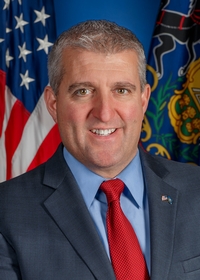
Frank Farry
Frank Farry Senate · District 6
R
Strong +
93% 45
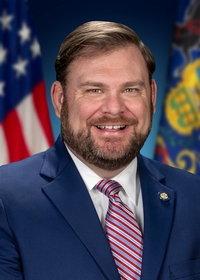
Devlin Robinson
Devlin Robinson Senate · District 37
R
Strong +
90% 52
Camera Bartolotta
Camera Bartolotta Senate · District 46
R
Strong +
89% 51
Joe Pittman
Joe Pittman Senate · District 41
R
Strong +
89% 55
Elder Vogel
Elder Vogel Senate · District 47
R
Strong +
88% 56
Dawn Keefer
Dawn Keefer Senate · District 31
R
Strong −
15% 46
Scott Hutchinson
Scott Hutchinson Senate · District 21
R
Oppose
29% 46
Charity Krupa
Charity Krupa House · District 51
R
Oppose
29% 256
Jarrett Coleman
Jarrett Coleman Senate · District 16
R
Oppose
29% 54
Stephanie Borowicz
Stephanie Borowicz House · District 76
R
Oppose
31% 214
Showing 271–280 of 325 bills

All labor & employment bills

in committee · Pennsylvania · Senate Jun 24, 2025

SB 889: An Act amending the act of December 17, 1959 (P.L.1913, No.694), known as the Equal Pay Law, further providing for definitions, for wage rates and for collection of unpaid wages.

SB 889 amends Pennsylvania's Equal Pay Law to strengthen protections against sex-based pay discrimination. It clarifies that "comparable work" requires similar skill, effort, and responsibility under similar conditions, and defines "wages" to include all compensation like bonuses and benefits. The bill prohibits employers from using past salary history to set new pay (except when a worker provides it to request higher pay) and bans retaliation for discussing wages or reporting violations. It also requires employers to justify any pay differences using legitimate, job-related factors like seniority or skills - not sex - and mandates that such factors must fully explain the wage gap. This directly affects workers and employers across Pennsylvania who set or receive wages.
in committee · Pennsylvania · House Jun 10, 2025

HB 1586: An Act amending the act of March 4, 1971 (P.L.6, No.2), known as the Tax Reform Code of 1971, in personal income tax, providing for tax paid on overtime wages.

HB 1586 creates a refundable tax credit for Pennsylvania taxpayers who earn overtime wages. It allows eligible workers to reduce their state income tax bill by 100% of taxes paid on overtime wages, calculated using employer-provided documentation (as required by 34 Pa. Code § 231.36). The credit applies to tax returns filed for taxable years beginning after December 31, 2025, and will be integrated into the standard PA 40 tax form. This directly affects Pennsylvania workers receiving overtime pay under the Minimum Wage Act of 1968.
in committee · Pennsylvania · Senate Apr 9, 2025

SB 588: An Act establishing the Prevailing Wage Co-Enforcement Program; and providing for duties of the Department of Labor and Industry and participants in the Prevailing Wage Co-Enforcement Program.

SB 588 establishes a new Prevailing Wage Co-Enforcement Program within Pennsylvania's Department of Labor and Industry. The program authorizes trained volunteers (called "program participants") to monitor public construction projects for violations of the existing Pennsylvania Prevailing Wage Act, which requires contractors to pay local prevailing wages. Key mechanisms include volunteers conducting site visits, interviewing workers, and reporting violations to the Department under strict guidelines (e.g., wearing ID badges, submitting reports within 48 hours, and avoiding union-related activities). This directly affects public construction workers, contractors working on public projects, and the Department of Labor, which oversees the program. The bill does not change prevailing wage rates but creates a new enforcement tool for the Department.
in committee · Pennsylvania · Senate Jan 24, 2025

SB 177: An Act amending the act of December 12, 1986 (P.L.1559, No.169), known as the Whistleblower Law, further providing for definitions.

SB 177 amends Pennsylvania's Whistleblower Law by updating the definition of "public body" to explicitly include state courts (like the Supreme Court), the General Assembly, and judicial agencies. This clarifies which government entities are covered under the law, ensuring employees reporting violations can seek protection when working with these specific bodies. The change directly affects state and local government employees who report suspected legal violations, making the scope of protected entities more precise. It is a procedural update to definitions, not a new protection or penalty.
in committee · Pennsylvania · Senate Apr 28, 2025

SB 19: An Act amending the act of January 17, 1968 (P.L.11, No.5), known as The Minimum Wage Act of 1968, further providing for definitions, for minimum wages and for exemptions; providing for gratuities; further providing for enforcement and rules and regulations, for penalties and for civil actions; repealing provisions relating to preemption; and providing for local option and for taxpayer savings and reinvestment.

SB 19 proposes amendments to The Minimum Wage Act of 1968, directly affecting employees and employers across the state. The bill seeks to increase the minimum wage to $15 per hour starting January 1, 2026, with subsequent annual adjustments tied to the cost of living. It also revises rules for tipped employees, requiring their cash wage to be at least 70% of the minimum wage and clarifying that all gratuities are the property of the employee. Employers would be prohibited from deducting credit card processing fees from employee tips and must pay them by the next regular payday.
in committee · Pennsylvania · House Mar 24, 2025

HB 1029: An Act amending the act of June 1, 1937 (P.L.1168, No.294), known as the Pennsylvania Labor Relations Act, further providing for definitions; providing for notice and regulations; further providing for unfair labor practices and for representatives and elections; providing for initial collective bargaining agreement; further providing for prevention of unfair labor practices and for penalties; and imposing penalties.

HB 1029 amends Pennsylvania's 1937 Labor Relations Act to clarify worker protections and union election processes. It defines "employe" more broadly (excluding independent contractors) and bans agreements that prevent workers from joining class or collective lawsuits. Employers must post notices about labor rights and provide detailed voter lists for union elections within two business days of a board order. The bill also adds new unfair labor practices, including coercing workers to sign agreements that limit their right to pursue collective claims. These changes directly affect Pennsylvania workers, employers, and labor organizations involved in union representation efforts.
in committee · Pennsylvania · Senate Apr 2, 2025

SB 486: An Act amending Title 62 (Procurement) of the Pennsylvania Consolidated Statutes, in source selection and contract formation, further providing for debarment or suspension.

SB 486 amends Pennsylvania's procurement laws to add new reasons for barring state contractors from future contracts. It specifically prohibits state agencies from awarding contracts to businesses that violate wage laws (like the Wage Payment and Collection Law), misclassify employees as independent contractors (violating laws covering workers' compensation, unemployment insurance, taxes, or construction misclassification), or breach workers' compensation rules. This directly affects businesses seeking or holding state government contracts by expanding the grounds for debarment. The bill updates existing debarment rules to include these specific labor and wage violations, making them automatic disqualifiers for state contracting. It takes effect 60 days after enactment.
in committee · Pennsylvania · Senate Jun 9, 2025

SR 123: A Resolution designating the week of June 9 through 13, 2025, as "Union Organizing Week" in Pennsylvania, in honor of those workers who have fought for their right to organize and bargain collectively at their workplace.

This resolution designates June 9-13, 2025, as "Union Organizing Week" in Pennsylvania. It symbolically honors workers who advocate for collective bargaining rights and fair workplace conditions, without creating new laws or altering existing policies. The resolution acknowledges the role of unions in improving wages, safety, and equity while recognizing workers' right to choose unionization. It is purely ceremonial and does not affect employers, workers, or labor regulations.
in committee · Pennsylvania · House Jul 1, 2025

HB 1687: An Act amending the act of December 5, 1936 (2nd Sp.Sess., 1937 P.L.2897, No.1), known as the Unemployment Compensation Law, in compensation, further providing for rate and amount of compensation.

HB 1687 amends Pennsylvania's Unemployment Compensation Law to change how the maximum number of weeks an unemployed worker can receive benefits is calculated. It bases the maximum weeks (ranging from 12 to 20) on the seasonal adjusted statewide unemployment rate from the six months preceding the claim application date, using the most recent U.S. Bureau of Labor Statistics data. This directly affects Pennsylvania workers filing for unemployment benefits on or after the effective date, as their benefit duration will now adjust based on current statewide unemployment rates. The bill specifies that total benefits in a single year cannot exceed the weekly benefit amount multiplied by the weeks determined under this new formula. The change takes effect six months after enactment.
Sub-Topics Unemployment
in committee · Pennsylvania · House Jul 1, 2025

HB 1692: An Act amending the act of December 5, 1936 (2nd Sp.Sess., 1937 P.L.2897, No.1), known as the Unemployment Compensation Law, in contributions by employers and employees, further providing for relief from charges; and, in compensation, further providing for ineligibility for compensation and providing for eligibility related to domestic violence.

HB 1692 amends Pennsylvania's unemployment compensation law to protect workers facing domestic violence and clarify employer cost relief. It adds a new provision (Section 402.7) stating workers who leave jobs due to domestic violence safety risks cannot be disqualified for unemployment benefits. The bill also revises existing rules to provide employers relief from extra charges when workers are separated for reasons like willful misconduct or certain discharges. These changes directly affect Pennsylvania workers seeking unemployment benefits and employers paying into the unemployment fund.
Sub-Topics Unemployment
Showing 271 to 280 of 325 bills
Previous 1 27 28 29 33 Next