Issue · Labor & Employment

Labor & Employment (Labor Standards)

Every labor & employment bill, vote, and legislator stance in Pennsylvania, automatically classified by Maddy, our AI policy reader.

Total bills
67
2025-2026 Regular Session
Top supporter
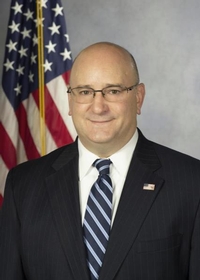
Ben Sanchez
82% support rate
Top opponent
Thomas Kutz
18% support rate
Ranked legislators
10
5 support · 5 oppose
Key legislators

Who's moving labor standards in Pennsylvania

Legislators moving labor standards in Pennsylvania
Legislator Party Stance Support rate Votes
Ben Sanchez
Ben Sanchez House · District 153
D
Strong +
82% 28
Bridget Malloy Kosierowski
Bridget Malloy Kosierowski House · District 114
D
Strong +
81% 27
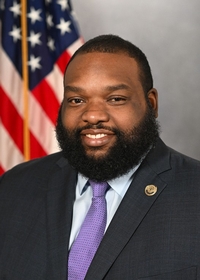
Jordan Harris
Jordan Harris House · District 186
D
Strong +
81% 27
Abigail Salisbury
Abigail Salisbury House · District 34
D
Strong +
81% 26
Aerion Abney
Aerion Abney House · District 19
D
Strong +
81% 26
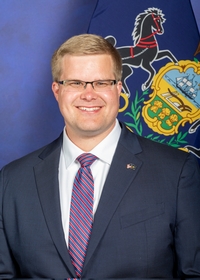
Thomas Kutz
Thomas Kutz House · District 87
R
Strong −
18% 28
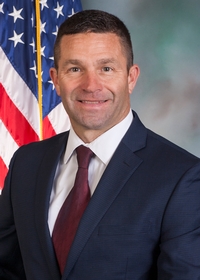
Jim Struzzi
Jim Struzzi House · District 62
R
Strong −
19% 27
Charity Krupa
Charity Krupa House · District 51
R
Strong −
19% 26
Jamie Barton
Jamie Barton House · District 124
R
Strong −
19% 26
Ann Flood
Ann Flood House · District 138
R
Strong −
20% 25
Showing 11–20 of 67 bills

All labor & employment bills

in committee · Pennsylvania · House Mar 30, 2026

HB 2332: An Act requiring certain warehouses to provide written descriptions of employment quotas; imposing powers and duties on the Department of Labor and Industry; and imposing penalties.

This Pennsylvania bill, known as the Warehouse Worker Protection Act, requires warehouses with 100 or more employees to provide written and verbal notice of employment quotas to workers upon hiring or within 30 days. The law defines quotas as specific production standards tied to time periods where failure to meet them could lead to disciplinary action, and mandates that employers explain these quotas, potential consequences, and any associated bonuses in a language the employee understands. Additionally, the bill prohibits employers from taking adverse employment actions against workers if they fail to provide adequate notice of quotas as required, while also requiring employers to notify employees of any quota changes at least five business days before enforcement. The Department of Labor and Industry gains authority to enforce these requirements and impose penalties on non-compliant employers.
passed · Pennsylvania · House Jun 10, 2026

HB 2189: An Act amending the act of January 17, 1968 (P.L.11, No.5), known as The Minimum Wage Act of 1968, further providing for definitions, for minimum wages and for exemptions.

HB 2189 amends Pennsylvania's Minimum Wage Act of 1968 to increase the state's minimum wage to $11 per hour starting January 1, 2027, $13 per hour on January 1, 2028, and $15 per hour on January 1, 2029. After 2029, the minimum wage will automatically adjust annually based on inflation data from the Consumer Price Index for the Pennsylvania-New Jersey- Delaware-Maryland area. This bill directly affects all Pennsylvania employers and workers covered under the Minimum Wage Act, including tipped employees who retain their tips. The changes apply to all non-exempt workers in the state, with no new exemptions or special rules added beyond the wage schedule and adjustment mechanism.
in committee · Pennsylvania · House Jan 12, 2026

HB 2133: An Act providing for rights of employees and for filing complaints.

HB 2133, the "Right to Disconnect Act," gives employees of Pennsylvania employers with 75+ workers the right to ignore work communications during nonworking hours (outside scheduled shifts). Employers must create written policies establishing this right, with exceptions for emergencies or last-minute schedule changes. Employees can file complaints with the Pennsylvania Department of Labor and Industry if an employer repeatedly violates this right (defined as three documented instances), with appeals potentially going to the Attorney General. The law aims to protect employees' personal time from work-related contact during nonwork hours.
in committee · Pennsylvania · House Dec 17, 2025

HB 2105: An Act providing for employer self-audit program to foster collaboration with employers to voluntarily remedy unpaid wages owed to an affected employee or cure a negligent violation that was the result of an employer inadvertently violating a labor act.

HB 2105 establishes an employer self-audit program in Pennsylvania, allowing businesses to voluntarily correct accidental unpaid wages or minor labor violations before enforcement action. It directly affects employers who unintentionally violated specific labor laws (like the Minimum Wage Act or Wage Payment Law) by requiring them to submit detailed audits, payroll records, and payment calculations for affected employees. Employers must demonstrate they corrected the issue, weren’t under investigation, and reviewed compliance resources before applying. The program focuses only on "negligent" (non-willful) violations, excluding cases involving falsified records or serious harm. This bill aims to foster cooperation between employers and the Department of Labor, not impose penalties for past mistakes.
in committee · Pennsylvania · House Apr 30, 2025

HB 1357: An Act amending the act of March 4, 1971 (P.L.6, No.2), known as the Tax Reform Code of 1971, in personal income tax, further providing for definitions and providing for provisions for overtime pay.

HB 1357 amends Pennsylvania's tax code to allow employees to deduct overtime pay from their taxable income when filing personal income tax returns. The bill defines "overtime pay" as compensation earned for hours worked beyond 40 per week (per federal standards) and requires employers to withhold tax on this amount. Employees who received overtime in 2026 or later can subtract the full overtime amount from their taxable income, potentially resulting in a tax refund if the deduction lowers their liability below zero. This directly affects Pennsylvania employees who earn overtime and employers who withhold taxes on such earnings. The changes apply to tax years beginning January 1, 2026.
in committee · Pennsylvania · House Feb 24, 2025

HB 716: An Act amending the act of July 14, 1961 (P.L.637, No.329), known as the Wage Payment and Collection Law, further providing for notification; providing for duty of employer; and imposing criminal and civil penalties.

HB 716 amends Pennsylvania's Wage Payment and Collection Law to require employers to provide employees with specific pay details (including rate, time of payment, and fringe benefits) at hiring and to post a summary of the law in a visible workplace location. Employers who fail to meet these notification or posting requirements face a $500 fine per violation. The bill also extends the time limit for employees to file legal claims for unpaid wages: if an employer didn't provide required notice or post the summary, the deadline becomes the later of three years after wages were due or the day the requirements were satisfied. This affects all employers in Pennsylvania subject to the Wage Payment and Collection Law.
Sub-Topics Labor Standards
in committee · Pennsylvania · Senate Jun 3, 2025

SB 818: An Act amending the act of October 6, 1998 (P.L.705, No.92), known as the Keystone Opportunity Zone, Keystone Opportunity Expansion Zone and Keystone Opportunity Improvement Zone Act, in preliminary provisions, further providing for definitions; and, in keystone opportunity zones, further providing for qualified businesses.

SB 818 amends Pennsylvania's Keystone Opportunity Zone (KOZ) Act to add new requirements for businesses seeking tax benefits. It mandates that businesses making capital investments over $25,000 for facility construction, repair, or renovation must ensure 70% of workers are "skilled craft laborers" (as defined by apprenticeship completion or equivalent experience) and that all workers receive the state-mandated prevailing wage. Violations of these wage requirements - such as intentional nonpayment - require businesses to refund all tax benefits received for that year. This affects KOZ businesses pursuing tax exemptions, deductions, abatements, or credits, directly linking labor standards to tax incentives. The bill integrates Pennsylvania's prevailing wage laws into KOZ tax compliance, effective 60 days after enactment.
in committee · Pennsylvania · Senate Aug 12, 2025

SB 72: An Act amending the act of October 13, 2010 (P.L.506, No.72), known as the Construction Workplace Misclassification Act, further providing for definitions, for improper classification of employees and for criminal penalties; providing for private right of action; and further providing for administrative penalties, for retaliation for action prohibited, for availability of information, for use of penalty funds and for funding.

SB 72 strengthens Pennsylvania's Construction Workplace Misclassification Act by increasing penalties for employers who wrongly classify workers as independent contractors. It adds criminal penalties (misdemeanors to felonies based on prior offenses), creates a private right for misclassified employees to sue for triple back pay plus attorney fees, and expands debarment authority to exclude violators from public construction projects for up to five years. The bill directly affects construction employers, workers on public projects, and contractors doing state work, while prohibiting retaliation against those reporting violations. These changes aim to enforce proper worker classification and compensation under the existing 2010 law.
in committee · Pennsylvania · House Feb 20, 2025

HB 676: An Act amending Title 35 (Health and Safety) of the Pennsylvania Consolidated Statutes, establishing the First Responder Resilience Grant Program and the First Responder Resilience Grant Program Fund; and imposing duties on the Pennsylvania Emergency Management Agency.

HB 676 establishes the First Responder Resilience Grant Program to help first responder organizations (like police, fire, and emergency medical services) cover costs for embedding mental health resilience coaches. The program provides competitive grants to defray salaries and overtime for these coaches, who deliver evidence-based support such as stress reduction, peer mentoring, and suicide prevention services. The Pennsylvania Emergency Management Agency will administer the program and manage the dedicated First Responder Resilience Grant Fund. This bill directly affects first responder organizations by enabling them to access funding for mental wellness support tailored to the unique stressors of their work.
Sub-Topics Labor Standards
in committee · Pennsylvania · House Feb 20, 2025

HB 667: An Act amending the act of March 10, 1949 (P.L.30, No.14), known as the Public School Code of 1949, in professional employees, providing for restrictions on administrative meetings during instructional time or planning periods.

HB 667 amends Pennsylvania's Public School Code to protect classroom teachers' instructional and planning time. It prohibits requiring teachers to attend administrative meetings during teaching hours unless covered by another qualified teacher or substitute. If meetings occur during a teacher's designated planning period (time for lesson prep, parent communication, or grading), schools must offer compensatory time or replace the diverted time. The bill applies to all public school districts, joint districts, intermediate units, and career schools, taking effect 60 days after enactment.
Showing 11 to 20 of 67 bills
Previous 1 2 3 7 Next