Issue · Labor & Employment

Labor & Employment

Every labor & employment bill, vote, and legislator stance in Pennsylvania, automatically classified by Maddy, our AI policy reader.

Total bills
325
2025-2026 Regular Session
Top supporter
Frank Farry
93% support rate
Top opponent
Dawn Keefer
15% support rate
Ranked legislators
10
5 support · 5 oppose
Key legislators

Who's moving labor & employment in Pennsylvania

Legislators moving labor & employment in Pennsylvania
Legislator Party Stance Support rate Votes
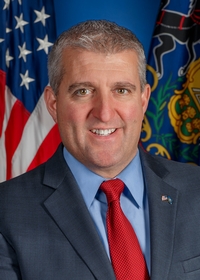
Frank Farry
Frank Farry Senate · District 6
R
Strong +
93% 45
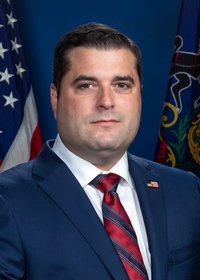
Devlin Robinson
Devlin Robinson Senate · District 37
R
Strong +
90% 52
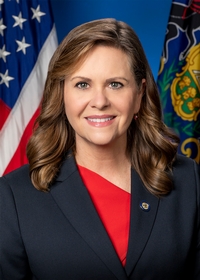
Camera Bartolotta
Camera Bartolotta Senate · District 46
R
Strong +
89% 51
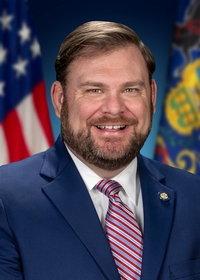
Joe Pittman
Joe Pittman Senate · District 41
R
Strong +
89% 55
Elder Vogel
Elder Vogel Senate · District 47
R
Strong +
88% 56
Dawn Keefer
Dawn Keefer Senate · District 31
R
Strong −
15% 46
Scott Hutchinson
Scott Hutchinson Senate · District 21
R
Oppose
29% 46
Charity Krupa
Charity Krupa House · District 51
R
Oppose
29% 256
Jarrett Coleman
Jarrett Coleman Senate · District 16
R
Oppose
29% 54
Stephanie Borowicz
Stephanie Borowicz House · District 76
R
Oppose
31% 214
Showing 121–130 of 325 bills

All labor & employment bills

in committee · Pennsylvania · House Feb 4, 2026

HB 603: An Act amending the act of December 12, 1986 (P.L.1559, No.169), known as the Whistleblower Law, further providing for remedies and for enforcement.

HB 603 extends the time employees have to file a lawsuit after retaliation under Pennsylvania's Whistleblower Law, changing the deadline from 180 days to two years. It clarifies that successful whistleblowers can recover back pay, reinstatement of benefits and seniority, and full legal costs including attorney fees. The bill also specifies that punitive damages may be awarded only if retaliation was intentional or showed reckless disregard for employee rights. These changes directly affect Pennsylvania employees who report violations of state, local, or federal law and face retaliation. The bill does not create new protections but strengthens enforcement mechanisms for existing whistleblower safeguards.
in committee · Pennsylvania · Senate Jun 18, 2025

SB 855: An Act amending the act of August 15, 1961 (P.L.987, No.442), known as the Pennsylvania Prevailing Wage Act, further providing for duty of contractor; providing for registration of contractors and subcontractors, for registration fees, for proof of registration and for duties of contractors, subcontractors and the department; and further providing for remedies and penalties.

SB 855 requires contractors and subcontractors bidding on or performing public works projects in Pennsylvania to register with the state department. Registrants must submit detailed personal and business information (including names, addresses, Social Security numbers, business history, and criminal/financial disclosures), proof of $50,000 liability insurance, and worker's compensation coverage. The bill prohibits unregistered entities from participating in public work contracts, adding a new registration requirement to the existing prevailing wage law. This primarily affects construction contractors and subcontractors seeking public projects, imposing administrative and disclosure obligations before they can bid.
in committee · Pennsylvania · House May 14, 2025

HB 526: An Act amending Title 35 (Health and Safety) of the Pennsylvania Consolidated Statutes, permitting a mother the freedom to nurse her child in public; and providing that breastfeeding may not be considered a nuisance, indecent exposure, sexual conduct or obscenity.

HB 526 protects mothers' right to breastfeed their children in any public or private location where they are otherwise permitted to be, without being considered indecent exposure, a nuisance, or obscenity. It defines "breastfeeding" to include both direct feeding and expressing milk for bottle-feeding, and creates a private right to sue for violations, allowing recovery of $1,000 per incident plus attorney fees. The law applies broadly across Pennsylvania, ensuring mothers can feed their children without legal interference while maintaining existing protections from the repealed 2007 Freedom to Breastfeed Act.
passed · Pennsylvania · House Oct 29, 2025

HB 157: An Act providing for grant awards to entities in rural counties and designated medically underserved areas to pay for the education debt of practitioners employed at the entity.

HB 157 creates state grants to help healthcare entities in rural counties or designated medically underserved areas cover the student loan debt of their employed healthcare practitioners. The grants would be paid directly to the healthcare facilities (like clinics or hospitals), not to individual providers, to offset the cost of practitioners' education debt. This aims to support recruitment and retention of healthcare workers in areas with limited access to medical services. The program would be funded through state appropriations, targeting facilities serving communities with significant healthcare access challenges.
in committee · Pennsylvania · House Jul 23, 2025

HB 1757: An Act amending Title 35 (Health and Safety) of the Pennsylvania Consolidated Statutes, in miscellaneous provisions relating to emergency management services, providing for firefighter cancer registry.

HB 1757 creates a voluntary Pennsylvania firefighter cancer registry managed by the Department of Health. It requires collecting anonymized data from firefighters, including fire incident types, work history, health information, and demographics, to link with existing cancer registry data. The registry aims to identify cancer trends and regional disparities among firefighters, with annual reports to the Governor and legislature containing findings and recommendations. All data remains confidential and cannot be used in court or for disciplinary actions. The registry will also make de-identified data available for public research without fees.
in committee · Pennsylvania · House Mar 3, 2025

HB 791: An Act amending Title 35 (Health and Safety) of the Pennsylvania Consolidated Statutes, in Commonwealth services, further providing for Pennsylvania State Fire Academy.

HB 791 adds a religious exemption to Pennsylvania's firefighter certification requirements. It allows individuals whose religion prohibits shaving or trimming beards to receive an exemption from beard-related training standards, provided they pass a fit test for self-contained breathing apparatus masks. The exemption applies only to certification standards under existing rules and requires meeting the State Fire Commissioner's mask seal standards. This directly affects individuals seeking firefighter certification who have religious objections to beard removal. The bill takes effect 60 days after enactment.
in committee · Pennsylvania · House Jun 30, 2025

HB 1674: An Act amending Title 38 (Holidays and Observances) of the Pennsylvania Consolidated Statutes, providing for Election Day and for observance of Election Day as a legal holiday; and imposing a penalty.

HB 1674 would add Election Day to Pennsylvania's list of legal holidays under Title 38, requiring state offices to close and state employees to have the day off. The bill includes a penalty for failure to observe the holiday as mandated, likely applying to state agencies or entities required to comply. This change would directly impact state government operations and employee schedules on Election Day. The bill is currently pending in the Pennsylvania House of Representatives after being referred to the State Government committee.
in committee · Pennsylvania · House Mar 17, 2025

HB 939: An Act amending the the act of October 24, 2012 (P.L.1209, No.151), known as the Child Labor Act, further providing for definitions and for employment of minors in a performance; and providing for employment of minors as content creators.

HB 939 amends Pennsylvania's Child Labor Act to include minors working as content creators (such as social media influencers, vloggers, and streamers) under the same protections as those in performing arts. The bill requires employers to establish a trust account holding at least 15% of a minor's earnings (above $2,500) for their benefit, managed by a fiduciary, with the parent or guardian setting up the account before employment. This applies when a minor's content creation is "substantial," defined as being the principal subject of the content or creating content for 10+ days in a 30-day period. The law directly affects minors in digital content creation and their employers, ensuring earnings are partially safeguarded for their future.
Sub-Topics Child Labor
in committee · Pennsylvania · House Jan 14, 2025

HB 85: An Act amending the act of October 27, 1955 (P.L.744, No.222), known as the Pennsylvania Human Relations Act, further providing for unlawful discriminatory practices; and providing for unlawful discriminatory practices against certain religions.

HB 85 amends Pennsylvania's Human Relations Act to clarify that discrimination against Jewish people based on religious creed includes actions defined as antisemitism by the International Holocaust Remembrance Alliance (IHRA) and its contemporary examples. The bill explicitly states that criticism of Israel, when similar to criticism of any other country, does not count as unlawful discrimination. This change directly affects employers, labor organizations, and others covered by the Human Relations Act, providing a clear standard for prohibited religious discrimination. The law takes effect 60 days after enactment.
in committee · Pennsylvania · House Jan 28, 2025

HB 382: An Act amending the act of March 4, 1971 (P.L.6, No.2), known as the Tax Reform Code of 1971, in tax credit and tax benefit administration, further providing for definitions and for application and administration.

HB 382 amends Pennsylvania's tax code to create new requirements for employers seeking tax credits related to hiring disabled individuals. It defines a "hiring program for disabled individuals" as a program requiring employers to set a minimum 5% hiring goal for people with disabilities, invite employee self-identification with disabilities, reference an employment framework, and conduct annual progress reviews. Employers must implement this program to qualify for tax credits under the existing tax code, with the Department of Revenue consulting vocational rehabilitation and human services agencies to assess compliance. The bill excludes educational tax credits under the Public School Code from these requirements and would take effect 60 days after passage.
Tags People with Disabilities
Showing 121 to 130 of 325 bills
Previous 1 12 13 14 33 Next