Issue · Healthcare

Healthcare (Public Health)

Every healthcare bill, vote, and legislator stance in Pennsylvania, automatically classified by Maddy, our AI policy reader.

Total bills
32
2025-2026 Regular Session
Top supporter
Eric Nelson
100% support rate
Top opponent
Josh Kail
33% support rate
Ranked legislators
10
5 support · 5 oppose
Key legislators

Who's moving public health in Pennsylvania

Legislators moving public health in Pennsylvania
Legislator Party Stance Support rate Decisive votes
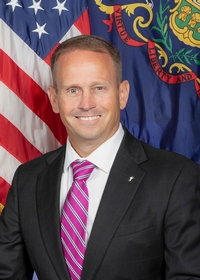
Eric Nelson
Eric Nelson House · District 57
R
Strong +
100% 5
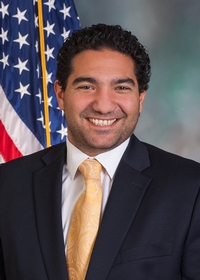
Alec Ryncavage
Alec Ryncavage House · District 119
R
Strong +
100% 4
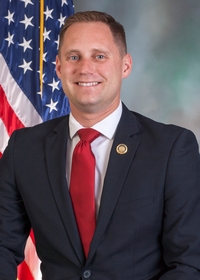
Craig Williams
Craig Williams House · District 160
R
Strong +
100% 4
Mark Gillen
Mark Gillen House · District 128
R
Strong +
100% 4
Natalie Mihalek
Natalie Mihalek House · District 40
R
Strong +
100% 4
Josh Kail
Josh Kail House · District 15
R
Oppose
33% 6
Zach Mako
Zach Mako House · District 183
R
Oppose
33% 6
AT
Ana Tiburcio House · District 22
D
Oppose
33% 3
JM
Jen Mazzocco House · District 42
D
Oppose
33% 3
Ann Flood
Ann Flood House · District 138
R
Oppose
40% 5
Showing 21–30 of 32 bills

All healthcare bills

in committee · Pennsylvania · Senate Jul 23, 2025

SB 959: An Act amending the act of May 17, 1921 (P.L.682, No.284), known as The Insurance Company Law of 1921, in uniform health insurance claim form, further providing for forms for health insurance claims.

SB 959 requires Pennsylvania insurance companies to use a standardized health insurance claim form developed by the Department of Insurance within 180 days. This uniform form must be used by all insurers, the state's public health programs, and healthcare providers within 120 days of its creation, though dental and vision claims may use the form at the insurer's discretion. The bill also mandates that insurers allow direct payment to dental providers when a patient authorizes it (a provision set to expire after 10 years) and requires a study on the impact of this payment rule. The Legislative Budget Committee must report on network participation changes within 36 months of the bill's effective date.
in committee · Pennsylvania · House Jan 8, 2025

HB 26: An Act amending Titles 18 (Crimes and Offenses), 35 (Health and Safety) and 40 (Insurance) of the Pennsylvania Consolidated Statutes, in provisions relating to abortion, repealing provisions relating to short title of chapter and to legislative intent, further providing for definitions, repealing provisions relating to medical consultation and judgment, to informed consent, to parental consent, to abortion facilities, to printed information, to Commonwealth interference prohibited, to spousal notice, to determination of gestational age, to abortion on unborn child of 24 or more weeks gestational age, to infanticide, to prohibited acts and to reporting, further providing for publicly owned facilities, public officials and public funds and for fetal experimentation and repealing provisions relating to civil penalties, to criminal penalties, to State Board of Medicine and State Board of Osteopathic Medicine and to construction; providing for reproductive rights; repealing provisions relating to compliance with Federal health care legislation as to regulation of insurers and related persons generally; and imposing penalties.

HB 26 removes Pennsylvania’s existing abortion statutes (including the "Abortion Control Act" and its restrictions like parental consent, spousal notice, and gestational limits) and replaces them with a new framework focused on "reproductive rights." It repeals specific provisions related to medical consultation, informed consent, facility requirements, and reporting, while adding language affirming reproductive rights for patients and providers. The bill also eliminates references to federal healthcare compliance for insurers and updates terminology, changing the chapter heading from "Abortion" to "Reproductive Offenses." This bill directly affects all abortion providers, patients, and public health systems in Pennsylvania by fundamentally restructuring the legal landscape governing abortion access.
in committee · Pennsylvania · House Sep 30, 2025

HB 1901: An Act providing for the Office of Health Equity; establishing the Health Equity Advisory Committee; and imposing duties on the Department of Health.

HB 1901 creates a new Office of Health Equity within the state Department of Health and establishes a Health Equity Advisory Committee. The bill requires the Department of Health to implement specific health equity initiatives and report on progress to the legislature. It directly affects the Department of Health, its staff, and public health programs by mandating new duties focused on reducing health disparities. The legislation aims to structure state efforts to address inequities in healthcare access and outcomes across the population.
Sub-Topics Public Health
in committee · Pennsylvania · House Apr 7, 2025

HB 1163: An Act amending Title 35 (Health and Safety) of the Pennsylvania Consolidated Statutes, in Commonwealth services, providing for work-related hazardous duty.

HB 1163 creates a legal presumption that certain frontline workers contracted infectious diseases (like COVID-19) on the job during a declared public health emergency. It directly affects employees in life-sustaining roles - such as healthcare workers, first responders, grocery staff, food service workers, and public utility employees - who are required to work during emergencies. The bill ensures these workers cannot be forced to use paid leave for illness, automatically qualifies them for unemployment compensation, and makes them eligible for workers' compensation covering all related medical costs. This applies during any Governor-declared emergency for infectious diseases posing significant public health risks.
in committee · Pennsylvania · House Apr 17, 2025

HB 1249: An Act amending Title 35 (Health and Safety) of the Pennsylvania Consolidated Statutes, establishing the Pennsylvania Drug Shortage Reporting System; and imposing duties on the Department of Health.

HB 1249 establishes Pennsylvania's mandatory Drug Shortage Reporting System under the Department of Health. It requires health care facilities (like hospitals, nursing homes, and cancer centers) and drug manufacturers to report shortages or production disruptions of "lifesaving drugs" - defined as critical for emergencies, surgery, or public health crises. The law mandates timely reporting of shortages where demand exceeds supply, and disruptions likely to reduce supply for over 90 days. This system aims to help the state track and respond to drug shortages affecting patient care.
Sub-Topics Public Health
in committee · Pennsylvania · House Mar 5, 2025

HB 809: An Act amending the act of April 14, 1972 (P.L.233, No.64), known as The Controlled Substance, Drug, Device and Cosmetic Act, further providing for definitions and for prohibited acts and penalties; and providing for syringe service programs authorized.

HB 809 amends Pennsylvania's Controlled Substance Act to clarify that syringes, needles, and related harm reduction supplies used in authorized syringe service programs or provided by pharmacies/healthcare providers are **not** considered "drug paraphernalia." This change directly affects syringe service programs, pharmacies, and healthcare providers operating under state regulations. The key provision (Section 2(b)(11)) explicitly exempts these items when used to prevent disease transmission and reduce harm among people who use drugs. The bill makes no changes to penalties or drug schedules - only updating definitions to protect public health initiatives.
in committee · Pennsylvania · Senate May 28, 2025

SB 13: An Act providing for mandatory Statewide employer-paid sick leave for employees and for civil penalties and remedies.

This bill requires most Pennsylvania employers to provide paid sick leave to employees, directly affecting workers and their families who need time for medical care, family health needs, or public health emergencies. Employees earn one hour of paid sick leave for every 30 hours worked (max 56 hours/year), with rules on accrual, carryover, and usage. Employers with existing equivalent paid leave policies (covering the same purposes and conditions) are exempt. The bill mandates employers to provide written notice of leave policies and prohibits retaliation against employees using sick leave, with pay calculated at the employee's regular rate or minimum wage.
in committee · Pennsylvania · Senate Jun 18, 2025

SB 865: An Act amending Title 35 (Health and Safety) of the Pennsylvania Consolidated Statutes, in miscellaneous provisions, further providing for urine drug screening requirement and providing for medetomidine awareness education.

SB 865 requires emergency departments in Pennsylvania hospitals to test patient urine samples for fentanyl, medetomidine, and xylazine when conducting drug screenings for diagnosis, provided such testing is available. It mandates reporting positive results (meeting department-set thresholds) to the Department of Health, with deidentified data used for awareness efforts. The bill also creates a new requirement for the Department of Drug and Alcohol Programs to develop educational materials about the dangers of human medetomidine use - highlighting its veterinary origins, health effects, and how to discuss risks with others. These provisions directly affect emergency departments, patients receiving screenings, and residents through public health education. The law takes effect 60 days after enactment.
in committee · Pennsylvania · House Mar 10, 2025

HB 840: An Act amending the act of March 10, 1949 (P.L.30, No.14), known as the Public School Code of 1949, in reimbursements by Commonwealth and between school districts, further providing for Targeted Industry Cluster Certificate Scholarship Program.

HB 840 establishes the Targeted Industry Cluster Certificate Scholarship Program to provide financial assistance for Pennsylvania residents pursuing specific short-term education programs. The program, administered by the Pennsylvania Higher Education Assistance Agency, offers grants for eligible students enrolled in approved courses that take two to four years to complete, including nursing, public health, and community health bachelor's degrees. The Department of Education and Department of Labor and Industry will collaborate to identify workforce-focused programs and approve eligible educational providers. This bill directly affects students seeking credentials in high-demand fields and requires the agency to set grant awards based on available funding.
in committee · Pennsylvania · House Nov 18, 2025

HB 1715: An Act amending the act of September 9, 1965 (P.L.497, No.251), known as the Newborn Child Testing Act, further providing for Newborn Child Screening and Follow-up Program.

The bill (HB 1715) amends Pennsylvania's Newborn Child Testing Act to enhance newborn screening and follow-up programs. It directly affects newborns, parents, and healthcare providers by updating requirements for screening tests and ensuring timely medical follow-up for infants with positive results. The bill's key provisions focus on improving the accuracy and efficiency of the screening process and strengthening coordination between healthcare facilities and public health agencies. As currently described in the provided context, the bill's specific policy changes beyond the title are not detailed. It is pending in the Health committee after being laid on the table.
Sub-Topics Public Health
Showing 21 to 30 of 32 bills
Previous 1 … 2 3 4 Next