
Issue · Healthcare

Healthcare

Every healthcare bill, vote, and legislator stance in Pennsylvania, automatically classified by Maddy, our AI policy reader.

Total bills
8
2025-2026 Regular Session
Top supporter
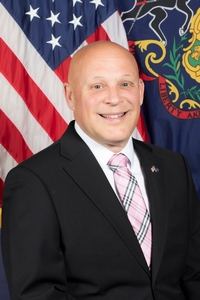
Joe Pittman
96% support rate
Top opponent
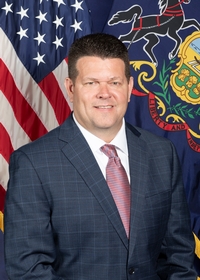
Eric Weaknecht
14% support rate
Ranked legislators
10
5 support · 5 oppose
Key legislators

Who's moving healthcare in Pennsylvania

Legislators moving healthcare in Pennsylvania
Legislator Party Stance Support rate Decisive votes
Joe Pittman
Joe Pittman Senate · District 41
R
Strong +
96% 24
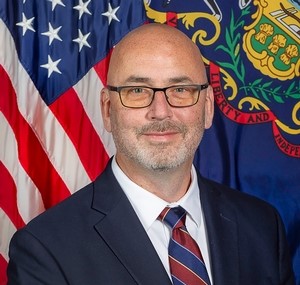
Bridget Malloy Kosierowski
Bridget Malloy Kosierowski House · District 114
D
Strong +
94% 113
Devlin Robinson
Devlin Robinson Senate · District 37
R
Strong +
93% 29
Steve Malagari
Steve Malagari House · District 53
D
Strong +
93% 95
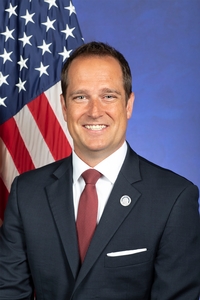
Kyle Mullins
Kyle Mullins House · District 112
D
Strong +
92% 91
Eric Weaknecht
Eric Weaknecht House · District 5
R
Strong −
14% 66
Jamie Walsh
Jamie Walsh House · District 117
R
Strong −
14% 80
Scott Barger
Scott Barger House · District 80
R
Strong −
14% 72
Ryan Warner
Ryan Warner House · District 52
R
Strong −
14% 77
Joe Hamm
Joe Hamm House · District 84
R
Strong −
14% 76
Showing 8 of 8 bills

All healthcare bills

signed · Pennsylvania · Senate Jul 12, 2026

SB 146: An Act amending the act of April 9, 1929 (P.L.343, No.176), known as The Fiscal Code, in emergency COVID-19 response, providing for extension of use of certain funds; in Child Care Staff Recruitment and Retention Program, further providing for Child Care Staff Recruitment and Retention Program; in cigarette sales and licensing, further providing for definitions and providing for allowable mode of operations for licensed cigarette stamping agents; in joint underwriting association, further providing for fund transfers; providing for food processing residuals; in financially distressed municipalities, further providing for financial recovery; in oil and gas wells, further providing for Oil and Gas Lease Fund and providing for deep wells and Utica Shale permits and for well plugging; providing for manufacturing and investment tax credit, for Innovate in PA 2.0 Tax Credit and for design build best value; in human services, further providing for medical assistance payments for institutional care, for resident care and related costs and for LIFE Program and providing for transition to chip-enabled access cards, for Medical Assistance Reentry Program, for Children's Trust Fund and for medical assistance pharmacy services; in additional keystone opportunity expansion zones, providing for additional zone for shipbuilding and for additional zones; providing for residential revitalization keystone opportunity zones and for violent incident clearance and technological investigative methods; in special funds, further providing for funding and for Pennsylvania Convention Center; in additional special funds and restricted accounts, providing for Veterans' Trust Fund Board and further providing for establishment of special fund and account, for use of fund and for distributions from Pennsylvania Race Horse Development Fund; in additional special funds and restricted accounts, further providing for deposits and providing for Professional Licensure Augmentation Account; in general budget implementation, further providing for Executive Offices, for Department of Agriculture, for Department of Corrections, for Department of Labor and Industry and for Department of Transportation, providing for Pennsylvania Emergency Management Agency and further providing for Commonwealth Financing Authority, for Federal and Commonwealth use of forest land, for Multimodal Transportation Fund, for School Safety and Security Fund, for State Gaming Fund, for State Employees' Retirement System Restricted Account and for Public School Employees' Retirement System Restricted Account; in retirement, providing for 2026 special ad hoc municipal police and firefighter postretirement adjustment, for supplemental annuities for public school employees commencing 2026, for supplemental annuities for State employees commencing 2026 and for payment of supplemental annuity and special ad hoc postretirement adjustment; in electricity load forecast accountability, providing for energy and water reporting and for advanced transmission technologies; in 2025-2026 budget implementation, further providing for Department of Agriculture, for Department of Human Services and for Pennsylvania Higher Education Assistance Agency; providing for 2026-2027 budget implementation and for 2026-2027 restrictions on appropriations for funds and accounts; in fiscal supplements to statutory programs, providing for amusement tax clarification, for situs for local sales tax for cities of the first class, for situs for local sales tax for counties of the second class, for net income and for housing; abrogating a regulation; making repeals; providing for suspension of pension actuarial notes; and making editorial changes.

SB 146 establishes a Veterans' Trust Fund Board to manage and oversee the State Veterans' Trust Fund under Pennsylvania law. The bill directly affects veterans' programs by creating a dedicated board to administer funds supporting veteran services, such as housing, healthcare, and employment initiatives. Key provisions include defining the board's structure, responsibilities, and governance for the Trust Fund, updating existing statutes to reflect these changes. The bill does not create new benefits but organizes the management of existing funding streams for veterans' support. (Note: As of the latest action, the bill was "Reported as amended" in committee and has not yet become law.)
signed · Pennsylvania · Senate Jul 12, 2026

SB 604: An Act authorizing the Commonwealth of Pennsylvania to join the Counseling Compact; and providing for the form of the compact.

SB 604 authorizes Pennsylvania to join the Counseling Compact, a multi-state agreement allowing licensed professional counselors to practice across participating states without obtaining separate licenses. This directly affects licensed counselors - especially those serving military families who relocate frequently - and their clients in member states. Key provisions include mutual recognition of licenses, standardized disciplinary processes, and support for telehealth services to improve access to counseling. The compact eliminates the need for counselors to hold multiple state licenses while ensuring accountability under each state’s practice laws where the client is located.
passed · Pennsylvania · Senate Apr 21, 2026

SB 998: An Act providing for the Nurse Education Capacity Expansion Grant Program; and imposing duties on the Department of Community and Economic Development.

SB 998 would create a grant program to fund expansions of nursing education programs at colleges and universities. It requires the Department of Community and Economic Development to administer grants for institutions aiming to increase nursing program capacity, directly affecting nursing schools and future nursing students. Key provisions include establishing grant criteria, application processes, and reporting requirements for funded programs. The bill is currently pending in the Appropriations committee after committee review.
signed · Pennsylvania · House Nov 12, 2025

HB 416: An Act amending the act of April 9, 1929 (P.L.343, No.176), known as The Fiscal Code, providing for Child Care Staff Recruitment and Retention Program; in 911 Emergency Communication Services, further providing for surcharge; in Department of Revenue, further providing for exclusion from classes of income and providing for research and experimental expenditures and qualified production property, for report to General Assembly and for interest expense; in joint underwriting association, further providing for findings and for definitions, repealing provisions relating to sunset and providing for risk-based capital certification, for fund transfers, for association oversight and additional duties, for Joint Underwriting Association Board, for board meetings, for construction, for dissolution, for appropriations and for reports and hearings; in State Health Insurance Exchange Affordability Program, further providing for Exchange Affordability Assistance Account; providing for Rural Health Transformation Program; in Treasury Department, providing for waiver of interest, costs and fees; in procedure for disbursement of money from the State Treasury, further providing for use and appropriation of unused Commonwealth funds; in oil and gas wells, further providing for Oil and Gas Lease Fund; providing for advanced air mobility sites and for public transportation vehicles; in human services, further providing for resident care and related costs; in Attorney General, providing for home improvement contractor registration fee; providing for Rare Disease Advisory Council, for affordable housing tax credit and for working Pennsylvanians tax credit; in additional keystone opportunity expansion zones, providing for additional keystone opportunity expansion zones for certain counties of the fourth class; providing for additional extensions of keystone opportunity zones; in special funds, further providing for funding, for expiration and for other grants; in additional special funds and restricted accounts, further providing for establishment of special fund and account, for use of fund and for distributions from Pennsylvania Race Horse Development Fund and providing for refund of 2003 assessment by Insurance Department; in additional special funds and restricted accounts relating to Service and Infrastructure Improvement Fund, further providing for deposits and providing for Property Tax Relief Fund; in general budget implementation, further providing Executive Offices, for Department of Community and Economic Development, for Department of Environmental Protection, for Pennsylvania Fish and Boat Commission, for Pennsylvania Higher Education Assistance Agency and for Commonwealth Financing Authority, providing for stenography services, further providing for surcharges, for Federal and Commonwealth use of forest land and for Multimodal Transportation Fund and providing for State Sexual Offenders Assessment Board, for interest transfers, for fund transfers and for miscellaneous provisions; in 2024-2025 budget implementation, further providing for Department of Education, for Department of Environmental Protection and for Department of Human Services; in Streamlining Permits for Economic Expansion and Development Program, further providing for scope of article, for definitions and for the Streamlining Permits for Economic Expansion and Development Program, providing for review and determination of specific permits and for State agency permits and further providing for construction; providing for electricity load forecast accountability, for 2025-2026 budget implementation and for 2025-2026 restrictions on appropriations for funds and accounts; making repeals; and making editorial changes.

HB 416 establishes a new Child Care Staff Recruitment and Retention Program to support early childhood educators and creates a Rural Health Transformation Program to improve healthcare access in underserved areas. It also streamlines permit processes for economic development projects through the Streamlining Permits for Economic Expansion and Development Program. These provisions are integrated into the 2025 state budget implementation, alongside administrative updates to tax collection procedures, state fund management, and reporting requirements for agencies like the Department of Revenue and Treasury. The bill does not alter existing tax rates or create new funding streams but modifies how current state financial systems operate.
signed · Pennsylvania · House Nov 12, 2025

HB 749: An Act amending the act of June 13, 1967 (P.L.31, No.21), entitled "An act to consolidate, editorially revise, and codify the public welfare laws of the Commonwealth," in public assistance, further providing for uniformity in administration of assistance and regulations as to assistance and for copayments for subsidized child care, providing for report on transition to chip-enabled access cards, further providing for reports to General Assembly, for persons eligible for medical assistance and for nonemergency medical transportation services and providing for abrogation of regulatory requirements for payment for outpatient behavioral health services within physical confines of behavioral health clinic facilities and for SNAP benefit reporting; and making a repeal.

HB 749 updates Pennsylvania's public welfare laws to streamline assistance programs and improve service access. It requires copayments for subsidized child care, changes reporting for SNAP benefits, and mandates reports on transitioning to chip-enabled access cards for benefits. The bill removes regulatory barriers for outpatient behavioral health services provided within clinic facilities, allowing services to be billed as part of the clinic visit. It also requires additional reports to the General Assembly regarding medical assistance eligibility and nonemergency medical transportation services.
signed · Pennsylvania · Senate Jul 7, 2025

SB 95: An Act amending the act of September 27, 1961 (P.L.1700, No.699), known as the Pharmacy Act, further providing for definitions, for licensing of pharmacists and for unlawful acts; and providing for price disclosure.

SB 95 amends Pennsylvania's Pharmacy Act to create a 180-day provisional license for pharmacists moving from other states, allowing them to practice without demonstrating competency under Pennsylvania's requirements. It also permits emergency medical services providers to distribute naloxone dose packages for opioid overdose reversal under specific conditions, including a Department of Health standing order and voluntary distribution without liability. Additionally, the bill requires pharmacies to disclose prescription drug prices (brand vs. generic), cost-sharing amounts, and health insurance options upon customer request. These changes aim to improve pharmacist mobility, expand naloxone access, and increase price transparency for consumers.
signed · Pennsylvania · House Jun 30, 2025

HB 640: An Act amending the act of April 9, 1929 (P.L.177, No.175), known as The Administrative Code of 1929, in powers and duties of the Department of Public Welfare and its departmental administrative and advisory boards and commissions, providing for managed care organization assessment, for intermediate care facilities for persons with an intellectual disability assessments, for hospital assessments, for Statewide quality care assessments and for nursing facility assessment; in powers and duties of the Department of Drug and Alcohol Programs, further providing for powers and duties; in judicial administration, further providing for surcharge and fee; and making repeals .

HB 640 creates new assessment fees for specific healthcare providers, including managed care organizations, intermediate care facilities for people with intellectual disabilities, hospitals, and nursing facilities. These fees fund state oversight programs under the Department of Public Welfare and the Department of Drug and Alcohol Programs. The law amends the 1929 Administrative Code to establish these funding mechanisms and adjust related administrative duties. It directly affects healthcare providers that must pay these assessments and state agencies managing the funds. The bill became law on June 30, 2025.
passed · Pennsylvania · Senate Jun 17, 2025

SB 115: An Act amending the act of June 13, 1967 (P.L.31, No.21), known as the Human Services Code, in general powers and duties of the Department of Public Welfare, further providing for personal care home and assisted living residence administrators; and abrogating regulations.

SB 115 amends Pennsylvania's Human Services Code to replace the high school diploma or GED requirement for direct care staff in personal care homes and assisted living residences with a skills competency exam. The exam assesses communication skills, basic literacy, cultural awareness, and knowledge of mental health needs specific to these settings, without permitting medication administration. This change specifically applies to individuals who are citizens of or educated in another country, lawfully reside in the U.S., and meet other qualifications, eliminating the need for facilities to seek certain waivers. The bill directs the Department of Human Services to create temporary implementing regulations within two years and repeals conflicting existing regulations.