Issue · Education

Education

Every education bill, vote, and legislator stance in Pennsylvania, automatically classified by Maddy, our AI policy reader.

Total bills
417
2025-2026 Regular Session
Top supporter
Lynda Culver
89% support rate
Top opponent
Barb Gleim
23% support rate
Ranked legislators
10
5 support · 5 oppose
Key legislators

Who's moving education in Pennsylvania

Legislators moving education in Pennsylvania
Legislator Party Stance Support rate Votes
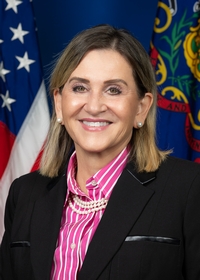
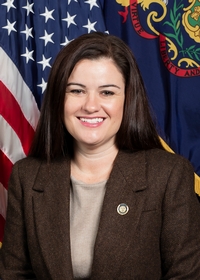
Lynda Culver
Lynda Culver Senate · District 27
R
Strong +
89% 64
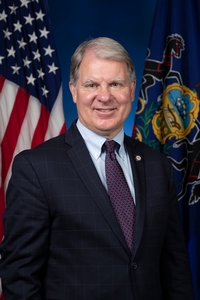
Greg Rothman
Greg Rothman Senate · District 34
R
Strong +
89% 58
Dave Argall
Dave Argall Senate · District 29
R
Strong +
89% 59
Kim Ward
Kim Ward Senate · District 39
R
Strong +
88% 78
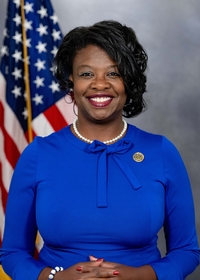
Regina Young
Regina Young House · District 185
D
Strong +
80% 195
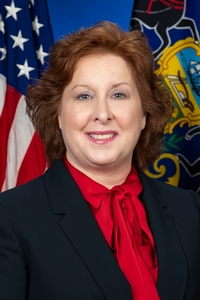
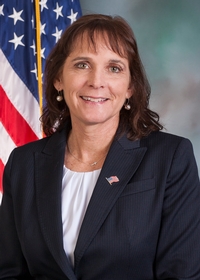
Barb Gleim
Barb Gleim House · District 199
R
Oppose
23% 155
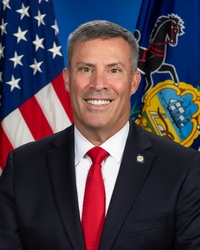
Marc Anderson
Marc Anderson House · District 92
R
Oppose
25% 157
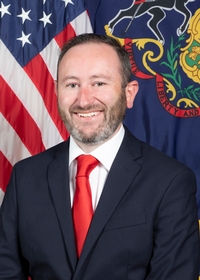
Joe D'Orsie
Joe D'Orsie House · District 47
R
Oppose
26% 159
Charity Krupa
Charity Krupa House · District 51
R
Oppose
32% 166
Brian Rasel
Brian Rasel House · District 56
R
Oppose
33% 157
Showing 161–170 of 417 bills

All education bills

in committee · Pennsylvania · House Jun 24, 2025

HB 1539: An Act establishing the Electric School Bus Grant Program and the Electric School Bus Grant Program Fund; and imposing duties on the Department of Education.

HB 1539 creates a new grant program to help school districts purchase electric school buses, funded through a dedicated "Electric School Bus Grant Program Fund." It directly affects public school districts seeking to replace diesel buses with electric models by providing financial assistance for vehicle purchases and related infrastructure. The bill requires the Department of Education to administer the program, including setting eligibility rules and distributing funds. The bill is currently pending in the Energy committee after being re-referred there from Education.
in committee · Pennsylvania · House Oct 29, 2025

HB 2002: An Act authorizing the Commonwealth of Pennsylvania to join the Interstate Compact for School Psychologists; providing for form of compact; and imposing additional powers and duties on the Governor, the Secretary of the Commonwealth and the Compact.

HB 2002 would allow Pennsylvania to join the Interstate Compact for School Psychologists, a multi-state agreement designed to simplify licensing for school psychologists working across state lines. The bill directly affects school psychologists seeking employment in multiple states and requires Pennsylvania’s Governor and Secretary of the Commonwealth to adopt the compact’s terms and implement its provisions. Key mechanisms include standardizing licensing requirements so that psychologists licensed in one compact state can practice in others without additional exams or paperwork. This would streamline mobility for professionals while maintaining consistent practice standards across participating states.
passed · Pennsylvania · Senate Oct 27, 2025

SB 65: An Act amending Title 75 (Vehicles) of the Pennsylvania Consolidated Statutes, in licensing of drivers, further providing for schedule of convictions and points; in rules of the road in general, further providing for meeting or overtaking school bus; and imposing penalties.

SB 65 amends Pennsylvania's vehicle code to strengthen school bus safety rules. It increases penalties for drivers who fail to stop for school buses with flashing red lights (5 points and a 60-day license suspension) and adds a $250-$500 fine with a $35 surcharge for violations. The bill requires the Department of Transportation to include school bus safety education in driver license renewal notices and share materials with school districts. All surcharges from violations fund the School Bus Safety Grant Program to improve school bus safety measures.
signed · Pennsylvania · Senate Nov 12, 2025

SB 315: An act amending the act of March 10, 1949 (P.L.30, No.14), entitled "An act relating to the public school system, including certain provisions applicable as well to private and parochial schools; amending, revising, consolidating and changing the laws relating thereto," in preliminary provisions, further providing for Special Education Funding Commission and for minimum number of days or hours; in duties and powers of boards of school directors, providing for admission fees for school-sponsored activities; in intermediate units, further providing for staff; in certification of teachers, further providing for certificates qualifying persons to teach and for instructional certificate grade spans and age levels and duties of department, providing for instructional certificate grade spans and age levels and for State certificate fee reduction, further providing for standard employment application, for career and technical instructional certificate, for program of continuing professional and paraprofessional education and for postbaccalaureate certification, providing for assessment of basic skills, further providing for professional educator discipline fee and providing for career and technical administrative director certification flexibility; in pupils and attendance, further providing for attendance policy at charter, regional charter and cyber charter schools, for procedure when child is truant, for procedure by school when child habitually truant, for procedure upon filing of citation, for penalties for violating compulsory school attendance requirements and for study of truancy procedure, providing for department supports to prevent truancy and further providing for reports to Superintendent of Public Instruction and for exceptional children and education and training; in student supports, further providing for definitions; in school safety and security, further providing for definitions, for School Safety and Security Committee, for school safety and security assessment providers, for School Safety and Security Grant Program, for school safety and security coordinator and for school safety and security training, providing for school safety and mental health grants for 2025-2026 school year and further providing for reporting and memorandum of understanding; in school security, further providing for training, for school resource officers, for school security guards and for duties of commission; in Safe2Say Program, further providing for intent, for definitions, for Safe2Say Program and for annual report; in threat assessment, further providing for definitions, for threat assessment teams and for threat assessment guidelines, training and information materials; in Drug and Alcohol Recovery High School Program, further providing for scope of program and selection of students and for enrollment of students; in evidence-based reading instruction, further providing for definitions and providing for school entity duties related to evidence-based reading instruction, for school entity duties related to reading screening, for reading deficiency identification and parental notification, for reading intervention plans, for grant program, for funding, for reporting, for accountability and for construction; in high schools, further providing for attendance in other districts and providing for Free Application for Federal Student Aid; in interscholastic athletics accountability, further providing for council recommendations and standards; in charter schools, further providing for funding for cyber charter schools, for enrollment and notification and for enrollee wellness checks; in career and technical education, further providing for capital reserve fund for approved purchases of equipment and facility maintenance, for career and technical education equipment grants, for Cosmetology Training through Career and Technical Center Pilot Program and for Barber Training through Career and Technical Center Pilot Program; providing for Nursing Shortage Assistance Program; in community colleges, further providing for financial program and reimbursement of payments; in the State System of Higher Education, further providing for definitions and for Grow Pennsylvania Merit Scholarship Program; in educational tax credits, further providing for limitations; in higher education accountability and transparency, further providing for exit counseling; in miscellaneous provisions relating to institutions of higher education, repealing provisions relating to State-related university performance-based funding model, further providing for prohibition on scholarship displacement at public institutions of higher education and providing for cooperation and for State scholarship renewals; in institutions of higher education, further providing for powers and duties of State Board of Higher Education, for definitions, for Performance-based Funding Council and for public institution of higher education reporting, providing for State-related University Performance Fund, for performance-based funding formula and for public accountability and further providing for agency duties, for grant priority and for report; in Ready-to-Succeed Scholarship, further providing for agency; in funding for public libraries, providing for State aid for fiscal year 2025-2026; in reimbursements by Commonwealth and between school districts, further providing for student-weighted basic education funding beginning with 2023-2024 school year, for extraordinary special education program expenses, for assistance to school districts declared to be in financial recovery status or identified for financial watch status and for Ready-to-Learn Block Grant; in construction and renovation of buildings by school entities, further providing for applicability; abrogating regulations; and making an editorial change.

SB 315 amends Pennsylvania's 1949 education code to update school funding, safety, and instructional requirements. It establishes new school safety grants, updates teacher certification standards, and strengthens truancy prevention measures for all public and charter schools. The bill adds funding for career and technical education equipment, expands mental health support through school safety programs, and modifies higher education scholarship rules. As Act No. 47 of 2025, it became law on November 12, 2025, affecting students, teachers, school districts, and higher education institutions statewide.
in committee · Pennsylvania · House Jan 16, 2025

HB 194: An Act amending the act of March 10, 1949 (P.L.30, No.14), known as the Public School Code of 1949, establishing the Mental Health Professional Student Loan Forgiveness Program; imposing powers and duties on the Pennsylvania Higher Education Assistance Agency; and making an appropriation.

HB 194 creates Pennsylvania's Mental Health Professional Student Loan Forgiveness Program, targeting mental health workers serving children and adolescents. It allows eligible residents who complete qualifying degrees (like social work, counseling, or psychology) and work in early childhood-to-adolescence mental health roles to receive up to $22,500 in loan forgiveness after signing a 7-year employment contract. The Pennsylvania Higher Education Assistance Agency (PHEAA) administers the program, requiring applicants to prove residency, partial degree completion, faculty recommendations, and secure employment in the specified field. Participants must maintain employment for seven years or repay the forgiven amount if they leave the field early, fail to comply, or provide false information. This directly affects mental health professionals in Pennsylvania seeking relief from student debt while addressing workforce needs in youth mental health.
in committee · Pennsylvania · House Sep 29, 2025

HB 1885: An Act amending the act of March 10, 1949 (P.L.30, No.14), known as the Public School Code of 1949, in terms and courses of study, providing for school swimming education program; in reimbursements by Commonwealth and between school districts, providing for payments on account of school swimming education program; and making an appropriation.

HB 1885 requires Pennsylvania public schools to include swimming education programs in their curriculum. It creates a reimbursement system where the state funds school districts for program costs, including payments between districts. The bill also allocates a specific state appropriation to cover these expenses. This directly affects all public school districts in Pennsylvania by adding a new mandatory program and providing dedicated funding.
Sub-Topics Curriculum
passed · Pennsylvania · House Dec 22, 2025

HB 1768: An Act establishing the Local Food Purchasing Incentive Grant Program, the Keystone Producer Grant Program, the Keystone Assistance Grant Program and the Keystone Fresh Farm to School Account; and imposing duties on the Department of Education and the Department of Agriculture.

HB 1768 establishes four new grant programs to support Pennsylvania's local food system. It provides incentives for schools and institutions to purchase local food (Local Food Purchasing Incentive Grant), offers financial assistance to farmers for production improvements (Keystone Producer Grant), supports food distribution networks (Keystone Assistance Grant), and funds school meal programs sourcing from local farms (Keystone Fresh Farm to School Account). The Department of Agriculture and Department of Education would administer these programs and manage the grant allocations. The bill directly affects Pennsylvania farmers, schools, food distributors, and local food businesses by creating new funding mechanisms to strengthen regional food systems.
Sub-Topics Procurement
in committee · Pennsylvania · House Mar 17, 2025

HB 915: An Act amending the act of March 10, 1949 (P.L.30, No.14), known as the Public School Code of 1949, providing for Child and Adult Care Food Program Supplement.

HB 915 creates a new supplemental funding program under Pennsylvania's Public School Code to support childcare facilities serving meals through the federal Child and Adult Care Food Program. The bill establishes a "Supplement" administered by the Department of Education, providing additional financial reimbursements to facilities that demonstrate they can serve more meals or improve care for enrolled children and adults. Facilities must meet specific criteria, such as expanding meal service or enhancing educational opportunities (with separate standards for nonprofits vs. for-profits), and must report annually to multiple legislative committees on participation, meals served, and funding needs. This bill directly affects licensed childcare centers, shelters, and similar facilities receiving federal meal reimbursements.
Sub-Topics Early Childhood
in committee · Pennsylvania · Senate May 22, 2025

SB 759: An Act amending the act of March 10, 1949 (P.L.30, No.14), known as the Public School Code of 1949, in grounds and buildings, providing for certified point-of-use filter required; establishing the Safe Schools Drinking Water Fund; and imposing duties on the Department of Environmental Protection.

SB 759 requires all Pennsylvania public school buildings to install certified point-of-use filters on drinking water outlets by January 1, 2027, replacing older fountains without lead-reducing filters at a rate of at least one per 100 students/staff. It creates the Safe Schools Drinking Water Fund, providing up to $10 million annually for three years to help schools cover installation and replacement costs, with priority for pre-2014 buildings and those serving prekindergarten students. Schools must maintain filter schedules, post lead-risk information online, and report progress to state agencies, while new outlets must meet strict lead-leaching standards. The bill directly affects all public K-12 school entities in Pennsylvania, aiming to reduce lead exposure in drinking water.
in committee · Pennsylvania · House Feb 20, 2025

HB 656: An Act amending the act of March 10, 1949 (P.L.30, No.14), known as the Public School Code of 1949, providing for administration of emergency anti-seizure medication.

HB 656 amends Pennsylvania's Public School Code to allow trained school staff to administer emergency anti-seizure medication during seizures when a nurse is unavailable. It directly affects students with epilepsy in public schools who have been prescribed such medication, requiring parental request and adherence to approved training guidelines. The bill establishes that non-nurse staff may provide emergency assistance only after completing designated training and following protocols approved by the Department of Education. It specifies that nasal spray or similar FDA-approved treatments may be used, while ensuring students' rights under disability laws like IDEA and the Rehabilitation Act are upheld. The policy change is voluntary for staff and requires schools to notify parents about potential accommodations under 504 plans or IEPs.
Showing 161 to 170 of 417 bills
Previous 1 16 17 18 42 Next