Issue · Criminal Justice

Criminal Justice

Every criminal justice bill, vote, and legislator stance in Pennsylvania, automatically classified by Maddy, our AI policy reader.

Total bills
412
2025-2026 Regular Session
Top supporter
Lindsey Williams
85% support rate
Top opponent
Dawn Keefer
14% support rate
Ranked legislators
10
5 support · 5 oppose
Key legislators

Who's moving criminal justice in Pennsylvania

Legislators moving criminal justice in Pennsylvania
Legislator Party Stance Support rate Votes
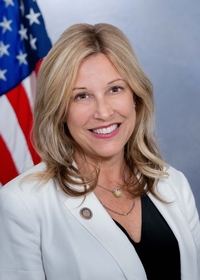
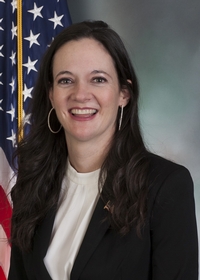
Lindsey Williams
Lindsey Williams Senate · District 38
D
Strong +
85% 36
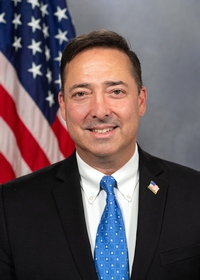
Chris Pielli
Chris Pielli House · District 156
D
Strong +
84% 203
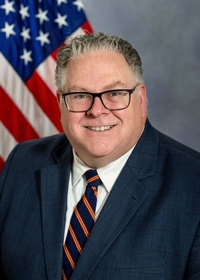
Tim Briggs
Tim Briggs House · District 149
D
Strong +
84% 199
Kyle Donahue
Kyle Donahue House · District 113
D
Strong +
84% 237
Melissa Shusterman
Melissa Shusterman House · District 157
D
Strong +
83% 220
Dawn Keefer
Dawn Keefer Senate · District 31
R
Strong −
14% 41
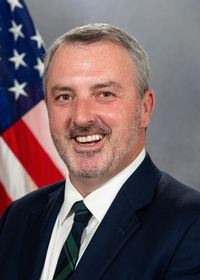
James Malone
James Malone Senate · District 36
D
Strong −
14% 23
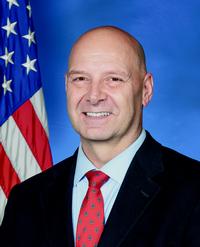
Doug Mastriano
Doug Mastriano Senate · District 33
R
Strong −
15% 53
Scott Hutchinson
Scott Hutchinson Senate · District 21
R
Strong −
17% 31
Stephanie Borowicz
Stephanie Borowicz House · District 76
R
Strong −
17% 204
Showing 321–330 of 412 bills

All criminal justice bills

in committee · Pennsylvania · House May 29, 2025

HB 1509: An Act amending the act of October 9, 2008 (P.L.1408, No.113), known as the Scrap Material Theft Prevention Act, further providing for penalties.

HB 1509 amends Pennsylvania's Scrap Material Theft Prevention Act to add a new penalty for intentionally possessing a detached catalytic converter without a commercial account and proper justification. It classifies this as a misdemeanor of the third degree, targeting individuals who remove catalytic converters from vehicles and keep them without being part of a registered scrap processor business or having a valid reason. The law directly affects people handling catalytic converters outside authorized commercial channels, such as thieves or those storing stolen parts. This change specifically addresses unauthorized possession of catalytic converters, which are frequently stolen for their valuable metals. The bill takes effect 60 days after enactment.
Sub-Topics Drug Policy
in committee · Pennsylvania · Senate Apr 11, 2025

SB 627: An Act amending Title 42 (Judiciary and Judicial Procedure) of the Pennsylvania Consolidated Statutes, in actions, proceedings and other matters generally, providing for reporting of deaths; and imposing penalties.

SB 627 requires law enforcement agencies, jails, and other entities responsible for individuals in custody to report deaths monthly to Pennsylvania's Commission on Crime and Delinquency. It also mandates that death certificates include a notation indicating if the death occurred in custody. Failure to report incurs a $1,000 daily penalty, and the Commission must submit annual compliance reports to the legislature. The bill establishes a Deaths in Custody Review Panel to analyze deaths and recommend prevention strategies.
Sub-Topics Juvenile Justice
in committee · Pennsylvania · Senate Jan 22, 2025

SB 46: An Act providing for adoption by the Attorney General of a Statewide model policy related to the prevention of excessive force by law enforcement officers and school security personnel.

SB 46 requires Pennsylvania's Attorney General to develop a statewide model policy within 120 days to prevent excessive force by law enforcement officers and school security personnel, after consulting with agencies, associations, and community groups. The policy must include specific standards for de-escalation tactics, reasonable alternatives to force, and prohibitions on chokeholds. All law enforcement agencies and school entities must adopt this model policy within 60 days or create a comparable policy meeting its minimum standards. Failure to comply risks loss of state funding, with annual training and biennial policy reviews mandated to ensure ongoing compliance.
in committee · Pennsylvania · Senate Mar 6, 2025

SB 387: An Act amending Titles 18 (Crimes and Offenses) and 61 (Prisons and Parole) of the Pennsylvania Consolidated Statutes, in authorized disposition of offenders, further providing for sentence for murder, murder of unborn child and murder of law enforcement officer and for sentence of persons under the age of 18 for murder, murder of an unborn child and murder of a law enforcement officer; and, in Pennsylvania Board of Probation and Parole, further providing for parole power.

SB 387 modifies Pennsylvania sentencing for murder offenses. It sets a minimum 25-year prison term for adults convicted of second-degree murder, murder of an unborn child, or murder of a law enforcement officer. For minors under 18 convicted of these crimes, it establishes minimum terms: 20 years for those aged 15+ at the time of offense, and 15 years for those under 15. The bill also restricts parole eligibility, requiring the Board of Probation and Parole to wait at least 20 years for offenders aged 15+ and 15 years for younger minors before considering parole, prioritizing public safety and victim safety.
in committee · Pennsylvania · Senate Jan 22, 2025

SB 37: An Act amending Title 18 (Crimes and Offenses) of the Pennsylvania Consolidated Statutes, in firearms and other dangerous articles, further providing for persons not to possess, use, manufacture, control, sell or transfer firearms.

This bill (SB 37) amends Pennsylvania law to prohibit individuals convicted of specific violent or dangerous crimes from possessing firearms. It directly affects people convicted of offenses like murder, aggravated assault, robbery, sexual assault, stalking, or certain types of kidnapping. The key mechanism adds over 50 existing criminal offenses - such as assault involving a firearm, robbery, or child sexual abuse - to a list where a conviction triggers an automatic firearm possession ban. The change clarifies that if someone is convicted of any of these listed crimes, they cannot legally own or carry a firearm.
in committee · Pennsylvania · House Jun 25, 2025

HB 1665: An Act amending Title 44 (Law and Justice) of the Pennsylvania Consolidated Statutes, in DNA data and testing, further providing for policy, for definitions, for State DNA Data Base, for State Police recommendation of additional offenses and annual report and for DNA sample required upon conviction, delinquency adjudication and certain ARD cases, providing for request for modified DNA search and further providing for DNA data base exchange, for expungement and for mandatory cost; and making an editorial change.

HB 1665 expands Pennsylvania's DNA collection requirements to include individuals convicted of specific misdemeanors (like simple assault, indecent exposure, or certain sex offense-related offenses) in addition to felony sex offenses and criminal homicide. It clarifies that DNA samples must be collected upon conviction, delinquency adjudication, or certain Accelerated Rehabilitative Disposition (ARD) cases for these offenses. The bill establishes a "modified DNA search" mechanism allowing law enforcement to use familial DNA matching (with scientific standards) to identify close relatives of individuals in the DNA database. It also requires the State Police to submit annual reports detailing demographics of collected DNA samples, fiscal impacts, testing timelines, and recommendations for expanding or removing offenses requiring DNA collection.
passed · Pennsylvania · Senate Jun 25, 2025

SB 635: An Act amending Title 42 (Judiciary and Judicial Procedure) of the Pennsylvania Consolidated Statutes, in sentencing, providing for sentencing for offenses committed near drug and alcohol recovery houses.

SB 635 amends Pennsylvania sentencing law to impose stricter penalties for certain drug-related offenses committed within 1,000 feet of a drug and alcohol recovery house. Specifically, it requires the Pennsylvania Commission on Sentencing to create enhanced penalties for offenses under the Controlled Substance Act (sections 13(a)(12), (14), or (30)) when committed near these facilities. The bill defines "drug and alcohol recovery house" using existing law (Section 2311-A of the Administrative Code). This policy change directly affects individuals convicted of targeted drug offenses near recovery centers, increasing potential sentencing severity. The bill passed final passage on June 25, 2025.
Sub-Topics Drug Policy Sentencing
passed both · Pennsylvania · House Jul 23, 2026

HB 1042: An Act amending Titles 18 (Crimes and Offenses), 42 (Judiciary and Judicial Procedure), 61 (Prisons and Parole) and 63 (Professions and Occupations (State Licensed)) of the Pennsylvania Consolidated Statutes, in crimes against unborn child, further providing for the offense of murder of unborn child; in arson, criminal mischief and other property destruction, further providing for the offense of arson and related offenses; in judicial boards and commissions, further providing for adoption of guidelines for sentencing; in posttrial matters, further providing for jurisdiction and proceedings; in sentencing, providing for sentence for general murder of the second degree, further providing for sentences for second and subsequent offenses and for life imprisonment for homicide, repealing provisions relating to transfer of inmates in need of medical treatment and providing for modification of an imposed term of imprisonment for reasons of illness; in general administration, providing for earned vocational training and education credit; in Pennsylvania Board of Probation and Parole, further providing for parole power, for short sentence parole, for parole procedure and for victim statements, testimony and participation in hearing; and, in powers and duties, further providing for consideration of criminal convictions.

House Bill 1042 creates a system in Pennsylvania allowing eligible incarcerated individuals to earn credits that reduce their minimum sentence. Inmates can receive sentence reductions for completing vocational training, educational programs like a GED or college degree, and other department-required programming. The bill sets specific credit amounts for different achievements, with a maximum limit of one-fourth of an inmate's minimum sentence. However, individuals convicted of certain serious offenses, such as murder or sexual assault, are excluded from earning these credits.
in committee · Pennsylvania · Senate Apr 9, 2025

SB 575: An Act amending Titles 18 (Crimes and Offenses) and 42 (Judiciary and Judicial Procedure) of the Pennsylvania Consolidated Statutes, in assault, further providing for the offense of ethnic intimidation; and making an editorial change.

SB 575 amends Pennsylvania law to expand the definition of hate-based intimidation under Title 18, specifically adding "ethnic" to the list of protected characteristics (alongside race, color, religion, national origin, and disability) for offenses involving assault or property damage. It creates a new civil remedy under Title 42, allowing victims injured by such acts to sue for damages, injunctions, or other relief in court. The bill directly affects individuals who experience hate-motivated crimes and the legal system handling these cases. The changes take effect 60 days after enactment.
in committee · Pennsylvania · House Sep 11, 2025

HR 99: A Concurrent Resolution directing the Joint State Government Commission to establish a bipartisan task force to study any consolidated or unconsolidated State statutes in the Pennsylvania Crimes Code, Judicial Code, Sentencing Code or elsewhere under which a term of imprisonment and other collateral consequences may be imposed in order to identify redundant, overlapping and inconsistent offenses, improper grading and gaps in criminal liability, out-of-date, antiquated, offensive or unenforceable language and to make recommendations to the General Assembly.

HR 99 directs Pennsylvania's Joint State Government Commission to create a bipartisan task force to study the state's criminal justice codes. The task force will examine the Crimes Code, Judicial Code, Sentencing Code, and related statutes to identify redundant offenses, inconsistent sentencing grades, outdated language, and gaps in criminal liability. It will focus on provisions that impose imprisonment or collateral consequences, aiming to recommend updates to modernize the codes. The task force must report findings and recommendations to the legislature within two years. This is a procedural resolution, not a law changing penalties.
Sub-Topics Sentencing
Showing 321 to 330 of 412 bills
Previous 1 32 33 34 42 Next