Issue · Criminal Justice

Criminal Justice

Every criminal justice bill, vote, and legislator stance in Pennsylvania, automatically classified by Maddy, our AI policy reader.

Total bills
412
2025-2026 Regular Session
Top supporter
Lindsey Williams
85% support rate
Top opponent
Dawn Keefer
14% support rate
Ranked legislators
10
5 support · 5 oppose
Key legislators

Who's moving criminal justice in Pennsylvania

Legislators moving criminal justice in Pennsylvania
Legislator Party Stance Support rate Votes
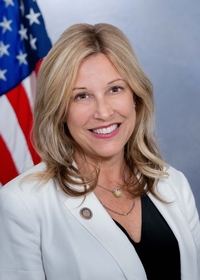
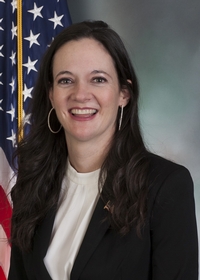
Lindsey Williams
Lindsey Williams Senate · District 38
D
Strong +
85% 36
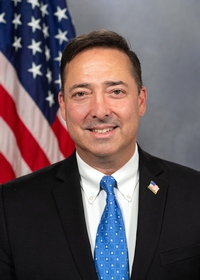
Chris Pielli
Chris Pielli House · District 156
D
Strong +
84% 203
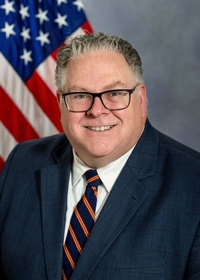
Tim Briggs
Tim Briggs House · District 149
D
Strong +
84% 199
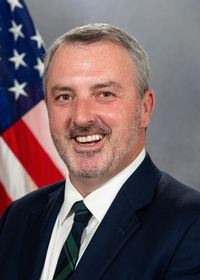
Kyle Donahue
Kyle Donahue House · District 113
D
Strong +
84% 237
Melissa Shusterman
Melissa Shusterman House · District 157
D
Strong +
83% 220
Dawn Keefer
Dawn Keefer Senate · District 31
R
Strong −
14% 41
James Malone
James Malone Senate · District 36
D
Strong −
14% 23
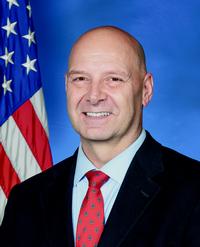
Doug Mastriano
Doug Mastriano Senate · District 33
R
Strong −
15% 53
Scott Hutchinson
Scott Hutchinson Senate · District 21
R
Strong −
17% 31
Stephanie Borowicz
Stephanie Borowicz House · District 76
R
Strong −
17% 204
Showing 331–340 of 412 bills

All criminal justice bills

in committee · Pennsylvania · Senate Jun 30, 2025

SB 896: An Act amending the act of November 24, 1998 (P.L.882, No.111), known as the Crime Victims Act, in compensation, further providing for determination of claims and for awards.

SB 896 amends Pennsylvania's Crime Victims Act to expand how victims can prove a crime occurred for compensation claims, allowing medical records, protection orders (like those under 23 Pa.C.S. §61), or sexual violence orders (42 Pa.C.S. §62A) instead of requiring police reports. It requires hospitals, funeral homes, and crime scene cleaners to stop billing victims while claims are processed, with a 45-day window after a claim decision. The bill also increases the cap for crime scene cleanup costs from $500 to $1,500 and maintains a $35,000 total award limit. This directly affects victims filing claims and service providers waiting for payment under the compensation program.
in committee · Pennsylvania · House Feb 20, 2025

HB 641: An Act amending Titles 42 (Judiciary and Judicial Procedure) and 61 (Prisons and Parole) of the Pennsylvania Consolidated Statutes, in sentencing, further providing for sentences for second and subsequent offenses; and, in Pennsylvania Board of Probation and Parole, further providing for parole power.

HB 641 requires individuals convicted of a "crime of violence" (as defined in the bill) and sentenced under Pennsylvania's second or subsequent offense provisions to serve 70% of their maximum sentence before becoming eligible for parole. This applies to serious offenses including murder, aggravated assault, sexual assault, robbery, and drug-related crimes resulting in death. The bill does not change the actual sentence length but modifies parole eligibility for repeat offenders in these categories. It affects only those convicted of specific violent crimes under the defined second or subsequent offense rules.
in committee · Pennsylvania · Senate Feb 3, 2025

SB 135: An Act amending Titles 18 (Crimes and Offenses), 42 (Judiciary and Judicial Procedure) and 61 (Prisons and Parole) of the Pennsylvania Consolidated Statutes, in authorized disposition of offenders, further providing for sentence of persons under the age of 18 for murder, murder of an unborn child and murder of a law enforcement officer; in sentencing, further providing for sentences for second and subsequent offenses; in miscellaneous provisions relating to inmate confinement, establishing the Life with Parole Reinvestment Fund; and, in Pennsylvania Board of Probation and Parole, further providing for parole power.

SB 135 changes sentencing for minors (under 18) convicted of certain murders. It mandates minimum 25- or 35-year prison terms (instead of life without parole) for those aged 15+ at the time of first-degree murder, murder of an unborn child, or murder of a law enforcement officer. The bill also establishes the Life with Parole Reinvestment Fund, which uses prison cost savings from parole decisions to fund victim services, offender reentry programs, and supervision. These changes affect minors convicted of specified violent crimes and modify parole procedures for life-sentence inmates. The fund transfers 25% to victim services, 25% to offender supervision, and 50% to reentry programs starting in 2026.
in committee · Pennsylvania · House Jul 3, 2025

HB 1698: An Act amending Title 18 (Crimes and Offenses) of the Pennsylvania Consolidated Statutes, in assault, further providing for the offense of terrorism.

HB 1698 amends Pennsylvania's terrorism statute (Title 18, Section 2717) to increase sentencing for terrorism-related assaults. Specifically, it raises the maximum prison term for individuals convicted of terrorism when the underlying violent offense is a first-degree felony from 40 years to life imprisonment, while maintaining a $100,000 maximum fine. This change directly affects defendants convicted under this terrorism provision who commit first-degree felony assaults. The bill modifies existing sentencing guidelines without creating new offenses or expanding the definition of terrorism. It will take effect 60 days after enactment.
passed · Pennsylvania · House Jun 25, 2026

HB 1585: An Act amending Title 18 (Crimes and Offenses) of the Pennsylvania Consolidated Statutes, in theft and related offenses, further providing for the offense of theft by extortion; and, in criminal history record information, providing for request and removal of the dissemination of booking photographs.

HB 1585 amends Pennsylvania's criminal code to prohibit the commercial use of booking photographs taken during arrests. It directly affects businesses or websites that currently sell, license, or profit from publishing these images of individuals arrested but not yet convicted. The bill creates a legal barrier by making it unlawful to publish or disseminate such photographs for commercial purposes. This change aims to prevent the exploitation of arrest imagery for profit, focusing on the specific policy shift in the law.
in committee · Pennsylvania · House May 29, 2025

HB 1506: An Act amending Title 61 (Prisons and Parole) of the Pennsylvania Consolidated Statutes, in miscellaneous provisions relating to inmate confinement, providing for communications services for inmates in State or county correctional institutions.

HB 1506 would require Pennsylvania state and county correctional facilities to provide affordable communication services, such as phone calls or video visits, for inmates. This bill directly affects incarcerated individuals and their families by improving access to regular contact. The key provision mandates that all correctional institutions must offer these services at reasonable rates, aiming to support family connections during incarceration. The bill is currently under review by the Communications & Technology committee.
in committee · Pennsylvania · House Jan 28, 2026

HB 1671: An Act amending Title 42 (Judiciary and Judicial Procedure) of the Pennsylvania Consolidated Statutes, in commencement of proceedings, providing for restorative justice.

HB 1671 amends Pennsylvania's sentencing laws to require courts to consider restorative justice programs when sentencing individuals convicted of crimes. This directly affects people in Pennsylvania's criminal justice system who are facing sentencing decisions. The bill adds specific provisions requiring judges to evaluate whether restorative justice - where offenders repair harm to victims and communities - can be applied alongside traditional sentencing. It aims to expand judicial options beyond incarceration by formally integrating these community-focused approaches into sentencing considerations.
in committee · Pennsylvania · House May 21, 2025

HB 1487: An Act amending the act of June 3, 1937 (P.L.1333, No.320), known as the Pennsylvania Election Code, in election districts and polling places, further providing for polling places to be selected by county board; and, in qualifications of electors, further providing for residence of electors.

HB 1487 requires county boards of elections in first-class counties to establish an additional polling place inside county prisons for individuals who register their residence at the prison. It clarifies that incarcerated people (for misdemeanor or summary offenses) in these counties may choose to register and vote at the prison or use absentee ballots, without changing voting eligibility. The bill does not alter who can vote but adds a new in-person voting option for eligible incarcerated individuals. The changes take effect 60 days after enactment.
Sub-Topics Corrections Tags Elections
in committee · Pennsylvania · Senate Feb 25, 2025

SB 279: An Act amending Title 53 (Municipalities Generally) of the Pennsylvania Consolidated Statutes, in employees, providing for use of force and deadly force policy for law enforcement agencies; imposing duties on the Municipal Police Officers' Education and Training Commission; and making an editorial change.

This bill requires all Pennsylvania municipal law enforcement agencies to create and implement written policies governing the use of force and deadly force by officers. The policies must include specific decision-making criteria for when force can be used (such as threats to safety or possession of weapons), prohibit choke holds except when deadly force is authorized, and mandate public posting online and physical availability upon request. The Municipal Police Officers' Education and Training Commission must certify each agency's policy biennially and provide non-compliance lists to the Pennsylvania State Police. This law directly affects municipal law enforcement agencies and their officers by standardizing force guidelines and increasing transparency around use-of-force incidents.
in committee · Pennsylvania · Senate Feb 25, 2025

SB 300: An Act amending Title 42 (Judiciary and Judicial Procedure) of the Pennsylvania Consolidated Statutes, in facilities and supplies, further providing for surcharge; and, in forfeiture of assets, providing for legal representation in forfeiture proceedings.

This bill adds a $2.25 surcharge to civil court filings in Pennsylvania and creates a new requirement for legal representation in asset forfeiture cases. It directly affects individuals facing property seizure (especially real estate) who cannot afford a lawyer and have not been criminally charged. Courts must provide attorneys for these individuals upon request, considering factors like the claim's good faith and the person's legal standing. The funds from the new filing fee will be used by counties to administer this legal representation program.
Showing 331 to 340 of 412 bills
Previous 1 33 34 35 42 Next