Issue · Criminal Justice

Criminal Justice

Every criminal justice bill, vote, and legislator stance in Pennsylvania, automatically classified by Maddy, our AI policy reader.

Total bills
412
2025-2026 Regular Session
Top supporter
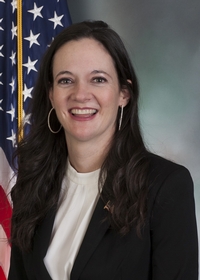
Lindsey Williams
85% support rate
Top opponent
Dawn Keefer
14% support rate
Ranked legislators
10
5 support · 5 oppose
Key legislators

Who's moving criminal justice in Pennsylvania

Legislators moving criminal justice in Pennsylvania
Legislator Party Stance Support rate Votes
Lindsey Williams
Lindsey Williams Senate · District 38
D
Strong +
85% 36
Chris Pielli
Chris Pielli House · District 156
D
Strong +
84% 203
Tim Briggs
Tim Briggs House · District 149
D
Strong +
84% 199
Kyle Donahue
Kyle Donahue House · District 113
D
Strong +
84% 237
Melissa Shusterman
Melissa Shusterman House · District 157
D
Strong +
83% 220
Dawn Keefer
Dawn Keefer Senate · District 31
R
Strong −
14% 41
James Malone
James Malone Senate · District 36
D
Strong −
14% 23
Doug Mastriano
Doug Mastriano Senate · District 33
R
Strong −
15% 53
Scott Hutchinson
Scott Hutchinson Senate · District 21
R
Strong −
17% 31
Stephanie Borowicz
Stephanie Borowicz House · District 76
R
Strong −
17% 204
Showing 311–320 of 412 bills

All criminal justice bills

in committee · Pennsylvania · House May 13, 2025

HB 1454: An Act amending Title 42 (Judiciary and Judicial Procedure) of the Pennsylvania Consolidated Statutes, in judicial boards and commissions, further providing for powers and duties of commission, providing for adoption of guidelines for bail and pretrial release conditions and further providing for publication of guidelines for sentencing, resentencing and parole, risk assessment instrument and recommitment ranges following revocation.

HB 1454 expands the duties of the Pennsylvania Commission on Sentencing. The bill requires the commission to establish and publish guidelines for setting bail and pretrial release conditions. These guidelines will assist courts in determining appropriate conditions by considering factors such as the seriousness of the offense, a defendant's criminal history, and community-based support systems. It also mandates the commission to collect and disseminate data on bail and pretrial release practices, in addition to its existing responsibilities for sentencing and parole.
in committee · Pennsylvania · House Apr 15, 2025

HB 1192: An Act amending Title 42 (Judiciary and Judicial Procedure) of the Pennsylvania Consolidated Statutes, in courts of common pleas, further providing for problem-solving courts; and, in minor courts, providing for the Mothers Treatment Court Pilot Program.

HB 1192 establishes a "Mothers Treatment Court Pilot Program" within Pennsylvania's minor courts, targeting mothers involved in the criminal justice system who require substance abuse or mental health treatment. The bill requires the Administrative Office of Pennsylvania Courts to create guidelines within six months for identifying eligible mothers, addressing their specific needs, and collecting data on program outcomes. Counties implementing the program must track participant referrals, charges, outcomes, and report annually - without personally identifiable information - to a public website. This pilot program, initially limited to minor courts, aims to provide court-supervised treatment alternatives rather than standard criminal penalties for qualifying mothers.
Sub-Topics Courts Substance Abuse
in committee · Pennsylvania · House May 7, 2025

HB 1419: An Act amending Title 23 (Domestic Relations) of the Pennsylvania Consolidated Statutes, in protection from abuse, further providing for contempt for violation of order or agreement.

HB 1419 amends Pennsylvania's domestic relations law to strengthen penalties for repeatedly violating protection-from-abuse orders. It creates tiered misdemeanor fines based on prior contempt violations: $500 minimum for a second offense, $500 for a third, and $500 for three or more offenses. The bill also removes jury trial rights for first-time violators (while guaranteeing legal counsel) and requires fines to fund domestic violence programs without replacing existing funding. This directly affects individuals who repeatedly disregard court-ordered protection from abuse. The changes aim to increase accountability for violating protective orders.
in committee · Pennsylvania · House May 21, 2025

HB 1486: An Act amending Title 42 (Judiciary and Judicial Procedure) of the Pennsylvania Consolidated Statutes, in bonds and recognizances, providing for bail in illegal firearm offenses in city of the first class.

HB 1486 would change bail rules for defendants charged with illegal firearm offenses in Pennsylvania's largest cities (like Philadelphia and Pittsburgh). It requires defendants to pay only 10% of the full bail amount for a first offense, 50% for a second offense, and 100% for third or subsequent offenses to be released while awaiting trial. The bill applies specifically to charges under Pennsylvania's firearm laws (18 Pa.C.S. § 61) in cities of the first class. It does not alter the underlying firearm laws but modifies the bail payment structure for these cases. The bill is currently pending in committee and has not yet become law.
Sub-Topics Firearms
in committee · Pennsylvania · House May 21, 2025

HB 1493: An Act amending Title 42 (Judiciary and Judicial Procedure) of the Pennsylvania Consolidated Statutes, in Administrative Office of Pennsylvania Courts, providing for data collection on race and ethnicity in criminal cases.

HB 1493 requires Pennsylvania's Administrative Office of Pennsylvania Courts to collect and publicly publish data on the race and ethnicity of defendants in criminal cases. This data must be posted in an accessible online format and reported annually to the Pennsylvania Commission on Crime and Delinquency. The bill directly affects all individuals involved in criminal cases across Pennsylvania's court system by mandating standardized demographic data collection. It establishes a concrete mechanism for tracking racial and ethnic disparities in criminal proceedings without altering sentencing or legal procedures. The law takes effect 60 days after enactment.
in committee · Pennsylvania · House Apr 28, 2025

HB 1324: An Act amending Title 18 (Crimes and Offenses) of the Pennsylvania Consolidated Statutes, in assault, providing for the offense of bullying.

HB 1324 creates a new criminal offense for bullying in Pennsylvania, defined as committing specific crimes (like assault or property damage) with the intent to harass, intimidate, or cause fear. It directly affects individuals who commit these acts with bullying intent, classifying the offense as a misdemeanor (typically third-degree for minor crimes, or one degree higher for more serious offenses). Sentencing enhancements for severe cases are directed to the Pennsylvania Commission on Sentencing. The bill excludes labor disputes and constitutionally protected activities from coverage. The law takes effect 60 days after enactment.
in committee · Pennsylvania · House Mar 3, 2025

HB 758: An Act amending the act of April 14, 1972 (P.L.233, No.64), known as The Controlled Substance, Drug, Device and Cosmetic Act, further providing for prohibited acts and penalties.

HB 758 amends Pennsylvania's Controlled Substance, Drug, Device and Cosmetic Act to reduce penalties for a specific drug-related violation. It changes the maximum fine from $500 to $25, eliminating the possibility of jail time for this offense. The bill directly affects individuals who violate clause (31) of the existing law, which relates to certain drug-related activities under the state's controlled substances regulations. This is a concrete policy change to lower the financial penalty for a minor violation, without altering the prohibited act itself.
in committee · Pennsylvania · Senate May 27, 2025

SB 788: An Act amending Title 61 (Prisons and Parole) of the Pennsylvania Consolidated Statutes, providing for solitary confinement.

SB 788 prohibits solitary confinement in Pennsylvania prisons and jails by banning the practice of confining inmates alone for 20+ hours daily with severely restricted activity. It directly affects all inmates in state and county correctional facilities, including juvenile facilities and those held under federal contracts. The bill requires prisons to use alternatives like limiting visits, restricting commissary privileges, or assigning additional unpaid work - each capped at 14 days - instead of solitary confinement. These alternatives must be used for disciplinary purposes, with no more than 14 days of any single penalty. The law would take effect 60 days after enactment.
passed · Pennsylvania · Senate Apr 3, 2025

SB 92: An Act amending Title 18 (Crimes and Offenses) of the Pennsylvania Consolidated Statutes, in criminal homicide, further providing for the offense of drug delivery resulting in death; and imposing a penalty.

SB 92 amends Pennsylvania law to strengthen penalties for individuals whose drug distribution causes a death. It establishes a minimum 10-year prison sentence and a fine (equal to the value of illegal proceeds) for repeat drug distributors convicted under this law who had two prior drug-related convictions and received significant payment for distributing drugs. The bill does not apply if the victim was under 13 years old or if the distributor and victim used drugs together. This law directly affects drug distributors convicted of causing a death through their illegal activity, with stricter penalties for those with prior offenses.
in committee · Pennsylvania · Senate May 27, 2025

SB 787: An Act amending Title 61 (Prisons and Parole) of the Pennsylvania Consolidated Statutes, providing for solitary confinement.

SB 787 establishes new rules for solitary confinement in Pennsylvania prisons and detention facilities. It defines solitary confinement as confinement alone for 20+ hours daily and prohibits its use for vulnerable populations - including youth, the elderly, pregnant individuals, LGBTQ+ people, and those with mental health or developmental disabilities - without specific medical evaluation. The bill limits solitary confinement to 15 consecutive days or 20 days in a 60-day period, requires a hearing within 72 hours of placement, and mandates daily clinical evaluations to identify vulnerable inmates who must be removed immediately. Facilities must also provide basic necessities, daily outside time, and prohibit 24-hour cell lighting without medical justification.
Showing 311 to 320 of 412 bills
Previous 1 31 32 33 42 Next