

Issue · Budget & Taxes
Budget & Taxes (Income Tax)
Every budget & taxes bill, vote, and legislator stance in Pennsylvania, automatically classified by Maddy, our AI policy reader.
Total bills
70
2025-2026 Regular Session
Top supporter
Aerion Abney
100% support rate
Top opponent
Thomas Kutz
0% support rate
Ranked legislators
10
5 support · 5 oppose
Key legislators
Who's moving income tax in Pennsylvania
| Legislator | Party | Stance | Support rate | Decisive votes |
|---|---|---|---|---|

Aerion Abney
House · District 19
|
D |
Strong +
|
100% | 7 |

Ben Waxman
House · District 182
|
D |
Strong +
|
100% | 7 |
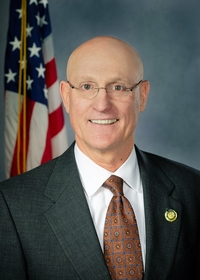
Joe Webster
House · District 150
|
D |
Strong +
|
100% | 7 |
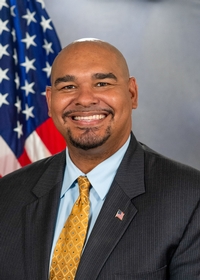
Justin Fleming
House · District 105
|
D |
Strong +
|
100% | 7 |

Pat Gallagher
House · District 173
|
D |
Strong +
|
100% | 7 |

Thomas Kutz
House · District 87
|
R |
Strong −
|
0% | 8 |

Eric Davanzo
House · District 58
|
R |
Strong −
|
0% | 7 |

Zach Mako
House · District 183
|
R |
Strong −
|
0% | 7 |

Jim Struzzi
House · District 62
|
R |
Strong −
|
0% | 6 |
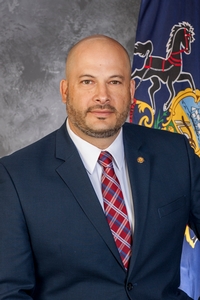
Jonathan Fritz
House · District 111
|
R |
Strong −
|
0% | 6 |
Showing 31–40 of 70
bills
All budget & taxes bills
SB 485: An Act amending the act of March 4, 1971 (P.L.6, No.2), known as the Tax Reform Code of 1971, in tax credit and tax benefit administration, further providing for definitions; and establishing the Residential Electric Vehicle Charging Station Tax Credit.
Topics
✓ Budget & TaxesSupports Budget & TaxesCreates refundable tax credit covering 100% of EV charger installation costs ($2k max), reducing tax liability for eligible homeowners per Tax Reform Code amendment.
✓ EnergySupports EnergyCreates tax credit for residential EV charging stations, promoting clean energy infrastructure adoption and reducing fossil fuel dependence through EV adoption incentives.
✓ EnvironmentSupports EnvironmentSB 485 creates a tax credit for residential EV charging stations, directly promoting clean transportation infrastructure and reducing emissions from vehicles, aligning with environmental protection goals.
SB 722: An Act amending the act of March 4, 1971 (P.L.6, No.2), known as the Tax Reform Code of 1971, in personal income tax, further providing for classes of income.
SB 753: An Act amending the act of April 9, 1929 (P.L.343, No.176), known as The Fiscal Code, establishing the Put Down Roots PA Pilot Program; and providing for duties of Pennsylvania Higher Education Assistance Agency.
Topics
✓ Budget & TaxesSupports Budget & TaxesFunds student loan relief grants via state budget allocation, increasing appropriations for housing assistance under Fiscal Code
✓ HousingSupports HousingProvides student loan relief grants to first-time homebuyers with income limits, directly advancing affordable housing access through financial assistance for homeownership.
HB 1177: An Act amending the act of March 4, 1971 (P.L.6, No.2), known as the Tax Reform Code of 1971, in personal income tax, further providing for classes of income.
Topics
✓ Budget & TaxesSupports Budget & TaxesExcludes military/public health income from taxable compensation, providing tax relief for affected residents per Tax Reform Code amendment.
✓ VeteransSupports VeteransExcludes veterans' military income from PA state tax, reducing tax burden for active duty service.
Sub-Topics
Income Tax
HB 1001: An Act amending the act of March 4, 1971 (P.L.6, No.2), known as the Tax Reform Code of 1971, in personal income tax, further providing for classes of income.
Sub-Topics
Income Tax
SB 124: An Act amending the act of March 4, 1971 (P.L.6, No.2), known as the Tax Reform Code of 1971, in personal income tax, further providing for classes of income.
Sub-Topics
Income Tax
HB 206: An Act amending the act of December 31, 1965 (P.L.1257, No.511), known as The Local Tax Enabling Act, in consolidated collection of local income taxes, further providing for definitions.
HB 334: An Act amending the act of March 4, 1971 (P.L.6, No.2), known as the Tax Reform Code of 1971, in tax credit and tax benefit administration, further providing for definitions; and providing for Pennsylvania Individual Recruitment and Retention Tax Credit.
Topics
✓ Budget & TaxesSupports Budget & TaxesCreates $2,500 tax credit for essential workers (teachers, law enforcement, healthcare) reducing state income tax burden, aligning with tax relief for public service roles.
✓ Criminal JusticeSupports Criminal JusticeTax credit explicitly targets law enforcement recruitment (police academy graduates), aiming to strengthen workforce retention in criminal justice sector.
✓ EducationSupports EducationProvides $2,500 tax credit to recruit/retain teachers (with instructional/special ed certs), directly supporting educator workforce through financial incentives.
✓ HealthcareSupports HealthcareBill offers $2,500 tax credit specifically for healthcare professionals (e.g., RNs) to recruit/retain in PA, directly strengthening workforce availability and access to care.
HB 310: A Joint Resolution proposing an amendment to the Constitution of the Commonwealth of Pennsylvania, providing for expiration of authority to levy or collect real property taxes.
Topics
✓ Budget & TaxesSupports Budget & TaxesReplaces school property taxes with new sales/income taxes to maintain 2029 funding levels via dedicated education fund, ensuring continued public school financial support.
✓ EducationSupports EducationReplaces school property taxes with state funding via dedicated education fund, maintaining current revenue levels for school support.