Issue · Budget & Taxes

Budget & Taxes

Every budget & taxes bill, vote, and legislator stance in Pennsylvania, automatically classified by Maddy, our AI policy reader.

Total bills
655
2025-2026 Regular Session
Top supporter
Camera Bartolotta
94% support rate
Top opponent
Katie Muth
23% support rate
Ranked legislators
10
5 support · 5 oppose
Key legislators

Who's moving budget & taxes in Pennsylvania

Legislators moving budget & taxes in Pennsylvania
Legislator Party Stance Support rate Votes
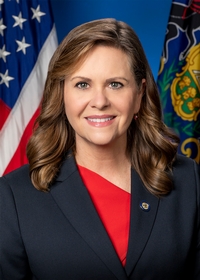
Camera Bartolotta
Camera Bartolotta Senate · District 46
R
Strong +
94% 74
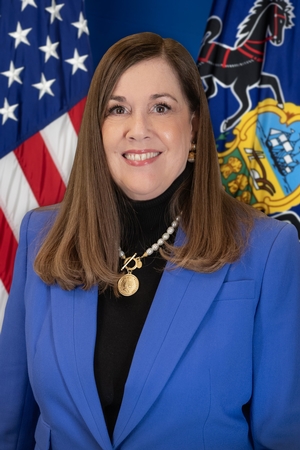
Lisa Baker
Lisa Baker Senate · District 20
R
Strong +
93% 61
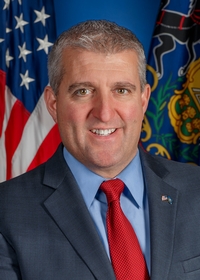
Joe Picozzi
Joe Picozzi Senate · District 5
R
Strong +
92% 83
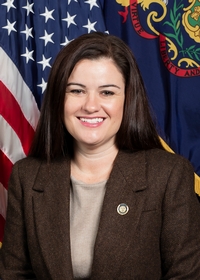
Frank Farry
Frank Farry Senate · District 6
R
Strong +
92% 67
Dave Argall
Dave Argall Senate · District 29
R
Strong +
91% 80
Katie Muth
Katie Muth Senate · District 44
D
Oppose
23% 74
Art Haywood
Art Haywood Senate · District 4
D
Oppose
29% 83
Lindsey Williams
Lindsey Williams Senate · District 38
D
Oppose
30% 74
Charity Krupa
Charity Krupa House · District 51
R
Oppose
31% 292
Steve Santarsiero
Steve Santarsiero Senate · District 10
D
Oppose
32% 68
Showing 31–40 of 655 bills

All budget & taxes bills

in committee · Pennsylvania · Senate Jun 26, 2026

SB 1407: An Act amending the act of February 9, 1999 (P.L.1, No.1), known as the Capital Facilities Debt Enabling Act, in capital facilities, further providing for definitions.

SB 1407 amends Pennsylvania's Capital Facilities Debt Enabling Act to update the definition of "redevelopment assistance capital projects" for the purpose of issuing tax-exempt bonds. The bill clarifies that eligible projects must generate significant economic activity, involve substantial non-state funding, and include specific infrastructure like stormwater systems or hospital facilities while excluding general highways and waste disposal sites. Additionally, it allows fire trucks and firefighting equipment to qualify for assistance under certain cost conditions. This legislative change directly affects local governments and organizations seeking state-approved financing for redevelopment initiatives by establishing clearer criteria for what projects can receive funding.
Sub-Topics Debt & Bonds
passed · Pennsylvania · House Jun 26, 2026

HB 2632: An Act amending the act of March 10, 1949 (P.L.30, No.14), known as the Public School Code of 1949, in educational tax credits, further providing for limitations and providing for termination of authority; providing for education options tax credits; establishing the Accountability for Diverted Tax Dollars Restricted Account; providing for scholarship granting organizations, for application by eligible contributors, for scholarships, for educational improvement programs, for low-achieving schools, for school participation in program and for original jurisdiction; and imposing duties on the Department of Community and Economic Development, the Department of Education, the Department of Revenue, the Auditor General, the Independent Fiscal Office and the State Treasurer.

This Pennsylvania bill establishes a temporary program allowing businesses to receive tax credits for donations to scholarship and educational improvement organizations. The legislation sets specific annual spending limits for these credits, which are available only for fiscal years before 2027-2028, and creates a new restricted account to track the funds. It also defines various terms related to the program, including assessments and business firms, while assigning oversight duties to several state departments.
in committee · Pennsylvania · Senate Jun 18, 2026

SB 1382: An Act amending the act of April 9, 1929 (P.L.343, No.176), known as The Fiscal Code, in Pennsylvania Child and Dependent Care Enhancement Tax Credit Program, further providing for definitions and for credit for child and dependent care employment-related expenses.

This bill updates Pennsylvania's Child and Dependent Care Enhancement Tax Credit Program to align state tax credits with future changes in the federal tax code. It directly affects Pennsylvania taxpayers who claim credits for employment-related child and dependent care expenses by modifying how the credit amount is calculated. The legislation establishes a new "applicable percent" for tax years starting after December 31, 2025, ensuring the state credit matches the federal credit limits, which are set at $3,000 for one qualifying individual or $6,000 for two or more. By linking these two systems, the bill ensures that the state tax benefit remains consistent with federal rules for future taxable years.
Sub-Topics Tax Credits
in committee · Pennsylvania · Senate Jun 5, 2026

SB 1365: An Act amending Titles 74 (Transportation) and 75 (Vehicles) of the Pennsylvania Consolidated Statutes, in Multimodal Fund, further providing for use of money in fund; in preliminary provisions relating to aviation, further providing for definitions and for Aviation Restricted Account and providing for Aviation Trust Fund; in authority of Department of Transportation, further providing for authority of department; in obstructions to aircraft operation, providing for prohibited conduct; in airport operation and zoning, providing for abandoned or derelict aircraft and further providing for power to adopt airport zoning regulations; in aviation development, further providing for service fees, for tax on aviation fuels, for allocation of funds, for agreement of maintenance and for tax on jet fuels and providing for tax on alternative aviation fuels and for aviation fees; in liquid fuels and fuels tax, further providing for imposition of tax, exemptions and deductions, for distributor's report and payment of tax, for disposition and use of tax and for refunds; imposing fees; imposing penalties; making transfers; abrogating regulations; and making editorial changes.

This bill updates Pennsylvania laws to create new funding accounts and taxes specifically for aviation activities. It establishes an Aviation Restricted Account and an Aviation Trust Fund, directing millions of dollars annually to the Department of Transportation for airport programs and aviation development. The legislation also introduces new taxes on aviation fuels, including jet fuel and alternative fuels like hydrogen and electricity, while defining terms such as "alternative aviation fuel" and "aircraft operating area." Additionally, the bill grants the Department of Transportation authority to adopt airport zoning regulations, address abandoned aircraft, and impose penalties for obstructing aircraft operations.
Sub-Topics Airports
in committee · Pennsylvania · House Jun 1, 2026

HB 2583: An Act amending the act of April 9, 1929 (P.L.343, No.176), known as The Fiscal Code, in human services, providing for medical assistance payments for medical equipment and supplies.

This bill directs the Pennsylvania Department of Human Services to make a one-time payment to medical assistance managed care organizations by December 31, 2027, to help increase payments to providers for medical equipment and supplies. The total amount available for distribution is calculated by taking the total funds these organizations paid to providers for such items in 2024 and adding 10% to that figure. Once the department distributes its share, the managed care organizations must pass along 10% of the 2024 payment amounts to each participating provider within 30 days. The law applies specifically to individuals enrolled in the medical assistance program and the healthcare providers and organizations that serve them.
in committee · Pennsylvania · House Jun 9, 2026

HB 2616: An Act amending the act of March 4, 1971 (P.L.6, No.2), known as the Tax Reform Code of 1971, in sales and use tax, further providing for exclusions from tax.

This bill amends Pennsylvania's Tax Reform Code to temporarily exempt the sales tax on protective gear purchased by firefighters, volunteer ambulance workers, and volunteer rescue personnel. The exemption applies specifically to items such as helmets, turnout coats, boots, and respiratory protection units during a six-month period starting on July 1, 2026. To ensure clarity, the legislation requires the Department of Revenue to publish online guidance on how to implement this temporary exclusion. The law defines the equipment and purchaser terms precisely, noting that the tax break applies even if the gear is delivered after the six-month window closes.
passed · Pennsylvania · House Jul 9, 2026

HB 2644: A Supplement to the act of December 8, 1982 (P.L.848, No.235), known as the Highway-Railroad and Highway Bridge Capital Budget Act for 1982-1983, itemizing additional State and local bridge projects.

This bill updates Pennsylvania's 1982 highway and bridge funding law to authorize $4.77 billion in repairs and replacements for state and local bridges during the 2026-2027 fiscal year. It allocates approximately $3.8 billion for state-owned projects managed by the Department of Transportation and about $962 million for local municipal projects, with the state providing grants covering up to 80% of non-federal costs. The legislation specifically lists individual bridge projects across various counties, detailing their estimated costs and purposes such as replacement, restoration, or preservation.
in committee · Pennsylvania · Senate Jun 9, 2026

SB 1374: An Act amending the act of December 1, 1977 (P.L.237, No.76), known as the Local Economic Revitalization Tax Assistance Act, further providing for title of act, for construction, for definitions, for deteriorated areas, for exemption schedule and for procedure for obtaining exemption; and providing for public registry.

This bill amends Pennsylvania's Local Economic Revitalization Tax Assistance Act to clarify and expand the types of properties eligible for tax exemptions in economically depressed areas. It specifically broadens the definition of "deteriorated property" to include industrial, commercial, and other business properties, as well as government-owned sites like schools that are located in designated distressed zones or have been ordered vacated or demolished. The legislation also introduces new definitions for terms such as "converted residential portion" and "mixed-use building" to better guide local governments in identifying eligible sites. Under the updated rules, local taxing authorities must hold a public hearing to establish the boundaries of these deteriorated areas before granting tax relief for improvements or new construction within them.
Sub-Topics Tax Incentives
in committee · Pennsylvania · House Jun 16, 2026

HB 2610: An Act amending the act of March 4, 1971 (P.L.6, No.2), known as the Tax Reform Code of 1971, in general provisions, providing for electronic tax lien filing and centralized repository; and making a repeal.

This bill amends Pennsylvania's Tax Reform Code to modernize how the state handles tax liens by introducing an electronic filing system and a centralized online repository. It directly affects the Department of Revenue, taxpayers, and creditors by requiring the department to post tax liabilities to a public website within seven days of a final assessment. The new system allows the department to maintain a searchable database of liens without needing to refile or revive them, while still requiring physical recording with county officials only when the state seeks to execute against specific property. Additionally, the legislation clarifies the priority of tax liens during judicial sales and establishes procedures for enforcing liens against out-of-state property.
in committee · Pennsylvania · Senate Jun 18, 2026

SB 1380: An Act amending the act of March 10, 1949 (P.L.30, No.14), known as the Public School Code of 1949, in institutions of higher education, establishing the PA WORKS Scholarship Grant Program and the trade career-incentive tax credit.

This bill creates the PA WORKS Scholarship Grant Program to provide financial aid to Pennsylvania residents pursuing specific trade careers in fields like construction, automotive repair, and welding at colleges and universities. To qualify for a grant of up to $5,000 per year, students must maintain satisfactory grades and sign an agreement to live and work in an in-demand trade job within the state for 36 months after graduation. The legislation also establishes a trade career-incentive tax credit for businesses that hire graduates from these approved trade programs.
Showing 31 to 40 of 655 bills
Previous 1 3 4 5 66 Next