

Issue · Budget & Taxes
Budget & Taxes
Every budget & taxes bill, vote, and legislator stance in Pennsylvania, automatically classified by Maddy, our AI policy reader.
Total bills
697
2025-2026 Regular Session
Top supporter
Camera Bartolotta
94% support rate
Top opponent
Katie Muth
23% support rate
Ranked legislators
10
5 support · 5 oppose
Key legislators
Who's moving budget & taxes in Pennsylvania
| Legislator | Party | Stance | Support rate | Votes |
|---|---|---|---|---|
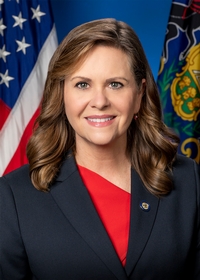
Camera Bartolotta
Senate · District 46
|
R |
Strong +
|
94% | 74 |

Lisa Baker
Senate · District 20
|
R |
Strong +
|
93% | 61 |

Joe Picozzi
Senate · District 5
|
R |
Strong +
|
92% | 83 |
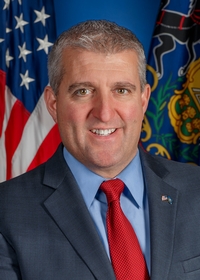
Frank Farry
Senate · District 6
|
R |
Strong +
|
92% | 67 |

Dave Argall
Senate · District 29
|
R |
Strong +
|
91% | 80 |

Katie Muth
Senate · District 44
|
D |
Oppose
|
23% | 74 |

Art Haywood
Senate · District 4
|
D |
Oppose
|
29% | 83 |

Lindsey Williams
Senate · District 38
|
D |
Oppose
|
30% | 74 |

Charity Krupa
House · District 51
|
R |
Oppose
|
31% | 292 |

Steve Santarsiero
Senate · District 10
|
D |
Oppose
|
32% | 68 |
Showing 191–200 of 697
bills
All budget & taxes bills
HB 2153: An Act amending the act of June 27, 2006 (1st Sp.Sess., P.L.1873, No.1), known as the Taxpayer Relief Act, in taxation by school districts, further providing for definitions, providing for disposition of data center property tax revenue and further providing for school district tax notices.
Topics
✓ Budget & TaxesSupports Budget & TaxesRedirects data center property tax revenue to fund homestead/farmstead tax exclusions, providing direct tax relief for homeowners and farmers per bill's explicit purpose.
✗ EducationOpposes EducationBill diverts data center property tax revenue (potential school funding) to homeowner/farmer tax exclusions, reducing school district revenue available for education.
HB 2169: An Act amending the act of April 9, 1929 (P.L.343, No.176), known as The Fiscal Code, making editorial changes to delete references to "approved private school" for the purpose of adding references to "approved special education school."
Topics
✓ Budget & TaxesSupports Budget & TaxesBill mandates 175% funding for special education schools, strengthening program support within Fiscal Code appropriations.
✓ EducationSupports EducationMandates minimum 175% funding for approved special education schools, updating terminology to ensure continued support and addressing allocation requirements.
HB 2184: An Act amending Title 66 (Public Utilities) of the Pennsylvania Consolidated Statutes, in general provisions, further providing for definitions; in powers and duties, providing for public interest; and, in rates and distribution systems, further providing for rates to be just and reasonable, for voluntary changes in rates and for rates fixed on complaint and investigation of costs of production.
Topics
✓ Budget & TaxesSupports Budget & TaxesBill explicitly requires PUC to consider tax revenue as a factor in utility decisions, aligning with fiscal responsibility under Budget & Taxes.
✓ EnergySupports EnergyBill mandates PUC to consider renewables, energy efficiency, and environmental protection as key factors in utility decisions, directly advancing clean energy policies.
✓ EnvironmentSupports EnvironmentBill explicitly requires PUC to consider 'environmental protection' as one of eight mandatory factors in utility decisions, alongside renewables and energy efficiency.
HB 2116: An Act amending the act of June 27, 2006 (1st Sp.Sess., P.L.1873, No.1), known as the Taxpayer Relief Act, in tax relief in cities of the first class, further providing for supplemental senior citizen tax reduction; and, in senior citizens property tax and rent rebate assistance, providing for income calculation and further providing for property tax and rent rebate.
HB 2149: An Act establishing the Executive Functioning and Study Skills Grant Program for public school entities and the Executive Functioning and Study Skills Fund.
Topics
✓ Budget & TaxesSupports Budget & TaxesBill allocates state funds via annual grants to public schools for executive functioning programs, increasing public education spending.
✓ EducationSupports EducationEstablishes grant program for executive functioning/study skills in grades 6-12, providing state funding for evidence-based student program implementation.
SB 1153: An Act amending the act of March 4, 1971 (P.L.6, No.2), known as the Tax Reform Code of 1971, in corporate net income tax, further providing for imposition of tax; and abrogating a regulation.
HR 382: A Resolution urging the Congress of the United States to retain expanded health insurance subsidies that enable consumers to purchase health insurance through Pennie.
Topics
✓ Budget & TaxesSupports Budget & TaxesBill urges extension of federal health insurance subsidies (a form of government spending/tax credit), directly supporting continued funding for essential health coverage and preventing premium increases that would impact state residents' fiscal b...
✓ HealthcareSupports HealthcareUrges Congress to extend subsidies preventing 102% premium hikes and 150k coverage losses, directly protecting healthcare access and affordability.
✓ Labor & EmploymentSupports Labor & EmploymentBill urges retention of health insurance subsidies, preventing 102% premium hikes and 150k coverage losses - directly supporting workers' access to affordable healthcare benefits, a core employment standard.
Sub-Topics
Insurance
HB 2144: An Act amending Title 75 (Vehicles) of the Pennsylvania Consolidated Statutes, in liquid fuels and fuels tax, further providing for definitions.
HB 2170: An Act amending the act of March 4, 1971 (P.L.6, No.2), known as the Tax Reform Code of 1971, in tax credit and tax benefit administration, further providing for definitions; and establishing the employer blood donation tax credit.
Topics
✓ Budget & TaxesSupports Budget & TaxesCreates employer tax credit reducing state tax burden, aligning with tax relief support indicators for targeted fiscal incentives.
✓ HealthcareSupports HealthcareCreates tax credit to incentivize employer-sponsored blood donations, directly supporting public health blood supply initiatives and access to critical medical resources.
✓ Labor & EmploymentSupports Labor & EmploymentCreates tax credit for employers providing paid time off for blood donations, expanding a specific worker benefit (paid time for health-related activities) without mandating it.