

Maddy summaryThe COUNTER Act (S 1793) amends U.S. military law to clarify and expand authorities for responding to drone threats. It allows the Secretary of Defense to delegate drone mitigation actions to combatant commanders and exempts related technology and protocols from public disclosure under federal and state laws. The bill specifies that certain federal laws (like those covering cybercrime and aviation) do not apply to military drone mitigation efforts conducted outside the United States. It also updates reporting deadlines and adds new definitions for military commands involved in drone threat response, with key provisions extending until 2030. This bill directly affects Department of Defense and Coast Guard operations related to unmanned aircraft system threats.
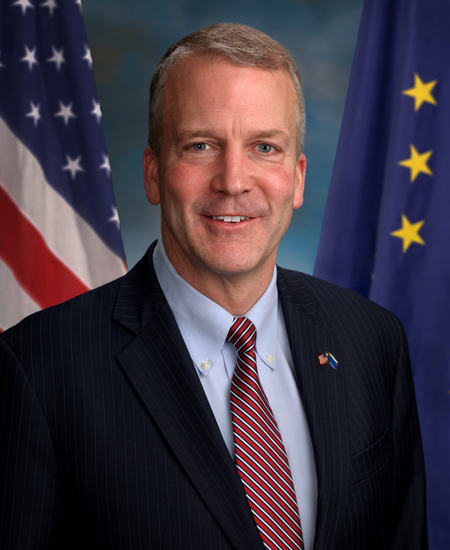
Sen. Dan Sullivan
Sponsored bills
Maddy summaryThis bill reinstates a tax deduction for personal casualty losses (such as property damage from crimes, scams, or disasters) that was suspended after 2017. It directly affects taxpayers who experienced qualifying losses but couldn't claim the deduction on past returns due to the suspension. The key provisions are: (1) removing the suspension of the deduction for future years, and (2) extending the deadline to file for refunds for past years where the deduction was suspended. The extension allows taxpayers to claim refunds related to these losses until the filing deadline for the tax year that includes the bill's enactment date.
Maddy summaryS 1766, the Protect Our Heroes Act of 2025, creates new federal crimes for killing or assaulting law enforcement officers, firefighters, and judicial staff (including those funded by federal grants from state/local agencies) during or related to their official duties. It mandates minimum 10-year sentences for killing such officers (life imprisonment if death results) and imposes tiered prison terms for assaults (2-20 years based on injury severity), with enhanced penalties for using deadly weapons or luring victims. The law applies when attacks involve interstate travel, commerce, or weapons crossing state lines. This bill directly affects federally funded public safety personnel nationwide by strengthening federal prosecution for targeted violence against them.
Maddy summaryThis bill requires the President to review whether specific Hong Kong judicial and government officials meet criteria for existing U.S. sanctions within 180 days of enactment. It directly affects 45 named individuals, including Hong Kong Chief Justice Andrew Cheung Kui-nung, judges, prosecutors, and officials like Chief Executive John Lee, who were previously sanctioned or hold current roles. The review will determine if sanctions under the Global Magnitsky Act, Hong Kong Human Rights Act, or other existing legal authorities apply to these individuals. The bill does not impose new sanctions but mandates a formal assessment process using current U.S. legal frameworks.
Maddy summaryThe RTCP Revitalization Act (S 1758) secures guaranteed annual funding for payments to geographically disadvantaged farmers and ranchers under the Commodity Credit Corporation program. It amends the 2008 Farm Bill to mandate specific funding levels: $10 million for fiscal year 2026, increasing to $15 million annually starting in 2031. The bill removes a previous funding availability condition and adds a provision ensuring no payment limits apply when sufficient funds are available. This directly affects eligible farmers in geographically disadvantaged areas by providing predictable financial support through fixed annual appropriations.
Maddy summarySRES 220 designates the week of May 11-17, 2025, as "National Police Week" to honor law enforcement officers across the United States. The resolution recognizes officers who have been killed, disabled, or injured in the line of duty, including 234 officers honored for 2024 fatalities and 18 officers killed in 2025. It expresses the Senate’s support for law enforcement, acknowledges the need for adequate resources for officer safety, and encourages public observance to celebrate their service and sacrifices. This is a ceremonial resolution with no new policy or funding changes.
Maddy summaryS 1738, the Securing Academia from Foreign Entanglements Act, prohibits U.S. universities and colleges receiving federal funding from accepting gifts or entering contracts with "foreign countries of concern." These countries include those designated under defense law or identified by federal agencies as threatening U.S. national security. The bill specifically excludes tuition, room, board, and other student costs from this restriction. It directly affects institutions participating in federal higher education programs by requiring them to avoid financial ties with designated foreign governments. The law creates new Section 117A within the Higher Education Act to implement these restrictions.
Maddy summaryThe STOP China Act prohibits federal funding for the procurement of certain vehicles (including buses) or related infrastructure from companies tied to China. It bans U.S. government contracts using "covered funding" for vehicles made by "covered entities" - defined as companies headquartered in China, controlled by China, or linked to Chinese state-owned entities, particularly those producing electric powertrains. The U.S. Trade Representative must publish and update a public list of these prohibited companies within 30 days of enactment, with quarterly updates initially. Exceptions allow funding for vehicle safety testing, investigations, and research, but the law directly affects federal transportation agencies, contractors, and companies with significant Chinese ownership or control.
Maddy summaryS 1672, the Forest Protection and Wildland Firefighter Safety Act of 2025, modifies a permit rule under the Federal Water Pollution Control Act to streamline firefighting operations. It adds an exception allowing the aerial application of fire retardants listed on the Forest Service's Qualified Products List without requiring a separate pollution discharge permit during wildfires. This directly affects wildland firefighters and federal agencies (like the Forest Service) using these approved products during emergency fire suppression. The key change removes a bureaucratic barrier for using essential firefighting chemicals during active fire events.
Maddy summaryThe INDEX Act (S 1670) requires investment advisers managing passively tracked funds (like index funds) to vote proxy ballots according to their clients' instructions, directly affecting millions of retail investors who own these funds. It mandates that advisers vote shares proportionally based on client ownership percentages - e.g., if 20% of a fund's clients hold shares, their voting preference applies to 20% of the fund's votes. Exceptions allow advisers to vote "routine" matters (like board elections) without client input if instructions aren't received 10 days prior, or to mirror other shareholders' votes for majority-required proposals. The bill aims to align voting with investor preferences while prohibiting advisers from charging funds for compliance costs.