

Maddy summaryS 1989, the Helping Communities with Better Support Act, expands Medicaid home and community-based services (HCBS) waivers to cover more people with disabilities who previously lacked eligibility under existing rules. It allows states to approve waivers covering HCBS for individuals meeting disability definitions under the ADA or Rehabilitation Act, provided states demonstrate no impact on wait times for current beneficiaries and report detailed data on applicant waitlists and service delivery. Key provisions require states to publicly share transparency metrics starting in 2028, including average wait times for services, fulfillment rates of authorized hours, and how services differ for newly covered individuals. The bill directly affects states administering Medicaid waivers and people with disabilities seeking home care services, aiming to improve access while increasing accountability through standardized reporting.
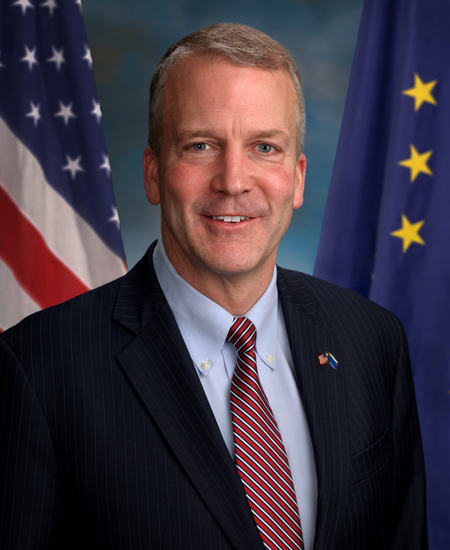
Sen. Dan Sullivan
Sponsored bills
Maddy summaryS 1970, the MACV-SOG Congressional Gold Medal Act, authorizes a single Congressional Gold Medal to honor the service members of the Military Assistance Command Vietnam-Studies and Observations Group (MACV-SOG) who served during the Vietnam War from 1964 to 1972. The medal, to be presented by congressional leaders, recognizes MACV-SOG’s covert operations in Vietnam, Laos, and Cambodia, including reconnaissance, sabotage, and rescue missions, and acknowledges the unit’s high sacrifice (over 1,500 personnel missing or killed). After presentation, the medal will be displayed at the Smithsonian Institution, with duplicate bronze medals available for sale to cover production costs. This bill is purely commemorative and does not create new policy or affect any current laws.
Maddy summaryThis bill requires lenders to include VA loan options in standard mortgage disclosures when discussing loan choices, alongside other options like FHA loans. It mandates adding a military service question to the Uniform Residential Loan Application form, positioned above the signature line. The change applies to all lenders using this standard form, ensuring veterans are identified early in the application process. The bill does not alter VA loan benefits but improves transparency about available options for military borrowers.
Maddy summaryThis resolution (SRES 255) is a ceremonial Senate measure honoring former U.S. Senator Christopher "Kit" Bond of Missouri, who died on May 13, 2025. It recognizes his 40+ years of public service, including his roles as Missouri Governor (1973-1977, 1981-1985) and U.S. Senator (1987-2011). The resolution directs the Senate to adjourn briefly as a mark of respect and transmit a copy to his family. It has no policy impact or direct effect on constituents, as it is purely commemorative.
Maddy summarySRES 253 is a ceremonial Senate resolution congratulating Pope Leo XIV on his election as Pope, recognizing him as the first U.S. citizen elected to the papacy. The resolution highlights his global role in promoting peace, justice, and interfaith dialogue, and expresses hope for continued strong U.S.-Holy See relations based on shared values. It does not create policy changes or affect any specific group, as it is a symbolic gesture of goodwill. The resolution was introduced by multiple senators and unanimously adopted by the Senate on May 22, 2025.
Maddy summaryThis bill redefines "private duty nursing services" under Medicaid as "continuous skilled nursing services" requiring licensed nurses (RNs or LPNs) for complex-care patients needing multiple hours of daily nursing. It directly affects Medicaid beneficiaries, particularly "full-benefit dual eligible individuals" (those qualifying for both Medicare and full Medicaid benefits), who rely on these services. Key mechanisms include mandating licensed providers, establishing a working group to develop national quality standards within 180 days, and updating Medicaid program guidelines to include these services by 18 months. The bill also requires states to incorporate these standards into their Medicaid programs and quality measure sets.
Maddy summaryThe Crime Victims Fund Stabilization Act of 2025 amends the law governing deposits into the Crime Victims Fund, adding two new sources: funds from declined criminal prosecutions (without conviction) and certain False Claims Act recoveries (from 2025 through 2030). It specifically excludes two types of False Claims Act funds from these deposits: payments to whistleblowers (qui tam plaintiffs) and reimbursements for government fraud damages. This bill directly affects the Crime Victims Fund, which provides support to victims of crime, and adjusts how federal agencies handle False Claims Act cases. The changes aim to modify the fund's funding sources without altering the False Claims Act itself.
Maddy summaryS 1918, the Access Technology Affordability Act of 2025, creates a new federal tax credit for expenses related to access technology for blind individuals. It allows taxpayers to claim a credit of up to $2,000 per 3-year period for qualified hardware, software, or IT tools that convert visual information into accessible formats for themselves, their spouse, or a blind dependent. The credit amount adjusts annually for inflation starting in 2026 and expires after 2030. This policy directly affects taxpayers who pay for such technology for blind family members, reducing their tax liability for these qualifying expenses.
Maddy summaryThe Veterans Health Care Freedom Act establishes a 3-year pilot program (starting one year after enactment) in at least four VA service networks, allowing eligible veterans enrolled in VA health care to choose their primary and specialty care providers from a broader network of VA facilities and non-VA providers with VA agreements. It removes current restrictions requiring veterans to use providers only in their local VA network or limiting non-VA care to situations where VA care was "unavailable." After the pilot, these expanded choices become permanent, meaning veterans will always be able to select providers without those restrictions and VA will provide care at any VA facility, regardless of the facility's network location relative to the veteran's residence.
Maddy summarySRES 234 is a ceremonial Senate resolution designating May 2, 2025, as "United States Foreign Service Day." It honors current and former Foreign Service officers who serve in the Department of State, USAID, and related agencies, recognizing their work in diplomacy, security, humanitarian aid, and promoting U.S. interests globally. The resolution calls for public reflection on their service and sacrifices, including those who died in the line of duty, but does not create new laws or policies. This is a symbolic gesture with no direct impact on legislation or affected individuals.