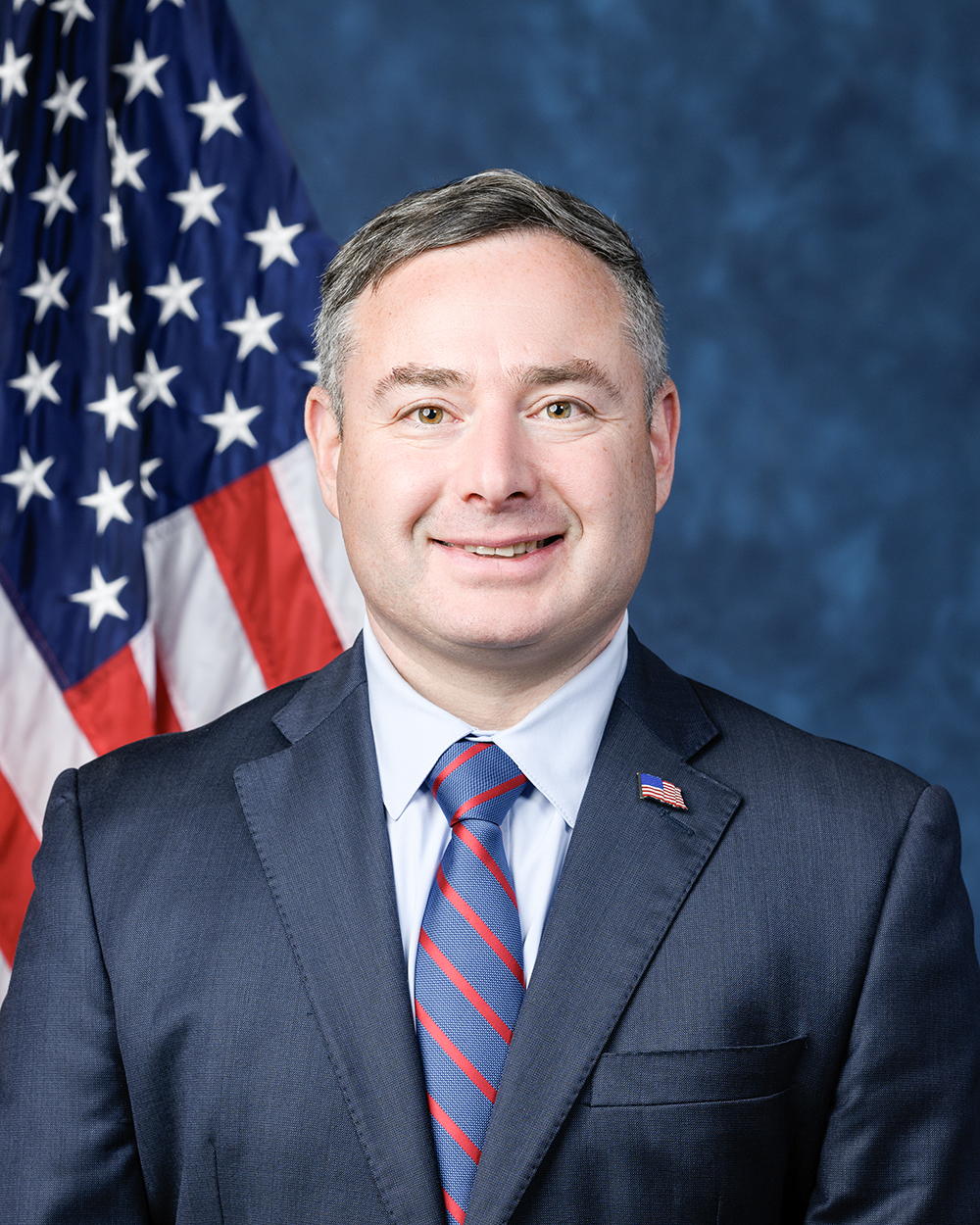
Photo of Eugene Simon Vindman
D United States House · District 7 · Virginia On the 2026 ballot

Rep. Eugene Simon Vindman

Compare
Total votes
669
all sessions
Attendance
99%
5 missed
Higher than 78% of chamber peers
With party
91%
of cast votes
Lower than 92% of chamber peers
Bipartisan score
5%
crosses aisle rarely
Higher than 91% of chamber peers
Sponsored
1,103
bills & resolutions
Higher than 98% of chamber peers
Committees
6
assignments
1,103 bills and resolutions

Sponsored bills

Total
1,103
Primary
72
Co-sponsor
1,031
This page
1,103
matching current filters
Co-sponsor HR 6259
In committee · Oregon House · Co-sponsor
No Fentanyl on Social Media Act

Maddy summaryHR 6259, the "No Fentanyl on Social Media Act," requires the Federal Trade Commission (FTC) to produce a detailed report within one year of enactment. The report must examine how minors access fentanyl (including pressed pills) through social media platforms, covering sellers' methods, health risks, platform design impacts, and current measures by platforms, law enforcement, and medical professionals. It specifically asks for recommendations to reduce this access and mandates consultation with stakeholders like parents and medical experts. The bill does not ban fentanyl sales or create new penalties; it solely focuses on gathering information to inform future policy.

In committee Dec 11, 2025 1 co-sponsor
Co-sponsor HR 5360
In committee · Oregon House · Co-sponsor
AWARE Act

Maddy summaryHR 5360, the AWARE Act, requires the Federal Trade Commission (FTC) to create and publish public educational resources about AI chatbot safety within 180 days of the bill becoming law. These resources will specifically help parents, educators, and minors (under age 18) understand safe AI chatbot use, including how to identify risks, privacy practices, and supervision strategies. The FTC must model these materials after its existing Youville program. The bill defines "AI chatbot" as consumer-facing interactive AI systems but does not regulate or restrict chatbot development or use.

In committee Dec 11, 2025 1 co-sponsor
Co-sponsor HR 6574
In committee · Oregon House · Co-sponsor
Loan Equity for Advanced Professionals Act

Maddy summaryThis bill increases federal student loan limits for graduate and professional students. Starting July 1, 2026, it sets a $50,000 annual limit and a $200,000 total aggregate limit (beyond undergraduate borrowing) for unsubsidized Federal Direct Stafford loans. These changes directly affect graduate and professional students pursuing advanced degrees who rely on federal loans for education costs. The provisions aim to provide higher borrowing capacity for these students' educational expenses under the Higher Education Act.

In committee Dec 10, 2025 1 co-sponsor
Co-sponsor HR 6597
In committee · Oregon House · Co-sponsor
LET’S Protect Workers Act

Maddy summaryHR 6597, the LET’S Protect Workers Act, increases civil penalties for employers violating key labor laws to strengthen worker protections. It raises fines for child labor violations to up to $700,000 per incident causing death or serious injury, and doubles penalties for repeated wage/hour violations (up to $50,000 per violation). The bill also significantly boosts OSHA penalties (e.g., up to $800,000 for serious violations), adds new retaliation penalties for mine safety violations (up to $200,000 for repeat offenses), and clarifies that recordkeeping violations continue until corrected. These changes apply to employers across sectors, including manufacturing, agriculture, and mining, under the Fair Labor Standards Act, Occupational Safety and Health Act, and Mine Safety Act.

In committee Dec 10, 2025 1 co-sponsor
Co-sponsor HR 5131
Passed · Oregon House · Co-sponsor
Public Lands Military Readiness Act of 2025

Maddy summaryHR 5131 extends military land withdrawals for training at key facilities until 2051, including Fort Greely and Fort Wainwright in Alaska, Fort Bliss's McGregor Range in New Mexico, and Fort Irwin in California. It corrects specific land area descriptions for these ranges (e.g., adjusting acreage for McGregor Range from 608,385 to 605,401 acres and Fort Irwin from 110,000 to 117,710 acres). The bill directly affects military training operations by maintaining current land use without new restrictions or requirements. It makes no policy changes beyond extending existing withdrawals and fixing technical land description errors.

Passed Dec 10, 2025 1 co-sponsor
Co-sponsor HR 4993
In committee · Oregon House · Co-sponsor
Joe Fiandra Access to Home Infusion Act of 2025

Maddy summaryThis bill expands Medicare coverage for home infusion therapy by changing how external infusion pumps and certain non-self-administered drugs are treated as durable medical equipment. It requires that these items be covered if three conditions are met: the drug's FDA-approved instructions require professional supervision, a qualified home infusion supplier administers/supervises the therapy at home, and the drug requires at least 12 infusions annually (either IV/subcutaneous or at pump-requiring rates). The bill directly affects Medicare beneficiaries needing long-term infusion drugs and qualified home infusion therapy suppliers. It also mandates that Medicare notify patients about cost-sharing differences between home infusion therapy and other care settings. This policy change clarifies coverage for specific home-based infusion treatments under defined safety and frequency requirements.

In committee Dec 10, 2025 1 co-sponsor
Co-sponsor HR 4503
Passed · Oregon House · Co-sponsor
ePermit Act

ePermit Act This bill establishes requirements related to digitizing environmental reviews conducted under the National Environmental Policy Act of 1969 (NEPA). The Council on Environmental Quality (CEQ) must develop, publish, and iteratively update data standards for the collection and curation of certain data related to environmental reviews. CEQ must also design, test, and build prototype tools for environmental reviews. Additionally, CEQ must publish guidance to assist relevant agencies in implementing such standards as well as certain minimum functional requirements, such as data sharing that enables automated transfer of relevant data among federal agencies. Federal agencies responsible for environmental reviews or authorizations must implement the data standards and such minimum functional requirements. To the maximum extent practicable, CEQ and such agencies must iteratively develop and maintain a unified interagency data system consisting of interconnected federal agency systems and shared services for environmental reviews and authorizations, including a common interactive, digital, cloud-based authorization portal. Within a year, CEQ must oversee a pilot of shared services for environmental reviews and authorizations, including the portal. To the maximum extent practicable, CEQ must develop and implement the unified interagency data system by December 1, 2027.

Passed Dec 10, 2025 1 co-sponsor
Co-sponsor HR 6509
In committee · Oregon House · Co-sponsor
SAFE Drugs Act of 2025

Maddy summaryHR 6509, the SAFE Drugs Act of 2025, limits how often pharmacies and healthcare providers can create custom drug formulations that copy standard medications. It restricts compounding any drug essentially identical to a commercially available product to no more than 20 times per month for individual patients. The bill also requires pharmacies compounding such drugs for out-of-state patients more than 20 times monthly to report details to the FDA, while exempting hospital pharmacies. These changes aim to improve safety oversight of non-standard drug compounding by setting clear limits and reporting rules.

In committee Dec 9, 2025 1 co-sponsor
Co-sponsor HR 6543
In committee · Oregon House · Co-sponsor
Health Care Worker and First Responder Fairness Act

Maddy summaryThis bill exempts certain wages earned by health care workers and first responders during the COVID-19 pandemic (January 2020-May 2023) from Social Security’s earnings test, ensuring these workers receive full retirement benefits without reduction. It also creates a future framework: during federally declared public health emergencies with healthcare worker shortages, the Social Security Commissioner may issue waivers to exclude such wages from the earnings test. The bill defines "health care professional" and "first responder" using existing law and requires annual reporting on issued waivers. It directly affects workers in these fields who earned wages during qualifying periods, removing a barrier to full Social Security benefits. The policy change is purely procedural, adjusting how Social Security calculates earnings for these specific workers.

In committee Dec 9, 2025 1 co-sponsor
Co-sponsor HR 6524
In committee · Oregon House · Co-sponsor
HIRE Act

Maddy summaryHR 6524, the HIRE Act, extends the Work Opportunity Tax Credit (WOTC) through 2030 and adds a new provision to incentivize hiring individuals receiving Social Security disability benefits. The bill directly affects employers who hire people certified as eligible for disability insurance benefits under the Social Security Act within 60 days before employment. Key provisions include modifying the tax credit to cover "qualified social security disability insurance beneficiaries" and requiring certification by a local agency for eligibility. The changes apply to new hires beginning work after December 31, 2025, with the credit extension applying through 2030.

In committee Dec 9, 2025 1 co-sponsor
Showing 361 to 370 of 1,103 bills
Previous 1 … 36 37 38 … 111 Next