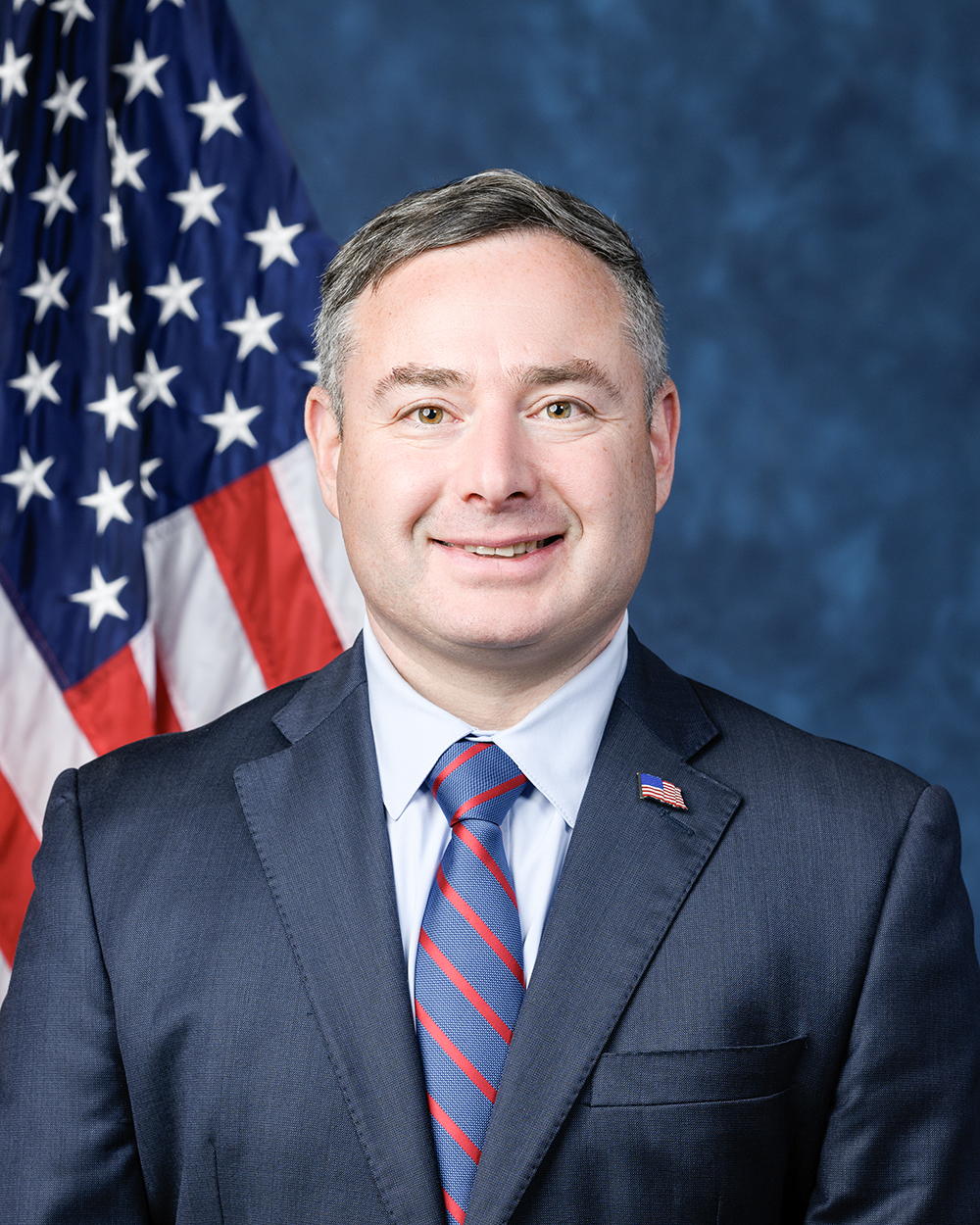
Photo of Eugene Simon Vindman
D United States House · District 7 · Virginia On the 2026 ballot

Rep. Eugene Simon Vindman

Compare
Total votes
669
all sessions
Attendance
99%
5 missed
Higher than 78% of chamber peers
With party
91%
of cast votes
Lower than 92% of chamber peers
Bipartisan score
5%
crosses aisle rarely
Higher than 91% of chamber peers
Sponsored
1,103
bills & resolutions
Higher than 98% of chamber peers
Committees
6
assignments
1,103 bills and resolutions

Sponsored bills

Total
1,103
Primary
72
Co-sponsor
1,031
This page
1,103
matching current filters
Co-sponsor HR 6758
In committee · Oregon House · Co-sponsor
UPLIFT Act

Maddy summaryThe UPLIFT Act creates a new federal tax credit for households with high residential energy costs. It allows individuals to claim up to $1,200 (or $2,400 for joint returns) annually for electricity, natural gas, or propane used in their primary U.S. home, but only when average energy prices exceed 102% of the prior year's level. The credit phases out for taxpayers earning over $75,000 (single) or $150,000 (joint), and refunds won't count as income for means-tested programs like SNAP. This directly affects renters and homeowners with qualifying energy expenses in their primary residence.

In committee Dec 16, 2025 1 co-sponsor
Co-sponsor HR 6735
In committee · Oregon House · Co-sponsor
Connecting Caregivers to Medicare Act of 2025

Maddy summaryHR 6735, the Connecting Caregivers to Medicare Act of 2025, requires Medicare to improve access to beneficiary health information for family caregivers. It mandates the Secretary to provide outreach and education about authorizing caregivers to access personal health data through 1-800-MEDICARE, using a standardized CMS-10106 authorization form. The bill requires clear, multilingual information to be included in Medicare notices, on Medicare.gov, and in Medicare Advantage plan communications, along with training for call center staff. It also directs the development of best practices to prevent fraud related to caregiver access and requires feedback opportunities for caregivers. This affects Medicare beneficiaries (Part A/B enrollees), their family caregivers, and Medicare providers.

In committee Dec 16, 2025 1 co-sponsor
Primary HR 6770
In committee · Oregon House · Lead sponsor
Scam Defense Strategy Act

Maddy summaryHR 6770, the Scam Defense Strategy Act, requires the Commander of U.S. Cyber Command to submit a report within six months to Congress detailing recommended actions for the Secretary of Defense to defend U.S. citizens, assets, and interests against transnational organized crime networks linked to the Chinese Communist Party that operate digital scams. The bill addresses networks estimated to steal $43.8 billion annually through scams targeting Americans, including vulnerable groups like the elderly, with $1.9 billion in losses reported in 2024 alone. The report must cover cyber defense strategies to counter these networks, which the bill states are tied to Chinese state support, threaten U.S. defense priorities near military bases in the Philippines, and involve human trafficking. This legislation focuses on a coordinated government response rather than creating new programs.

In committee Dec 16, 2025 0 co-sponsors
Co-sponsor HR 6722
In committee · Oregon House · Co-sponsor
Automatic IRA Act of 2025

Maddy summaryThis bill establishes a framework for automatic retirement savings plans, requiring most employers to automatically enroll employees in Individual Retirement Arrangements (IRAs) with the option to opt out. Employees would be automatically enrolled at 6% of their salary in the first year, increasing to 10% over time, with employers making contributions and providing default investment options. Employers who fail to implement these plans would face a $10 daily penalty per employee, though small businesses with fewer than 10 employees are exempt. The bill also creates a $500 annual tax credit for small employers to help offset implementation costs during the first three years of participation.

In committee Dec 15, 2025 1 co-sponsor
Primary HR 6728
In committee · Oregon House · Lead sponsor
Linking Seniors to Needed Legal Services Act of 2025

Maddy summaryHR 6728, the Linking Seniors to Needed Legal Services Act of 2025, provides $125 million annually (2026-2029) to fund state grants that connect vulnerable seniors to legal services through healthcare settings. It directly affects seniors facing legal issues impacting health (like housing or elder abuse) by establishing medical-legal partnerships in clinics, hospitals, and community health centers. Key provisions include funding for legal hotlines, partnerships between healthcare providers and lawyers, and requiring states to report on referral success rates and issue resolution times. The bill aims to address social determinants of health by embedding legal support within existing health services for seniors.

In committee Dec 15, 2025 0 co-sponsors
Co-sponsor HR 6718
In committee · Oregon House · Co-sponsor
Professional Student Degree Act

Maddy summaryHR 6718, the Professional Student Degree Act, amends the Higher Education Act to clarify the definition of a "professional degree" for federal education purposes. It replaces the previous definition with a new section listing specific degrees that meet the criteria, including Pharmacy (Pharm.D.), Law (J.D.), Medicine (M.D.), Dentistry (D.D.S.), Veterinary Medicine (D.V.M.), and others like Nursing (D.N.P.) and Business Administration (M.B.A.). This definition requires degrees to signify both completion of academic requirements for professional practice (often requiring licensure) and skills beyond a bachelor's level. The bill directly affects students pursuing these designated degrees by formally recognizing them under federal education law, without creating new programs or changing funding.

In committee Dec 15, 2025 1 co-sponsor
Primary HR 6729
In committee · Oregon House · Lead sponsor
Auto Reenroll Act of 2025

Maddy summaryThe Auto Reenroll Act of 2025 modifies retirement savings plan rules to allow automatic re-enrollment for employees who previously opted out. Specifically, it permits employers to automatically place employees back into retirement contribution plans after 1-3 years (without requiring a new election), unless the employee actively chooses to remain opted out. This applies to 401(k) plans and similar retirement arrangements, directly affecting employees who had previously declined to contribute. The law ensures plans won’t be disqualified for using this automatic re-enrollment method, streamlining participation while respecting employee choice.

In committee Dec 15, 2025 0 co-sponsors
Co-sponsor HR 2550
Passed · Oregon House · Co-sponsor
Protect America's Workforce Act

Maddy summaryThe Protect America's Workforce Act cancels an executive order issued on March 27, 2025, that excluded certain groups from federal labor-management relations programs, making it legally unenforceable. It also ensures that all collective bargaining agreements between federal agencies and labor unions, which were active as of March 26, 2025, remain fully effective until their agreed terms expire. This directly affects federal agencies, labor unions, and the employees covered by these agreements. The bill prevents federal funds from being used to implement the canceled executive order while preserving existing labor agreements.

Passed Dec 15, 2025 1 co-sponsor
Co-sponsor HR 452
Signed into law · Oregon House · Co-sponsor
Miracle on Ice Congressional Gold Medal Act

Miracle on Ice Congressional Gold Medal Act This act provides for the award of Congressional Gold Medals to the members of the 1980 U.S. Olympic men's ice hockey team in recognition of the team's achievement at the 1980 Winter Olympic Games.

Signed into law Dec 12, 2025 1 co-sponsor
Co-sponsor HR 6666
In committee · Oregon House · Co-sponsor
HIRRE Prosecutors Act of 2025

Maddy summaryThe HIRRE Prosecutors Act of 2025 establishes a federal grant program to help state, local, tribal, and territorial prosecutor offices hire, retain, and train prosecutors and support staff. It authorizes $10 million annually (2026-2030) for competitive grants, covering up to 75% of eligible costs, with preference given to rural, tribal, and areas rehiring laid-off prosecutors. Grantees must cover the remaining 25% of costs (or qualify for a waiver), and funds cannot replace existing state/local funding but must supplement it. All funded projects require data tracking and annual performance evaluations by the Attorney General.

In committee Dec 11, 2025 1 co-sponsor
Showing 341 to 350 of 1,103 bills
Previous 1 34 35 36 111 Next