Maddy summaryHR 645, the National Constitutional Carry Act, would prevent all U.S. states and localities from requiring permits or imposing penalties for carrying firearms in public. It directly affects eligible U.S. citizens (including non-residents) who legally possess firearms under state and federal law, removing current permit requirements for public carry. The bill’s key provision amends federal law to invalidate any state or local law that criminalizes or discourages public firearm carry, except where private property owners clearly prohibit firearms or security screening occurs. This would override existing state permit laws, making permitless carry legal across all states and territories for qualified individuals.
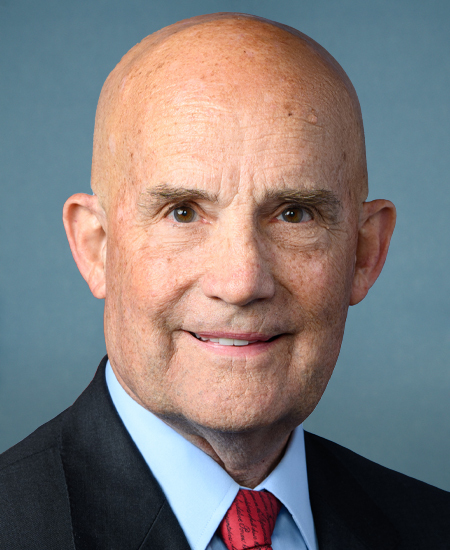
Rep. Keith Self
Sponsored bills
Maddy summaryHR 703, the Main Street Tax Certainty Act, makes a key tax deduction permanent for small business owners. It removes the temporary sunset provision (subsection (i)) from Section 199A of the tax code, ensuring the qualified business income deduction remains available for eligible small businesses. This change directly affects pass-through business owners (like S-corps, partnerships, and sole proprietorships) who currently qualify for this deduction. The permanent change takes effect for tax years starting after December 31, 2025.
Maddy summaryHR 648, the Strengthening our Servicemembers with Milk Act, requires the Secretary of Defense to provide a variety of milk options - including unflavored, organic, lactose-free, and different fat levels - to all members of the Armed Forces at military dining facilities. The bill mandates that installations offer these choices to support servicemember nutrition and dietary needs. It also prohibits purchasing milk from entities owned or controlled by foreign adversaries, as defined by Commerce Department regulations. This policy directly affects military personnel dining at on-base facilities nationwide.
Maddy summaryHRES 56 is a non-binding resolution proposing to memorialize unborn children by encouraging the public to lower the U.S. flag to half-staff on January 22 each year. It cites the anniversary of Roe v. Wade's 1973 ruling and the 2022 overturning of that decision, referencing the claim that over 62 million unborn children have "perished" since 1973. The resolution specifically urges the public to observe this day as the "Day of Tears," encourages flag lowering to "mourn and honor" those affected, and promotes legislative efforts to "affirm the sanctity of life" regarding abortion. As a symbolic gesture, it does not create new law but seeks to influence public observance. The resolution was introduced by multiple House members and referred to the Oversight Committee.
Maddy summaryThis bill prohibits federal funding from being provided to Planned Parenthood Federation of America or its related clinics. It redirects funds previously allocated to Planned Parenthood to other eligible providers like community health centers, hospitals, and clinics that offer women's health services. These services include contraception, cancer screenings, prenatal care, STI testing, and family planning - particularly in underserved areas. The bill explicitly states it does not reduce overall federal funding for women's health care or affect existing abortion-related funding restrictions.
Maddy summaryHR 627 requires states receiving Medicaid funds for family planning services to submit standardized abortion data to the CDC annually, covering 10 specific variables like maternal age, gestational age, race, procedure type, and whether the child survived. States must report by December 31 of the previous year, with delayed submissions allowing retroactive payments but false reporting risking one year of lost Medicaid funding. This creates a uniform national system to replace inconsistent state reporting, aiming to fill gaps where some states currently report no data. The bill directly affects states administering Medicaid family planning programs, linking their funding eligibility to data submission.
Maddy summaryThe RIFLE Act of 2025 amends federal firearm licensing laws to create a more structured process for addressing violations by licensed firearm businesses. It establishes graduated penalties for violations, with non-willful violations requiring notification and a reasonable timeframe to correct, while willful violations could lead to license suspension (up to 30 days for first-time offenders) or revocation. The bill adds procedural protections including written notice requirements, administrative hearings with due process, and a 90-day period to liquidate inventory after license expiration or revocation. It also requires the Attorney General to reconsider denied applications from former licensees and reverse certain past license revocations made under specific ATF orders. The bill aims to balance enforcement with due process for firearm licensees while maintaining public safety standards.
Maddy summaryHR 7 prohibits federal funds from being used for abortions or health insurance plans covering abortion, with exceptions for pregnancies resulting from rape, incest, or when a woman's life is endangered. It blocks federal premium tax credits under the Affordable Care Act for health plans covering abortion (except in specified cases) and requires clear disclosure of abortion coverage and related surcharges in plan materials. The bill allows individuals or employers to purchase separate abortion coverage using non-federal funds, such as out-of-pocket payments, without affecting federal subsidies. It directly affects federal health programs, ACA marketplace plans, and health insurance issuers offering coverage that includes abortion services.
Birthright Citizenship Act of 2025 This bill limits birthright citizenship by redefining what it means to be subject to the jurisdiction of the United States. Currently, a person born in the United States and subject to U.S. jurisdiction is entitled to citizenship. Under the bill, a person is subject to U.S. jurisdiction if he or she is born to a parent who is (1) a U.S. citizen or national, (2) a lawful permanent resident residing in the United States, or (3) a non-U.S. national ( alien under federal law) with a lawful immigration status who is performing active service in the Armed Forces. The bill does not affect the citizenship or nationality status of any person born before the bill's enactment date.
Maddy summaryHR 587 removes the lesser prairie-chicken (all populations) from the federal lists of threatened and endangered species under the Endangered Species Act. It also permanently amends the law to prevent the U.S. Fish and Wildlife Service from ever listing the bird as threatened or endangered in the future. This bill directly affects the lesser prairie-chicken by ending its current legal protections under the Endangered Species Act. The key mechanism is a specific exclusion added to the Act’s listing authority, blocking any future federal protection for this species.