Maddy summaryHR 814, the "Defund the CFPB Act," would eliminate all federal funding for the Consumer Financial Protection Bureau (CFPB) by amending the 2010 law that created it. Specifically, it replaces the CFPB's funding authorization with a fixed $0 amount, effectively shutting down the agency's operations. This direct change would prevent the CFPB from functioning as an independent agency, removing its ability to enforce consumer financial protections. As a result, consumers would no longer have access to the CFPB's regulatory oversight and enforcement actions regarding financial products and services.
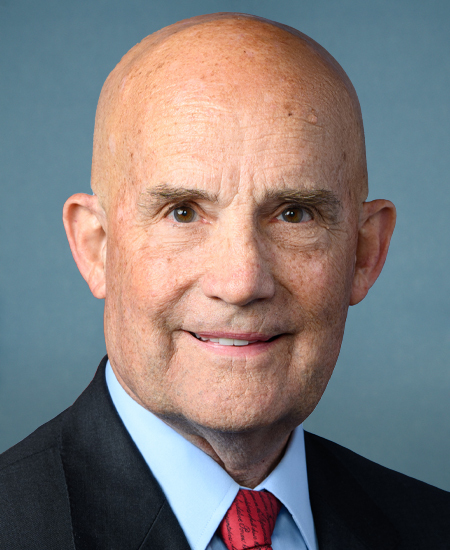
Rep. Keith Self
Sponsored bills
Maddy summaryHR 797, the Ultrasounds Save Lives Act of 2025, requires abortion providers to perform an ultrasound before an abortion (except in medical emergencies) and share the results with the patient. It mandates a specific informed consent form detailing the fetus's gestational age, medical risks, developmental stage (including heartbeat and organ development), and provider penalties for non-compliance. Violations trigger civil penalties of $100,000-$250,000 per incident, plus private lawsuits allowing patients to seek triple the abortion cost in damages. The law applies to licensed medical providers and those legally authorized to perform abortions, with exceptions only when ultrasound poses a direct risk to the patient's life or major bodily function.
Illegitimate Court Counteraction Act This bill imposes sanctions against foreign persons (individuals and entities) who assist the International Criminal Court (ICC) in investigating, arresting, detaining, or prosecuting certain individuals. The bill categorizes as protected persons (1) any U.S. individual, U.S. entity, or person in the United States, unless the United States is a state party to the Rome Statute of the ICC and provides formal consent to ICC jurisdiction; and (2) any foreign person that is a citizen or lawful resident of a U.S. ally that is not a state party to the Rome Statute or has not consented to ICC jurisdiction. If the ICC attempts to investigate, arrest, detain or prosecute a protected person, the President must impose visa- and property-blocking sanctions against the foreign persons that engaged in or materially assisted in such actions, as well as against foreign persons owned by, controlled by, or acting on behalf of such foreign persons. The President must also apply visa-blocking sanctions to the immediate family members of those sanctioned. Upon enactment, the bill rescinds all funds appropriated for the ICC and prohibits the subsequent use of appropriated funds for the ICC.
Maddy summaryHR 727 amends federal law to expand the definition of "valuable consideration" in transactions involving human fetal tissue. The bill specifically adds provisions to prohibit payments, waived fees, canceled debts, or free/discounted services related to tissue transportation, processing, storage, or implantation. This directly affects medical providers, laboratories, and facilities handling fetal tissue by restricting how they can receive compensation for these services. The key change clarifies that even indirect financial benefits, like reduced charges or waived costs, would be considered prohibited "valuable consideration."
Maddy summaryHR 729, the Teleabortion Prevention Act of 2025, prohibits healthcare providers from administering chemical abortions (using drugs to terminate pregnancy) via telehealth or remote means without being physically present during the procedure. It requires providers to physically examine the patient, be present at the location of the abortion, and schedule a follow-up visit within 14 days. The bill directly affects healthcare providers offering telemedicine abortion services, imposing fines up to $1,000 or up to 2 years in prison for violations. Exceptions apply for life-threatening medical emergencies, and the law explicitly excludes treatment for verified ectopic pregnancies. This bill targets the remote provision of abortion drugs, making in-person provider presence mandatory for such procedures.
Life at Conception Act This bill declares that the right to life guaranteed by the Constitution is vested in each human being at all stages of life, including the moment of fertilization, cloning, or other moment at which an individual comes into being. Nothing in this bill shall be construed to authorize the prosecution of any woman for the death of her unborn child.
Maddy summaryHR 21, the Born-Alive Abortion Survivors Protection Act, requires medical staff at abortion facilities to provide the same immediate care and hospital admission to any infant born alive during an abortion as they would for any newborn. It mandates reporting failures to provide this care to law enforcement and imposes penalties of up to 5 years in prison for violations, with harsher penalties for intentional killing. The bill also allows women who undergo abortions to sue for civil damages, including triple the abortion cost, and provides for attorney fees. It defines "abortion" to exclude procedures performed after viability to preserve a live birth. This law directly affects healthcare providers at abortion facilities and creates new federal legal obligations for them.
Maddy summaryThe MACARTHUR Act (HR 700) requires the U.S. Military Academy to add the phrase "Duty, Honor, Country" to its official mission statement within 30 days of the bill's enactment. This change directly affects the U.S. Military Academy, mandating a formal update to its foundational statement by the Secretary of the Army. The bill reinforces Congress's view that these principles should be central to the academy's ethos and instilled in all cadets. The mechanism is a straightforward amendment to the academy's existing mission statement, with no additional program changes or funding impacts.
Maddy summaryHR 643, the Federal Insurance Office Elimination Act, eliminates the Federal Insurance Office within the Treasury Department and removes the position of its Director. The bill updates federal law by deleting references to the office from the Dodd-Frank Act and other legislation, while clarifying that Treasury retains all existing authority over insurance matters. This change directly affects the structure of federal financial regulation by removing a specific oversight role and modifying related statutory language. The bill does not alter insurance policy or create new regulatory requirements, only removing an existing office and its associated references.
Maddy summaryHR 679 nullifies specific changes the Food and Drug Administration (FDA) made in January 2023 to the safety rules (REMS) for the abortion pill mifepristone. The bill prohibits the FDA from implementing any future safety rules for mifepristone that are substantially similar to the nullified changes. This directly affects the FDA's regulatory authority over mifepristone, which could impact how healthcare providers prescribe the medication and how patients access it. The bill focuses solely on reversing the FDA's 2023 modifications without altering the drug's broader approval status.