

Maddy summaryThe Moms Matter Act directs the Department of Health and Human Services to create two main grant programs aimed at improving maternal mental health and reducing health disparities among pregnant and postpartum individuals. The first program provides funding to community organizations and healthcare providers to expand services that integrate mental health care into prenatal and postpartum settings, with a specific focus on groups facing higher risks of mortality and morbidity. The second program offers grants to educational institutions to train and recruit a diverse workforce of mental health professionals who specialize in caring for pregnant and postpartum patients. Both initiatives require recipients to submit annual reports on their activities and outcomes, while the legislation authorizes $25 million and $15 million respectively for each program from fiscal years 2027 through 2031.
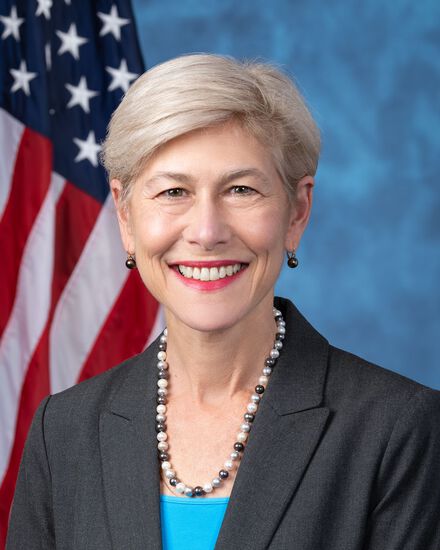
Rep. Deborah K. Ross
Sponsored bills
Maddy summaryThis resolution honors the 75th anniversary of the American College of Obstetricians and Gynecologists, a professional organization representing over 62,000 doctors who provide essential reproductive and women's health care. The text acknowledges the group's long-standing contributions to improving maternal health, reducing mortality rates, and offering reliable medical information to patients nationwide. While the measure does not alter laws or funding, it formally expresses the House of Representatives' appreciation for the organization's leadership and reaffirms a commitment to supporting women's health and research.
Maddy summaryThis bill establishes a compensation fund to provide financial support to law enforcement officers who actively defended the U.S. Capitol on January 6, 2021, and suffered injuries, emotional distress, or death as a result. The program is administered by a Special Master appointed by the Attorney General, who will review individual claims for economic and non-economic losses while ignoring any questions of negligence. Eligible officers can receive specific payments for their injuries or the death of a colleague, with a guaranteed minimum of $4.975 million for death claims, plus an additional equal distribution to all qualifying officers regardless of injury status. The legislation also includes provisions to reduce payouts by any other compensation the claimant has already received and grants the federal government the right to recover funds if they are later paid out in related legal settlements.
Maddy summaryThe Universal School Meals Program Act of 2026 mandates that all public schools provide free breakfast and lunch to every enrolled student, regardless of income. It establishes specific funding rates for these meals, adjusts payments based on the use of locally sourced food, and eliminates the ability of schools to collect debt for unpaid charges. Additionally, the bill expands free meal access to summer programs, afterschool care, and incarcerated juveniles while updating poverty measurement standards across various federal education and nutrition laws.
Maddy summaryThe Criminal History Access Act expands the types of government entities that can receive criminal history records from the Federal Bureau of Investigation (FBI) for official use. It specifically allows the FBI to share these records with the United States Sentencing Commission, State sentencing commissions, Indian tribes, and State peace officer standards and training agencies. These State agencies are defined as those with statutory authority to set standards for law enforcement hiring, training, and ethical conduct. The bill also broadens the definition of "State" for these purposes to include U.S. territories, and requires the Attorney General to update regulations to reflect these changes within 180 days.
Maddy summaryThis bill would amend federal law to strengthen penalties for organized retail crime by expanding definitions of theft to include digital goods, gift cards, and setting a $5,000 aggregate value threshold for charges over a 12-month period. It would establish a new "Organized Retail and Supply Chain Crime Coordination Center" under Homeland Security to coordinate Federal, State, local, and Tribal law enforcement efforts against cross-jurisdictional theft groups. The Center would share information with retailers, transportation companies, and law enforcement agencies, track crime trends, and produce annual reports on organized retail crime. This legislation directly affects retailers, supply chain businesses, and law enforcement agencies, while targeting organized crime groups responsible for a 93% increase in larceny incidents and rising safety concerns for retail employees. The bill aims to address significant financial losses and supply chain disruptions noted in the National Retail Federation's 2023 data.
Maddy summaryThe TREE Act prohibits the import and sale in the U.S. of goods linked to deforestation, starting in 2029, and directly affects companies that trade or sell commodities like cattle, soy, palm oil, and wood. To enforce this ban, the bill requires importers to submit detailed due diligence statements proving their products are deforestation-free, while also mandating increased customs inspections for goods from countries categorized as high or moderate risk. The U.S. Trade Representative will annually assess and rank countries based on their deforestation rates and environmental laws, with higher-risk nations facing stricter scrutiny and potential trade restrictions. Additionally, the law establishes civil penalties for violations and directs half of the collected fines toward providing financial assistance to developing countries for forest management.
Maddy summaryThis bill expresses the sense of Congress that medication abortion is a safe medical treatment approved by federal regulators. It asserts that this federal approval overrides any state laws requiring the procedure to be dispensed in person by a healthcare provider. Additionally, the bill states that federal approval preempts state restrictions on prescribing or dispensing medication abortion through telehealth. Essentially, the legislation argues that states cannot enforce rules limiting how medication abortion is delivered if those rules conflict with the federal approval process.
Maddy summaryThe Data Infrastructure Risk Reduction Act directs the Department of Homeland Security to identify data centers that should be classified as critical infrastructure within 180 days of enactment. This directive requires the agency to evaluate the security of power and water supplies connected to these facilities and assess the potential impact of their locations near residential communities. Following this assessment, the Department must submit a strategy to Congress outlining how to defend these sites from breaches and protect nearby neighborhoods. The law applies to federal agencies responsible for cybersecurity and infrastructure security, specifically focusing on data centers as defined by existing energy legislation.
Maddy summaryThe Blood Pressure MATTERS Act requires health insurance plans, Medicaid programs, and the Children's Health Insurance Program to cover self-measured blood pressure monitors for pregnant and postpartum individuals without charging copayments or deductibles. This coverage applies to devices that allow individuals to measure their own blood pressure without a doctor's help, provided the device is FDA-cleared and listed on a specific validated registry. The law mandates that these devices be covered regardless of whether a person has been diagnosed with high blood pressure, but limits the benefit to one device per person every two years. These changes take effect approximately 120 days after the bill is enacted, with a grace period for states that need to pass additional legislation to comply.