Maddy summaryThe No Taxpayer-Funded Settlement Slush Funds Act of 2026 prohibits the use of federal money to pay specific settlements involving high-ranking government officials and their close associates. It bars payments to the President, Vice President, their immediate families, cabinet members, senior executive staff, political appointees, and individuals connected to these roles, as well as any entity owned by the President or Vice President. Additionally, the bill restricts settlements related to claims about the January 6 Capitol attack, foreign election interference, or previously dismissed lawsuits, while requiring Treasury reports for large settlements and allowing the government to seek repayment if rules are broken.
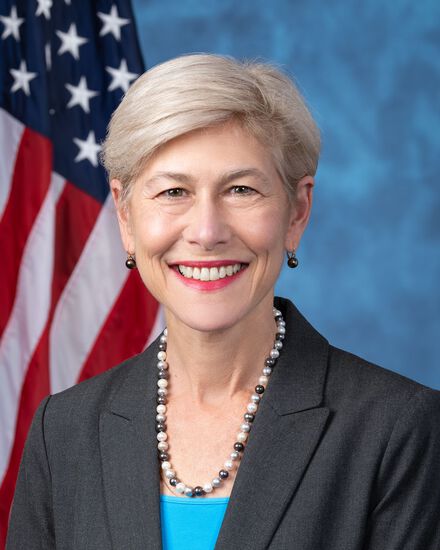
Rep. Deborah K. Ross
Sponsored bills
Maddy summaryThis bill creates federal programs to advance alternative protein production through biomanufacturing and bioprocessing. It authorizes $15 million annually for research centers focused on protein diversification, $50 million for grants to companies building food biomanufacturing facilities, and $25 million for workforce development programs. The bill also requires a national strategy on protein security coordinated across multiple federal agencies. These provisions aim to strengthen food supply chains, create jobs in the growing protein sector, and reduce reliance on foreign commodities. The bill explicitly excludes insect-based food production from its scope.
Maddy summaryThis bill (HR 3869, the Every Veteran Housed Act) expands eligibility for veterans' homelessness benefits by redefining who qualifies as a "veteran" under existing law. It removes barriers for veterans discharged under conditions other than dishonorable or by general court-martial, regardless of service length, component (active/reserve), or current military status. The bill ensures these veterans can access housing assistance programs without being excluded due to prior discharge status or service details. It makes minor conforming changes to related provisions but does not create new benefits or alter funding. This directly affects veterans previously excluded from homelessness assistance due to technical discharge or service criteria.
Maddy summaryThis bill restores veterans' education benefits for periods spent at institutions later found to have fraud, closure, or approval issues. It prevents those periods from counting against a veteran's total benefit entitlement or lifetime limit. Educational institutions must repay the VA if they received benefits for veterans during these covered periods, including cases where courts found fraud or the school was closed for violations. The law applies to veterans using benefits under chapters 30, 31, 32, 33, 35, or 1606/1607 of title 38.
Dental Care for Veterans Act This bill expands eligibility for veterans for dental care provided by the Department of Veterans Affairs (VA). Specifically, the bill makes all veterans who are enrolled in the VA health care system eligible for VA-provided dental services. Currently, only veterans who have a service-connected dental issue or meet other narrow criteria are eligible for certain dental services. The bill phases in eligibility over four years based upon existing eligibility, degree of service-connected disability or other disability, prisoner of war status, award of a Purple Heart, financial need, or VA health care eligibility.
Maddy summaryThe Traumatic Births Research Act of 2026 directs the Department of Health and Human Services to study how traumatic birth experiences and post-traumatic stress disorder affect mothers, infants, and families. This legislation expands research funding to include states, Indian Tribes, and Tribal organizations, requiring that study results be broken down by race and ethnicity. Additionally, the bill authorizes a pilot program to compare midwife-led care models against traditional medical care regarding their impact on birth trauma and mental health. To monitor progress, the Secretary must submit an interim report by the end of fiscal year 2028 and a final report by the end of fiscal year 2030.
Maddy summaryThe Corporate Prosecution Reform Act establishes a new Office of Corporate Enforcement within the Department of Justice to oversee agreements with companies accused of federal crimes. It restricts the use of deferred and non-prosecution agreements by banning them for offenses involving loss of life, serious injury, or specific crimes like terrorism and human trafficking, while requiring courts to ensure these deals adequately compensate victims and prevent future misconduct. To increase transparency, the bill mandates that the Attorney General publish the full text of all such agreements on a public website and submit annual reports to Congress detailing their terms and compliance. Additionally, the legislation creates standardized guidance for prosecutors to ensure consistent penalties for similar corporate offenses and updates federal crime categories to include cyber and financial crimes.
Maddy summaryThis non-binding resolution expresses the House of Representatives' view that the FDA should regulate mifepristone, a medication used for abortion, based on scientific evidence rather than political pressure. It highlights over 25 years of data showing the drug is safe and effective when prescribed via telemedicine or dispensed by mail and pharmacy. The bill advocates for policies that ensure equitable access to this care, particularly for marginalized communities facing barriers due to state-level restrictions. By citing numerous studies and medical organizations, the resolution calls for transparent, science-based decisions to maintain current access methods.
Maddy summaryThe Supporting Women COPS Act of 2026 creates a 12-member Task Force to study and recommend national hiring standards for law enforcement that do not disadvantage women based on sex. This group will also provide advice on improving retention for female officers and helping them advance to leadership positions. States that adopt these recommendations will receive an additional 5 percent of their federal crime control funding, and the Attorney General will offer technical assistance to help states implement the standards. The Task Force must submit its findings and recommendations to Congress within 18 months of the bill's enactment.
Maddy summaryThe Protecting Our Democracy Act is a comprehensive legislative bill designed to prevent abuses of presidential power, restore checks and balances, and defend elections against foreign interference. Key provisions include prohibiting the President from granting self-pardons, requiring congressional oversight for pardons involving the President or their family, and banning the President from accepting payments from individuals who have received clemency. The bill also strengthens enforcement of the Hatch Act and ethics rules for political appointees, mandates greater transparency in presidential tax returns and campaign finances, and restricts the use of federal property for political conventions. Additionally, it expands reporting requirements for foreign contacts in federal campaigns and imposes stricter penalties for violations of election laws.