Maddy summaryThis bill is a non-binding resolution that expresses the House of Representatives' sentiment to honor public servants for their dedication to the United States. It specifically acknowledges the work of federal, state, and local government employees, as well as uniformed service members, who deliver essential services and support the economy. The resolution calls on the American public to observe Public Service Recognition Week with ceremonies and activities that recognize these contributions. Because it is a symbolic expression of the House's feelings rather than a law with enforceable rules, it does not create new policies or mandate specific actions.
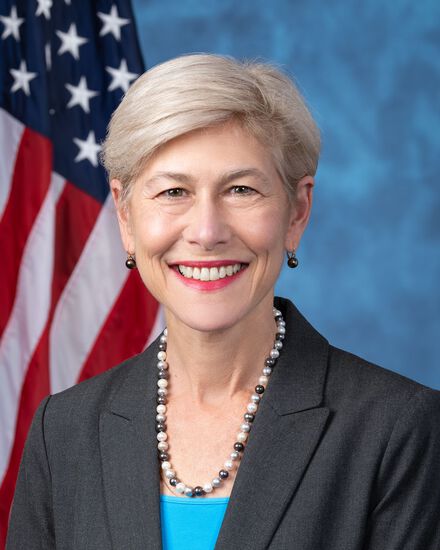
Rep. Deborah K. Ross
Sponsored bills
Maddy summaryH.R. 1243 is a House resolution that formally recognizes May as Asian American, Native Hawaiian, and Pacific Islander Heritage Month to celebrate the contributions of these communities to U.S. history. The bill highlights the diverse populations, historical milestones, and significant achievements of Asian Americans, Native Hawaiians, and Pacific Islanders in government, the military, and society. It also acknowledges the ongoing challenges faced by these groups, including a rise in hate crimes and historical discrimination. As a commemorative resolution, the measure does not create new laws or funding but serves to express official congressional appreciation and awareness.
Maddy summaryThe Petfax Act of 2026 requires sellers of dogs and cats to provide buyers with specific information about the animal's source, health history, and any past violations of animal welfare laws. This disclosure rule applies to licensed dealers, retail pet stores, and other commercial sellers but excludes public shelters and bona fide rescue organizations. Additionally, the bill makes it illegal for sellers to misrepresent whether a pet came from a high-volume breeder and gives the Federal Trade Commission authority to enforce these consumer protection standards. The legislation also tightens licensing rules by prohibiting the issuance of new licenses to immediate family members or related entities if a previous license at the same location was suspended or revoked in the last decade. Finally, the act allows the Secretary of Agriculture to revoke any licenses that were improperly granted after the law's enactment.
Maddy summaryThe Closing Bankruptcy Loopholes for Child Predators Act of 2026 modifies federal bankruptcy laws to ensure that individuals and organizations accused of sexually abusing children cannot easily hide their assets or avoid financial responsibility. Key provisions include preventing the discharge of debts related to child sexual abuse, requiring courts to hold special conferences for victims to share their experiences, and mandating independent forensic audits for nonprofit organizations facing such allegations. The bill also restricts the ability of debtors to release third parties from liability without strong voter approval and prohibits sealing evidence related to these crimes, except to protect a victim's identity when the accused is found not guilty.
Maddy summaryThis bill, titled the Protecting Human Rights and Public Health in Foreign Assistance Act, aims to cancel specific regulations issued by the Department of State. It directly affects the federal government by prohibiting any department or agency from enforcing, implementing, or proposing rules related to protecting life, combating discriminatory equity ideology, and combating gender ideology in foreign aid programs. The legislation treats these cancelled rules as if they never existed, effectively nullifying their impact on future foreign assistance policies.
Maddy summaryThe American Leadership in AI Act establishes a new Center for AI Standards and Innovation at the National Institute of Standards and Technology to develop voluntary guidelines and testing methods for ensuring artificial intelligence systems are safe, secure, and reliable. It creates a large National Artificial Intelligence Research Resource to provide researchers and students with access to advanced computing power and data, while also launching prize competitions to solve specific challenges in areas like national security and health care. The bill mandates that every federal agency appoint a full-time Chief Artificial Intelligence Officer to oversee responsible AI use and requires the development of federal standards for AI procurement and security. Additionally, the legislation strengthens penalties for financial crimes committed using AI, protects workers who report AI safety violations from retaliation, and expands educational programs to improve AI literacy among K-12 students and the broader workforce.
Maddy summaryThis bill authorizes the placement of a monument at Arlington National Cemetery to honor veterans of the Army Security Agency who served between 1945 and 1976. The monument will be designed with approval from the Secretary of the Army and the National Army Security Agency Association, and the association will be responsible for funding the site preparation, construction, and ongoing maintenance. If no suitable space exists within the cemetery, the monument may be placed outside the entrance instead. The legislation defines the covered service periods using existing legal definitions for World War II, the Korean conflict, and the Vietnam era.
Maddy summaryThis House Resolution expresses support for the staff of public, school, academic, and special libraries across the United States and the essential services they provide to communities. It recognizes libraries as critical infrastructure and supports prioritizing full funding for their services at federal, state, and local levels. The resolution also reaffirms the public's right to access information, the right of library workers to organize and collectively bargain, and their civil rights to perform their duties without intimidation.
Maddy summaryThe Neighborhood Tree Act of 2026 establishes a new federal "Neighborhood Tree Fund" to provide financial assistance for planting and maintaining urban trees. This fund will support states, Indian Tribes, and local governments or community groups in increasing tree canopy and improving urban forest health. The bill prioritizes projects in low-income areas, historically disadvantaged communities, and neighborhoods with less tree cover and higher summer temperatures to address environmental inequities. It authorizes substantial funding, starting at $100 million in fiscal year 2025, and also adjusts an existing advisory council's membership to include representatives from smaller and low-income communities.
Maddy summaryThe Protecting America from Seasonal and Pandemic Influenza Act of 2026 aims to strengthen the United States' ability to prevent, detect, and respond to flu outbreaks by modernizing vaccine development and securing the domestic supply chain. The bill sets specific national goals, such as delivering pandemic vaccines within 12 weeks of a threat emerging and developing a universal flu vaccine within a decade, while also requiring agencies to create detailed plans to meet these targets. It authorizes significant funding to support research into new diagnostics and treatments, establishes partnerships to reduce reliance on foreign manufacturing, and launches demonstration projects to improve vaccine access for underserved communities. Additionally, the legislation mandates regular reporting on public communication strategies to combat misinformation and ensures that federal stockpiles of antivirals and testing supplies are regularly updated and diversified.