Maddy summaryThe LEAD Act of 2025 reclassifies certain reusable unmanned aircraft systems (drones) as standard aircraft for export purposes, removing them from missile-related controls under the Missile Technology Control Regime. It directly affects drone manufacturers and exporters by changing how these systems are reviewed and approved for international sales. Key provisions require the President to amend export regulations within 180 days to treat these drones as manned aircraft systems, separate from missile technology, and subject to standard aircraft export rules. This simplifies export processes for qualifying drones but does not alter their military or commercial use.
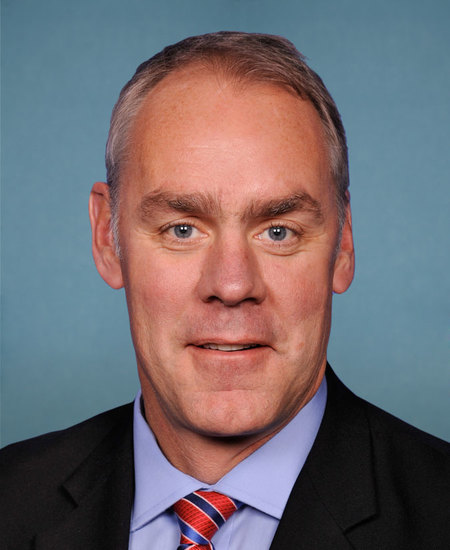
Rep. Ryan K. Zinke
Sponsored bills
Maddy summaryThe Parity for Tribal Law Enforcement Act enables tribal law enforcement officers who have contracted federal law enforcement duties under the Indian Self-Determination Act to enforce federal law on tribal lands. To qualify, officers must complete training comparable to Bureau of Justice Services employees, pass a background check, and receive certification from the Bureau. The bill also designates these officers as federal law enforcement officers for legal protections under the Federal Tort Claims Act and retirement benefits. Additionally, it requires the Attorney General to coordinate Department of Justice efforts to improve public safety in tribal communities through better data collection, training, and reporting.
Resident Physician Shortage Reduction Act of 2025 This bill increases the number of residency positions eligible for graduate medical education payments under Medicare for qualifying hospitals, including hospitals in rural areas and health professional shortage areas. The bill provides for an additional increase of 2,000 positions per fiscal year from FY2026-FY2032; during this period, each hospital may receive up to 75 additional positions in total under the bill and current law. Additionally, one-third of the positions that are made available under the bill must be allocated to hospitals that are already operating above applicable resident limits. The bill also requires the Government Accountability Office to report on strategies to increase the diversity of the health professional workforce, including with respect to representation from rural, low-income, and minority communities.
Maddy summaryThis bill would allow national parks to add a surcharge to entrance fees for international visitors (defined as tourists on certain nonimmigrant visas). Park managers could set the fee amount to maximize revenue while maintaining visitation levels, with proceeds staying with the specific park for maintenance, visitor services, and staffing. Exceptions include no surcharge at the Washington Monument and for certain International Peace Parks managed under international agreements. A similar surcharge would apply to international visitors purchasing park passes, with those funds directed to a national restoration fund instead of local parks.
Maddy summaryHR 4335, the Abraham Accords Defense Against Terror Act, streamlines U.S. defense exports to countries that have normalized relations with Israel (via the Abraham Accords) and cooperate with the U.S. on countering Iran and Iran-aligned threats in the Middle East and North Africa. The bill authorizes the Secretary of State to identify qualifying countries and fast-tracks approval for military sales, leases, or transfers to them, requiring a 15-day congressional notification with specific safeguards. Key safeguards include ensuring sensitive U.S. technology isn’t shared with China or Russia and mandating regular strategy reports to Congress on implementation, threat assessments, and pending defense deals over $25 million. This directly affects participating Middle Eastern nations and U.S. defense export processes, aiming to accelerate security cooperation without altering Israel’s military edge. The bill focuses on procedural changes to expedite defense cooperation, not on new funding or policy outcomes.
Maddy summaryHR 3613, the Streamlining Foreign Military Sales Act of 2025, amends the Arms Export Control Act by raising multiple financial thresholds for foreign military sales. It increases specific dollar limits, such as raising the threshold for certain sales from $250,000 to $500,000 (Section 36(a)(10)), and from $7 million to $30 million (Section 25(a)(1)). These changes affect defense contractors and U.S. government agencies processing foreign military sales under the Arms Export Control Act. The bill directly modifies existing financial caps without creating new programs or altering substantive approval processes.
Maddy summaryHR 4481, the ARMS Act, modifies the Special Defense Acquisition Fund (SDAF) under the Arms Export Control Act to streamline foreign defense sales. It removes specific language requiring "sales made under" and "actual value" from the fund's authorization, allowing faster processing of defense articles for allied nations. This directly affects defense contractors and U.S. government agencies handling Foreign Military Sales (FMS) and Direct Commercial Sales (DCS), aiming to reduce delivery delays. The bill seeks to strengthen the U.S. defense industrial base by improving the efficiency of selling defense products internationally, where global demand currently exceeds domestic spending by a two-to-one ratio.
Maddy summaryHR 1919, the "Anti-CBDC Surveillance State Act," prohibits the Federal Reserve from developing, testing, or issuing any central bank digital currency (CBDC) or similar digital assets. It specifically bans the Fed from offering direct financial products to individuals, maintaining individual accounts, or issuing CBDCs directly or indirectly through intermediaries like banks. The bill also blocks the Fed from using any digital asset for monetary policy and clarifies that physical currency's privacy protections remain intact. This policy directly affects the Federal Reserve System's ability to create or manage digital monetary tools.
Maddy summaryHR 4474, the Equal Shot Act of 2025, prohibits the Small Business Administration (SBA) from denying financial assistance - such as loans or guarantees - to firearm businesses solely because of their industry. It directly affects firearm manufacturers, distributors, trade associations, and affiliated entities like shooting ranges or training providers. The bill requires the SBA to treat these applicants equally under existing law, removing any policy that would block them based on their connection to firearms. This is a concrete policy change ensuring firearm-related businesses have the same access to SBA programs as other eligible applicants.
Maddy summaryHR 4363, the Defend Girls Athletics Act, requires public K-12 schools and colleges to certify annually that they comply with Executive Order 14201, which mandates keeping men out of women's sports. Schools must submit written compliance certifications by August 15 each year (for K-12) or July 1 (for colleges), with states reporting non-compliant agencies to the federal government. Schools or colleges failing to certify or violating the rule risk losing federal education funding, including returning unobligated funds and becoming ineligible for future federal support. The bill directly affects all public schools and colleges receiving federal education funds by tying their eligibility to adherence to this sports participation requirement.