Maddy summaryThis bill amends the Social Security Act to remove an exclusion for rural facilities primarily treating mental health conditions from Medicare coverage. It specifically changes Section 1861(aa)(2) by deleting the phrase "or a facility which is primarily for the care and treatment of mental diseases," allowing these facilities to qualify for Medicare reimbursement. The change directly affects rural behavioral health centers specializing in mental health care that were previously excluded. The amendment takes effect on January 1, 2027, enabling these facilities to access federal Medicare funding for services.
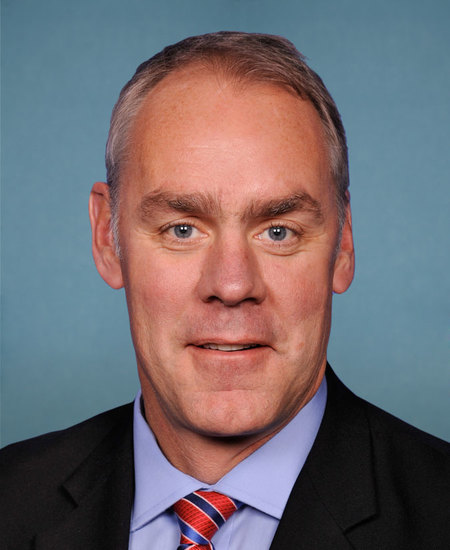
Rep. Ryan K. Zinke
Sponsored bills
Maddy summaryThis bill changes federal rules for rural healthcare facilities that employ physician assistants (PAs) and nurse practitioners (NPs). It requires these facilities (not run by a physician) to have arrangements consistent with state laws governing PA/NP practice, ensuring services follow state regulations. The policy directly affects rural clinics and hospitals seeking federal reimbursement for PA/NP services. The changes take effect January 1, 2027, aligning federal requirements with existing state oversight of these healthcare providers.
Maddy summaryHR 5198, the Rural Health Clinic Location Modernization Act of 2025, changes Medicare eligibility rules for rural health clinics by updating the definition of "urban area" used to determine clinic qualification. It replaces the current "urbanized area" standard with a clearer definition: any urban area (per Census Bureau data) having a population of 50,000 or more. This adjustment directly affects clinics seeking Medicare certification, ensuring they meet consistent geographic criteria for rural designation. The change takes effect January 1, 2027, aiming to simplify qualification rules without altering Medicare coverage or benefits.
Maddy summaryThis bill, officially titled the "FMS-Only List Review Act" (not "Made-in-America Defense Act"), requires the State and Defense Secretaries to annually review defense items currently only available via Foreign Military Sales (FMS) but not direct commercial sales. The review must assess transfer times, agency workload impacts, and national security/competitiveness benefits of shifting items to direct sales. It mandates a report to Congress within 30 days of each review, detailing identified items and reasons for changes. The bill directly affects defense contractors, the State Department, and Congress, focusing on streamlining sales processes without altering eligibility rules.
Maddy summaryHR 4215 establishes strict timelines for processing U.S. defense export licenses under the Arms Export Control Act. It requires the State Department to create a priority list of countries and end-users needing expedited approvals (45 days), while setting a 60-day deadline for all other applications. The bill mandates semi-annual reports to Congress detailing any delays in meeting these timelines, including specific reasons and planned resolutions. This directly affects defense exporters, foreign governments purchasing military equipment, and the State and Defense Departments responsible for licensing decisions. The law aims to streamline commercial defense exports without altering the underlying regulatory framework.
Maddy summaryThe ARMOR Act streamlines defense trade processes among the U.S., U.K., and Australia by expanding an expedited review system for military exports and transfers within these nations. It requires the President to submit annual reports detailing licenses issued, applicants, and defense items covered, and mandates an annual review of the "Excluded Technologies List" to ensure only necessary items require licensing. The bill directly affects defense companies, government agencies, and military contractors handling cross-border defense articles and services. Key changes include broadening licensing rules to cover reexports, retransfers, and temporary imports, while clarifying congressional notification requirements for defense transfers. These provisions aim to reduce administrative delays in defense cooperation without altering existing security policies.
Maddy summaryThis bill designates five specific river segments in Montana - including the Madison River (42 miles), Gallatin River (39.5 miles), and Hyalite Creek (4.6 miles) - as protected under the Wild and Scenic Rivers program. It directly affects recreational users, local tourism economies, and existing water rights holders by preserving public access, private property rights, and current infrastructure like the Hebgen and Madison Dams. Key provisions include designating segments as "recreational" or "scenic" rivers under USDA Forest Service management, explicitly preserving existing hydropower operations (including FERC licenses for the Hebgen and Madison Dams), and prohibiting dam expansion into protected areas. The bill also confirms that existing water rights, including Tribal and state compacts, remain fully intact.
Maddy summaryThis bill streamlines defense cooperation between the U.S., Australia, and the United Kingdom under the AUKUS security pact. It removes bureaucratic barriers by allowing direct reexports of U.S. defense articles between these governments without presidential consent, and eliminates certification requirements for commercial technical assistance agreements with Australia or the UK. Key provisions include exempting authorized transfers (including intra-governmental and entity-level movements) from certain export controls and Foreign Assistance Act rules. The changes specifically target defense-related items and services shared among the three nations, reducing administrative hurdles for military collaboration. This affects U.S. defense exports, Australian and UK government entities, and authorized defense contractors involved in AUKUS partnerships.
Maddy summaryHR 4871, the COVID-19 Military Backpay Act of 2025, allows military members discharged for non-compliance with the 2021 Department of Defense COVID-19 vaccination mandate to seek legal remedies. It provides a pathway for affected service members (active/reserve, National Guard) to file civil actions in the Court of Federal Claims, arguing their discharges were involuntary. If successful, the court can award compensation for missed inactive-duty training, retroactively count service time toward retirement (including 20-year or 18-year milestones), restore retirement benefits, and deem members eligible for reenlistment with two additional years of service. The bill specifically restores benefits like retirement pay and medical care that were lost due to the discharge, without reducing compensation for civilian employment earned afterward.
Maddy summaryHR 4870 designates five specific river segments in Montana - including the Madison River (42 miles), Gallatin River (39.5 miles), and three tributaries - as protected components of the National Wild and Scenic Rivers System under the Secretary of Agriculture. The bill preserves public access, private property rights, and existing infrastructure like dams while protecting current water rights and hydroelectric operations at Hebgen and Madison Dams. It explicitly ensures no impact on existing dam operations, licensing, or hydropower generation, and prohibits expanding dams into designated segments. The legislation directly affects Montana residents, recreational users, agricultural communities, and existing dam operators within the Greater Yellowstone Ecosystem.