Maddy summaryHR 4966 prohibits grocery stores from selling items at "grossly excessive prices," defined as 120% or more above the average market price over the previous six months (with exceptions for unavoidable cost increases like supply chain issues). It bans using facial recognition or personal data to set different prices for individual customers (e.g., adjusting prices based on shopping history) and requires clear signage if facial recognition is used. Stores over 10,000 square feet must replace electronic shelf labels with physical price tags. The Federal Trade Commission enforces these rules, allowing consumers to seek $3,000 per violation or actual damages, with penalties for willful violations.
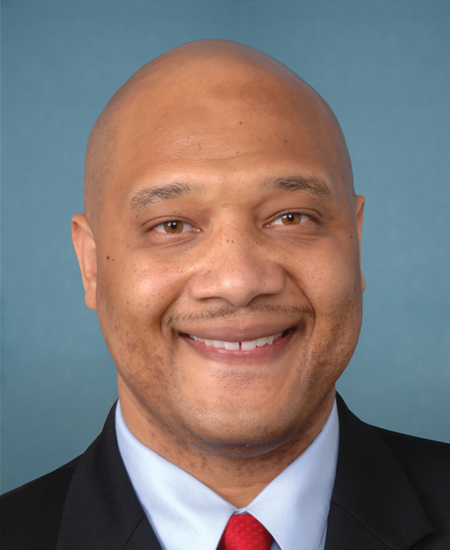
Rep. André Carson
Sponsored bills
Maddy summaryHRES 646 is a House resolution calling on the Senate to remove Senator Richard B. Russell's name from the Russell Senate Office Building. It cites Russell's historical opposition to civil rights, including drafting the 1956 Southern Manifesto opposing school desegregation and making statements supporting white supremacy. The resolution requests the Senate rename the building to its original name, the Old Senate Office Building, until a new honoree is selected. This is a symbolic request, not a binding law, focused on addressing the building's namesake.
Maddy summaryHRES 645 is a ceremonial resolution honoring John Brown, a 19th-century abolitionist. It acknowledges his lifelong opposition to slavery and his role in advancing the fight for freedom, referencing his actions in events like Bleeding Kansas and the 1859 Harpers Ferry raid. The resolution does not create new laws or affect any policies - it simply encourages Americans to reflect on historical struggles for liberty and the nation’s journey toward fulfilling its founding ideals of "life, liberty, and the pursuit of happiness." As a commemorative measure, it has no binding effect on government actions or individuals.
Maddy summaryThis resolution (HRES 644) commemorates the 25th Army Corps of the Union Army, specifically acknowledging their role in capturing Galveston, Texas, on June 5, 1865, and liberating thousands of enslaved people days before General Gordon Granger's June 19 arrival (Juneteenth). It recognizes the corps as the largest African American unit in the Union Army during the Civil War and highlights their broader contributions, including capturing Richmond, Virginia, and freeing Union soldiers and enslaved people held by Confederates. As a non-binding commemorative resolution, it does not create policy changes but formally honors this historical unit and their role in advancing freedom.
Maddy summaryThis bill requires the removal of a statue honoring Albert Pike from its current location near Judiciary Square in Washington D.C. The National Park Service must take down the statue, which was erected in 1898. The Secretary of the Interior may donate the statue to a museum or similar institution for indoor display only, with the condition that if it is ever displayed outdoors, ownership reverts to the federal government. The bill directly affects the physical location of the statue and the National Park Service's management of it.
Maddy summaryHR 4925, the "Original Securities and Exchange Atonement Act of 2025," requires large companies (those with over 100 employees or $300 million+ capitalization) to conduct biennial audits assessing their ties to slavery, diversity policies, and business impacts. Covered issuers must publicly report findings, including steps taken or planned to address historical ties to slavery - such as funding minority communities or historically Black institutions. Companies failing to report or providing false information face daily fines up to $20,000, with 50% of collected fines directed to Treasury for minority financial programs and 50% to HUD for housing assistance like homebuyer support and affordable housing. The bill directly affects major corporations in the securities market, mandating transparency about historical practices and allocating enforcement funds toward community equity programs.
Maddy summaryHRES 633 is a ceremonial resolution honoring Prince Hall (1735-1807), recognizing him as the founder of Black Freemasonry and a Revolutionary Era activist. It commemorates his role in establishing African Lodge #1 (later No. 459) in 1775 after being denied entry to a White Masonic lodge, his advocacy for abolition, and his petitions to Massachusetts authorities on slavery and Black sailors' rights. The resolution formally acknowledges his lasting impact on the African-American fight for justice through community advocacy and Masonic leadership. As a non-binding commemorative measure, it does not create new laws or affect any policies or individuals.
Maddy summaryHRES 632 is a resolution honoring Reverend Nat Turner for his 1831 rebellion against slavery and his efforts to apply the Declaration of Independence's principle that "all men are created equal" to enslaved people. It recognizes his historical role in the abolition movement and encourages continued study of racial justice struggles, including figures like Turner. The resolution also calls for observing Slavery Remembrance Day to reflect on those who suffered under slavery. (Note: As a symbolic resolution, it does not create new laws or directly affect any individuals or policies.)
Maddy summaryThis resolution expresses the House of Representatives' opposition to any presidential pardon, commutation, or other clemency for Ghislaine Maxwell, who was convicted in 2021 for conspiring to traffic minors for sexual abuse alongside Jeffrey Epstein. It highlights her 20-year prison sentence for facilitating the grooming and abuse of children, emphasizing that clemency would deny justice to victims. The resolution is non-binding but formally states that her conviction and sentence were warranted, and that her ongoing imprisonment is the only available measure of justice for survivors.
Maddy summaryHR 4917, the Expanding the VOTE Act, amends the Voting Rights Act to increase language access for voters. It expands the definition of "voting materials" to include digital formats and requires states to provide language assistance (both written and oral) for minority language groups, with special provisions for American Indian and Alaska Native languages when written translations aren't feasible. The bill creates grants to help jurisdictions provide voting materials in languages that don't currently trigger Section 203 coverage, and mandates a study on lowering population thresholds for language assistance requirements. This directly affects states, local election jurisdictions, and voters who speak minority languages, including those in communities not currently covered by existing language access rules.