Maddy summaryHR 5018, the Naomi Schwartz and Susan Rose Safe Parking Act of 2025, adds "safe parking" as an eligible activity under the federal Emergency Solutions Grant Program. It directly affects homeless individuals living in vehicles, including motor homes, by making funding available for programs that provide them with safe overnight parking and supportive services to transition to stable housing. The bill defines "safe parking" as activities offering a secure place to park vehicles overnight while connecting residents to re-housing support. This change allows communities to use federal grants to establish and operate such parking programs, which were previously ineligible under the program's rules.
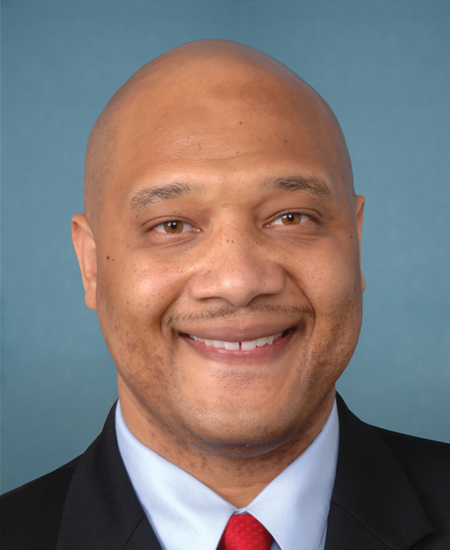
Rep. André Carson
Sponsored bills
Maddy summaryThis bill permanently establishes the Coordinator for Afghan Relocation Efforts (CARE) within the State Department, expanding their role to prioritize family reunification for U.S. military personnel and veterans with Afghan allies. It mandates the Coordinator to collect detailed data on Afghan applicants (including special immigrant visa seekers, refugees, and parolees), vetting timelines, and pending family reunification cases into a centralized database. The Coordinator must report this data to Congress every 90 days to ensure transparency and inform policy decisions. The law directly affects Afghan allies and their families seeking U.S. relocation, particularly those connected to U.S. military service.
Maddy summaryHJRES 113 designates August 20 as Slavery Remembrance Day to commemorate the arrival of the first 20 enslaved Africans in Virginia in 1619 and honor the enduring legacy of slavery. The resolution requests the President issue a proclamation encouraging the public to observe this day through ceremonies and activities that acknowledge slavery's horrors and its lasting impacts. It includes historical context about the transatlantic slave trade, the Middle Passage, and figures like Harriet Tubman, while posthumously recognizing Reconstruction-era Black Congress members. As a symbolic commemorative resolution, it does not create new laws or directly affect any group, but serves to raise awareness about slavery's history and consequences.
Maddy summaryThis bill (HJRES 115) terminates a presidential emergency declaration made on August 11, 2025, which claimed a "crime emergency" in Washington, D.C. It directly affects the District of Columbia by ending federal restrictions that prevented D.C. from using $1 billion in locally-raised funds for public safety, law enforcement, fire services, and schools. The resolution cites that the emergency declaration was legally flawed - section 740 of the DC Home Rule Act does not permit federalizing the Metropolitan Police Department - and notes that D.C. violent crime has reached a 30-year low. The bill formally ends the emergency under the DC Home Rule Act, restoring D.C.'s authority over its own budget and public safety resources.
Maddy summaryHRES 655 is a symbolic House resolution supporting the designation of August 17, 2025, as "Marcus Garvey Recognition Day." It cites Marcus Garvey's role as founder of the Universal Negro Improvement Association, his focus on Black economic independence through initiatives like the Black Star Line, and his 2025 posthumous presidential pardon. The resolution asks the President to issue a proclamation encouraging the public to observe the day with ceremonies. This is a commemorative gesture with no binding legal effect, intended to honor Garvey's historical contributions.
Maddy summaryThis resolution (HRES 654) is a symbolic statement expressing the House's recognition of Marcus Garvey's historical contributions and calling for his exoneration. It states the House believes Garvey was innocent of his 1920s mail fraud conviction (which the resolution deems politically motivated), affirms his global leadership in human rights and economic self-sufficiency movements, and urges the President to clear his name. The resolution does not create new laws or policies; it is purely a statement of congressional sentiment regarding Garvey's legacy. It directly affects how Garvey is formally recognized in U.S. history but has no legal effect on his historical record or current policy.
Maddy summaryHR 4979, the Tick Identification Pilot Program Act of 2025, allows the CDC to award grants to state health departments to create programs where residents can submit photos of ticks they encounter online. The programs must provide users with a tick species ID, disease risk estimate, and prevention advice within 72 hours, while tracking location, date, and environmental details of each encounter. States with high Lyme disease rates and strong implementation plans receive priority for funding. The initiative directly affects the public (especially in tick-prone areas) and state health agencies, focusing on improving early detection and public education through a centralized data system. The CDC will report annual data on program participation and outcomes to Congress from 2026-2029.
Maddy summaryThe BITE Act establishes a national system to prevent diseases spread by ticks, mosquitoes, and fleas. It requires the Health Secretary to create a system with six key parts: a public vector identification service, an AI-powered early warning system using weather and habitat data, insurance claims monitoring for early outbreak detection, emergency room symptom tracking, targeted public education campaigns, and a goal to reduce Lyme disease by 25% by 2035. This system integrates human, animal, and environmental data (One Health approach) and serves both civilians and military medical facilities. The bill directly affects public health agencies, healthcare providers, and communities in areas with vector-borne diseases. Its key mechanism is using real-time data from multiple sources to predict and prevent disease outbreaks before they spread widely.
Maddy summaryThis bill creates a special postage stamp that allows the public to voluntarily contribute to Lyme disease research. All money from stamp sales will go directly to the National Institute of Allergy and Infectious Diseases (NIAID) at the NIH, with proceeds specifically designated for Lyme disease and tick-borne illness research. The funds cannot be used to offset other NIH research funding, and the stamp would be available for at least six years after the law takes effect. It directly affects the public (through voluntary purchases) and NIAID (as the recipient of dedicated research funding).
Maddy summaryThis bill amends the Higher Education Act to include Fulbright Teacher Exchange Program and Fulbright English Teaching Assistant Program participation as qualifying public service employment for student loan forgiveness. It directly affects teachers who serve in these Fulbright programs, allowing them to count their service toward existing loan cancellation benefits under the public service repayment plan. The key provision adds a specific definition to the law, treating Fulbright teaching roles as equivalent to other public service jobs for loan forgiveness eligibility. This change expands access to an existing program without altering the core loan forgiveness mechanism. The bill does not create new benefits but makes Fulbright teaching service eligible under current rules.