Maddy summaryThis bill requires most health insurance plans to cover HIV prevention services - including PrEP and PEP drugs, related lab tests, counseling, and monitoring - without cost-sharing (like copays or deductibles) or prior approval. It applies to private insurance, Medicare, Medicaid/CHIP, and federal employee health plans, directly affecting people who use HIV prevention medications. Key provisions mandate 100% coverage for FDA-approved HIV prevention drugs, eliminate cost-sharing for these services, and prohibit insurers from requiring preauthorization for them. The bill defines covered services to include all necessary components of HIV prevention care as outlined in current public health guidelines.
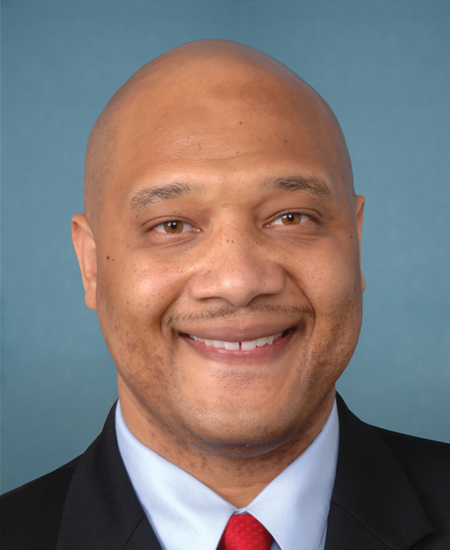
Rep. André Carson
Sponsored bills
Maddy summaryHR 5126, the HIV Prevention Now Act, appropriates $2.165 billion for the CDC's National Center for HIV, Viral Hepatitis, STD, and Tuberculosis Prevention for fiscal year 2026. This funding is in addition to existing CDC appropriations and must be used exclusively by that specific center for its programs, with no transfer to other entities. The bill directly affects the CDC's public health operations by providing dedicated resources for prevention and treatment programs targeting HIV, viral hepatitis, STDs, and tuberculosis. It does not create new policies or alter eligibility but ensures sustained funding for existing prevention efforts at the federal level.
Maddy summaryHR 5110, the Federal Disaster Housing Stability Act of 2025, prevents landlords and mortgage servicers from taking certain actions against tenants and homeowners during declared disasters. It prohibits evictions and late fees for renters in covered dwellings (most residential rentals) for 120 days after a disaster declaration, and blocks foreclosure proceedings for covered mortgage loans (standard home loans on 1-4 unit properties) for six months. The law applies to disasters declared under federal, state, or tribal emergency authorities, ensuring renters cannot be forced out for nonpayment and homeowners cannot face foreclosure sales during this period. It directly affects tenants in rental housing and homeowners with qualifying mortgages in disaster areas.
Maddy summaryThe Tipped Worker Protection Act eliminates the sub-minimum wage for tipped workers, requiring employers to pay the full minimum wage instead of the current $2.13/hour rate that relies on tips to make up the difference. During a transition period, tipped workers would receive a minimum cash wage of $3.60/hour in the first year, increasing by $1.50 annually until reaching the full minimum wage. The bill also prohibits employers from keeping tips or using them for anything other than distributing to employees, requires transparency about service charges, and establishes rules for voluntary tip pooling. This bill directly affects workers in restaurants, bars, and other service industries who traditionally receive tips as part of their compensation.
Maddy summary# Summary of Proposed FEMA Reform Legislation (FEMA Act of 2025) This comprehensive legislative document proposes significant reforms to the Robert T. Stafford Disaster Relief and Emergency Assistance Act, with four main sections addressing: ## 1. Disaster Assistance Reforms - **Expanded eligibility** for assistance, including clarifying that absence of a fixed address doesn't disqualify individuals from sheltering assistance - **Improved rental assistance** with consideration of local post-disaster rent increases - **Direct assistance** for those unable to use financial assistance, with no requirement to show other assistance can cover costs (except insurance) - **Enhanced notices** for applicants, including documentation of denial decisions - **Clarification of displacement assistance** eligibility, stating insurance shouldn't be considered a duplication of benefits ## 2. Mitigation Program Enhancements - **Preapproved project mitigation plans** requiring states to develop plans with peer review processes - **Improved allocation of funds** with formulas prioritizing vulnerable communities, high-risk areas, and rural/economically distressed communities - **Resilient buildings** requirements for housing retrofits using the latest building codes - **Streamlined application processes** for hazard mitigation funds across multiple programs - **Study on mitigation benefits** to evaluate cost savings and effectiveness ## 3. Transparency and Accountability Measures - **Public dashboards** for both individual assistance (431) and public assistance (432) showing application status, approvals, denials, and funding - **Transparency requirements** for disaster declarations with detailed justifications for approvals/denials - **GAO studies** on numerous topics including: - Identity theft in disaster assistance (409) - Insurance utilization for public assistance facilities (410) - Wildfire management plans (411) - Effectiveness of alerting systems (412) - Cost savings of repair/rebuilding reforms (415) - **Prohibition on political discrimination** in assistance distribution ## 4. Workforce and Operational Improvements - **Study on workforce retention** in noncontiguous communities - **Pilot program** for preliminary damage assessments in remote communities - **Fast-moving disasters working group** to develop best practices for rapid response The legislation focuses on improving efficiency, transparency, and effectiveness of disaster relief programs while prioritizing vulnerable populations and communities with higher risk of disasters. It also emphasizes data-driven decision making through required studies and reports to continuously improve disaster management policies.
Maddy summaryHR 5088, the "Union Participation for All Act," repeals a provision in the 1959 Labor-Management Reporting and Disclosure Act (LMRDA) that barred individuals convicted of certain crimes (like bribery or fraud) from holding union leadership positions. This change directly affects union members with specific criminal convictions who previously could not serve in union offices. The bill removes Section 504 of the LMRDA, eliminating the ban on their eligibility for union leadership roles. It does not alter other union governance rules or create new requirements.
Maddy summaryHR 5094, the "Protect Patients from Costly Care Act," repeals two specific provisions from a prior reconciliation law (Public Law 119-21) that would have increased patient costs. It restores Medicaid cost sharing rules to their pre-2023 state, directly affecting Medicaid beneficiaries by preventing higher out-of-pocket costs. It also reverses changes to orphan drug exclusions under the Drug Price Negotiation Program, bringing those medications back under federal price negotiation rules for manufacturers. The bill does not create new policies but undoes specific cost-increasing changes to existing programs.
Maddy summaryHR 5048, the "Don’t STEAL Act," amends the Fair Labor Standards Act to ensure workers receive the highest wage promised in their contracts or collective bargaining agreements, whichever exceeds federal or state minimum wage requirements. It directly affects employees engaged in commerce or working for businesses involved in commerce, requiring employers to pay at least the higher of their agreed-upon wage or the legal minimum. The bill establishes criminal penalties for willful wage theft exceeding $1,000 (up to 5 years in prison) and civil penalties for all unpaid wages, with fines funding the Department of Labor’s Wage and Hour Division enforcement efforts. These changes apply to violations occurring 90 days after enactment.
Maddy summaryThis bill would require U.S. companies to obtain both Commerce Department approval and a specific congressional joint resolution before exporting advanced AI semiconductors to China. The Commerce Secretary must first conduct an interagency review assessing national security risks, military applications, human rights concerns, and economic impacts. Congress would then need to pass a dedicated resolution approving each export, effectively giving lawmakers a veto over such transactions. The bill defines "advanced AI semiconductors" by technical thresholds (e.g., 2,400+ processing performance) and applies to all exports targeting China, including Hong Kong and Macau.
Maddy summaryThis bill streamlines defense cooperation between the U.S., Australia, and the United Kingdom under the AUKUS security pact. It removes bureaucratic barriers by allowing direct reexports of U.S. defense articles between these governments without presidential consent, and eliminates certification requirements for commercial technical assistance agreements with Australia or the UK. Key provisions include exempting authorized transfers (including intra-governmental and entity-level movements) from certain export controls and Foreign Assistance Act rules. The changes specifically target defense-related items and services shared among the three nations, reducing administrative hurdles for military collaboration. This affects U.S. defense exports, Australian and UK government entities, and authorized defense contractors involved in AUKUS partnerships.