

Maddy summaryHR 3946, the FIGHT Act of 2025, amends the Animal Welfare Act to specifically prohibit gambling on animal fighting events and restrict the interstate transport of roosters used in such ventures. It defines "rooster" as male chickens over six months old and makes it unlawful to sponsor, exhibit, attend (for those under 16), or gamble on animal fighting events - whether in-person or broadcast. The bill creates a civil enforcement mechanism allowing any person to file a lawsuit to stop violations after providing 60 days' notice to authorities, with potential fines up to $5,000 per violation. It also establishes seizure of property used to facilitate violations and clarifies that state laws on animal fighting remain in effect unless directly conflicting with federal provisions.
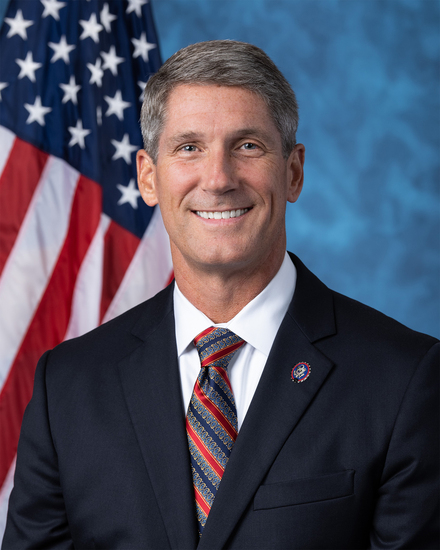
Rep. Scott Franklin
Sponsored bills
Maddy summaryThis bill requires the Department of Veterans Affairs (VA) to continue personnel investigations into misconduct or performance issues even if an employee resigns, retires, or leaves before the investigation concludes. Once completed, the VA must permanently note the findings in the employee’s official personnel file, while ensuring the employee receives written notice within 5 days, 30 days to respond with evidence, and the right to appeal to the Merit Systems Protection Board. It directly affects VA employees in competitive, excepted, or senior executive service roles who are subject to such investigations. The policy change mandates transparency and due process for employees during separation, preventing investigations from being abandoned upon departure.
Maddy summary# Summary of the Proposed Legislative Document This document outlines a comprehensive legislative proposal that amends and reauthorizes various environmental, weather, climate, and health-related programs. Key elements include: 1. **National Integrated Heat Health Information System (NIHHIS)**: Establishes a new system within NOAA to reduce heat-related health risks, with a 5-year strategic plan and $5 million annual funding (2026-2030) for implementation. 2. **National Landslide Preparedness Act Reauthorization**: - Updates definitions to include "atmospheric river" and "extreme precipitation event" - Increases funding from $25 million to $35 million annually (with at least $10 million for landslide early warning systems) - Establishes regional partnerships with eligible organizations and institutions of higher education - Requires assessment of risks from atmospheric river flooding and extreme precipitation events 3. **Harmful Algal Bloom and Hypoxia Program**: - Creates a National-Level Incubator Program to develop new strategies for preventing, mitigating, and controlling harmful algal blooms - Increases funding for NOAA ($19.5 million annually) and EPA ($8 million annually) - Establishes an Action Strategy for harmful algal blooms to be updated every five years 4. **Other Key Provisions**: - Amends the Flood Level Observation, Operations, and Decision Support Act - Establishes an interagency committee to coordinate heat health activities across multiple federal departments - Creates an "unfunded priorities list" for Congress to identify critical needs not included in the budget - Includes provisions for meteorological observations in the Arctic region - Authorizes technical assistance for Pacific Island nations The legislation represents a significant expansion of NOAA's role in climate and weather-related research, public health protection, and disaster preparedness, with emphasis on cross-agency coordination, updated terminology reflecting current scientific understanding, and increased funding for critical programs.
Maddy summaryHR 649, the Whole Milk for Healthy Kids Act of 2025, amends the National School Lunch Act to allow schools participating in the program to offer students both organic and non-organic whole milk, in addition to reduced-fat, low-fat, and fat-free options. Key provisions include clarifying that milk fat in whole milk should not count toward saturated fat limits for meal compliance, prohibiting schools from purchasing milk from Chinese state-owned enterprises, and ensuring schools cannot be barred from offering the full range of milk types listed. The bill directly affects public and private schools serving the National School Lunch Program by expanding their milk options for students. It focuses on concrete policy changes to dietary offerings and sourcing restrictions within the school nutrition program.
Maddy summaryHR 3694, the VALID Act of 2025, requires lenders to include specific information about VA loans in mortgage disclosures. It amends the National Housing Act to mandate that disclosures state the loan-to-value ratio and clarify that VA loans are available under Chapter 37 of Title 38 (veterans' benefits law), assuming prevailing interest rates. The bill also requires the Federal Housing Finance Agency to add a military service question to the Uniform Residential Loan Application form, placing it above the signature line within six months of enactment. This directly affects veterans and active-duty service members applying for VA-guaranteed mortgages, as well as the lenders processing those applications.
Maddy summaryHR 2240 requires federal agencies to analyze data gaps related to law enforcement safety and wellness. Specifically, it mandates three reports within 270 days of enactment: one on attacks against officers (including ambushes), another on unreported aggressive incidents not meeting crime thresholds, and a third on officer mental health impacts and existing wellness resources. The reports will examine current data collection limitations, training effectiveness, and potential improvements to reporting systems like the Law Enforcement Officers Killed and Assaulted Data Collection. This bill focuses on gathering information to inform future policy decisions, not on creating new programs or funding. It directly affects federal agencies (Attorney General, FBI, National Institute of Justice) and aims to improve understanding of officer safety challenges.
Maddy summaryThis resolution (HRES 417) is a symbolic gesture to honor the National Science Foundation (NSF) on its 75th anniversary. It recognizes the NSF’s founding in 1950 to advance science, engineering, and education, highlighting its role in supporting research across all 50 states, fostering global scientific collaboration, and enabling key innovations like the internet, MRI technology, and AI. The resolution does not create new policy or funding but formally commends the NSF’s mission and achievements, including its annual support for roughly 350,000 researchers and its contribution to 268 Nobel Prize-winning discoveries. It concludes by reaffirming congressional support for the NSF’s ongoing work.
Maddy summaryHR 3392, the STOP Screwworms Act, requires the U.S. Department of Agriculture to build modular facilities for rearing sterile New World screwworm flies within 180 days of enactment. These facilities will disperse sterile flies into at-risk agricultural areas - identified based on migratory patterns and suitability for dispersal - to prevent infestations that threaten livestock. The bill authorizes $300 million in funding for construction, operation, and annual reporting to Congress on threat assessments and effectiveness. It directly affects livestock producers and agricultural regions vulnerable to screwworm fly migration, using sterile insect technique as a preventive measure.
Maddy summaryHR 3277, the Ensuring Lasting Smiles Act, requires group health plans and health insurance issuers to cover medically necessary outpatient and inpatient treatments for congenital anomalies or birth defects primarily affecting the eyes, ears, teeth, mouth, or jaw. This includes reconstructive procedures, dental/orthodontic support during treatment, and follow-up care, but excludes purely cosmetic surgery not tied to a medical diagnosis. Cost-sharing (like copays) for these services must not be stricter than for other medical benefits. The law takes effect for plan years beginning January 1, 2026, and mandates insurers to provide notice about this coverage to beneficiaries.
Maddy summaryThe SERVICE Act of 2025 creates a federal grant program to fund local veteran response teams within law enforcement agencies. These teams, composed of veteran officers and community partners, will provide 24/7 crisis response for at-risk veterans, coordinate with the Department of Veterans Affairs, and offer mental health training focused on military-related issues like PTSD. The program directly affects veterans in crisis and law enforcement agencies that receive grants to establish these teams. It requires teams to track outcomes and share best practices, with funding tied to existing crime control grants for fiscal years 2026-2030.