

Maddy summaryThis bill requires federal agencies to provide detailed information about payments they authorize, including the purpose, funding source, and activity type. It mandates agencies to verify bank account information before payments are made and gives the Treasury Department access to the National Directory of New Hires, tax information, and Social Security data to help identify and prevent improper payments. Agencies must periodically verify payment information accuracy and report on payments exempt from these requirements due to sensitive operations. These provisions apply to all federal agencies using Treasury disbursement systems, aiming to improve government spending efficiency through better data sharing and verification processes.
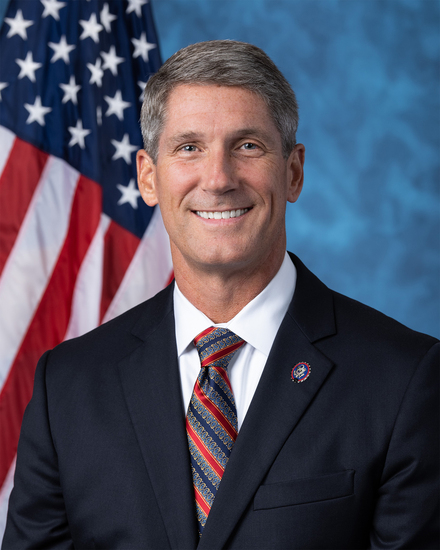
Rep. Scott Franklin
Sponsored bills
Maddy summaryThe PBM Reform Act of 2025 aims to increase transparency and fairness in pharmacy benefit manager (PBM) operations within Medicare Part D and Medicaid programs. The bill requires Medicare Part D plans to allow any pharmacy meeting standard terms to join their networks, establishes "essential retail pharmacies" in underserved areas (with limited pharmacy access), and mandates detailed reporting on drug pricing, rebates, and reimbursement rates. It creates a process for pharmacies to report PBM violations of reasonable contract terms and prohibits "spread pricing" in Medicaid, where PBMs retain the difference between what they pay pharmacies and what they charge plans. These provisions aim to improve pharmacy access for Medicare beneficiaries and ensure fairer reimbursement practices for pharmacies.
Maddy summaryThis bill clarifies that Russian-origin americium-241 (Am-241) sealed sources - which have similar properties to eligible materials - can be disposed of at the Waste Isolation Pilot Plant (WIPP) once they meet safety standards. It directly affects the National Nuclear Security Administration (NNSA), which recovers these materials globally, and international facilities supplying them. The key provision amends a 2005 law to explicitly include foreign-origin radiological materials meeting WIPP criteria under disposal pathways for defense-related waste. This change aims to accelerate the removal of materials that could potentially be misused in radiological threats, reducing security risks without altering WIPP operations.
Maddy summaryHR 875 amends immigration law to make non-citizens with DUI convictions inadmissible (preventing entry) and deportable (requiring removal after entry). It applies to any conviction for driving while intoxicated or impaired under state, tribal, or local law, regardless of whether the offense is classified as a misdemeanor or felony. The bill directly affects non-citizens convicted of driving under the influence of alcohol or drugs, including impairment from other substances. This policy change expands immigration consequences for DUI offenses beyond current standards.
Maddy summaryThe CONNECT for Health Act of 2025 expands Medicare telehealth coverage by removing geographic restrictions that limited where patients could receive care, expanding the types of health care providers who can offer telehealth services, and eliminating the requirement for an in-person visit before receiving telemental health services. The bill includes specific provisions to support telehealth use for Native American health facilities, rural health clinics, and Federally Qualified Health Centers. It requires the Centers for Medicare & Medicaid Services to collect and publish data on telehealth usage and impacts, and to develop resources to improve accessibility for people with disabilities and limited English proficiency. Program integrity measures are added to monitor telehealth billing practices and prevent fraud while maintaining coverage for telehealth services during public health emergencies.
Maddy summaryThis bill, the PAPA Act of 2025, restricts how aircraft tracking data (ADS-B) can be used and regulates fees on general aviation aircraft. It prohibits using ADS-B data to identify aircraft for revenue purposes without owner consent, allows its use only for air traffic safety by controllers, and extends this restriction to all government officials. For airport fees, it requires public disclosure of cost-saving efforts, alternative revenue sources, fee impact assessments, and specific safety project costs before imposing landing/takeoff fees on general aviation aircraft. All fees collected must be used exclusively for airside safety projects, not other airport expenses. The bill defines general aviation aircraft as those used for personal, recreational, training, or non-commercial purposes (excluding scheduled airlines and military flights).
Maddy summaryThis bill makes technical corrections to the Camp Lejeune Justice Act of 2022 to streamline claims for individuals harmed by water contamination at Camp Lejeune. It clarifies the evidence required (30+ days at the base plus a link between contaminants and health harm), specifies that cases must be handled in North Carolina courts (with limited transfer options), and sets attorney fee caps (20% before suit, 25% after). These changes directly affect veterans and civilians who lived at Camp Lejeune and filed claims under the 2022 law. The bill does not create new eligibility but aims to improve the legal process for existing cases.
Maddy summaryThe LEDGER Act (HR 4091) requires the Treasury Department to create a system tracking every government payment within 180 days of enactment. It mandates that all federal departments, agencies, and branches (executive, legislative, judicial) must report disbursements from every funding source, including how long funds remain available for spending. This system will detail each payment's origin, recipient, and timing across all government accounts. The bill directly affects all federal spending entities by standardizing expenditure tracking previously handled inconsistently.
Maddy summaryThe Fire Weather Development Act of 2025 establishes a National Oceanic and Atmospheric Administration (NOAA) program to improve wildfire forecasting, detection, and communication systems. The program will develop better tools for predicting wildfire spread, smoke dispersion, and fire behavior through collaboration with federal agencies, state and local emergency officials, and stakeholders. It authorizes $5 million for fiscal year 2026 to fund research on new technologies like unmanned aircraft systems, advanced satellite detection, and improved communication systems. The bill also creates an Interagency Coordinating Committee on Wildfires and a National Advisory Committee to coordinate wildfire response efforts and provide recommendations to enhance preparedness and response capabilities.
Maddy summaryThis bill requires the United States Postal Service (USPS) to notify postal customers and specific government officials when a post office temporarily suspends operations. It mandates detailed advance notice (60 days for planned closures) including reasons, expected dates, and plans for replacement services, with shorter notices (14 days) for unplanned closures. USPS must provide replacement retail services - such as selling packaging, handling mail for post office boxes, and processing address changes - within 10 days and maintain them until operations resume. The law applies only to closures starting after enactment and targets USPS operations affecting local communities and their federal/state representatives.