

Maddy summaryHR 4976, the Shielding Students from Wildfire Smoke Act, requires the Environmental Protection Agency to commission the National Academies of Sciences to review existing policies protecting children from wildfire smoke in K-12 schools, childcare centers, and related activities like sports or camps. The review will assess current standards, identify research and policy gaps, and provide recommendations to Congress for better protection, especially in under-resourced settings. This bill does not create new regulations but mandates a formal evaluation of current approaches to safeguard children during smoke events. It directly affects children in educational and childcare environments across the U.S., particularly in communities frequently impacted by wildfires.
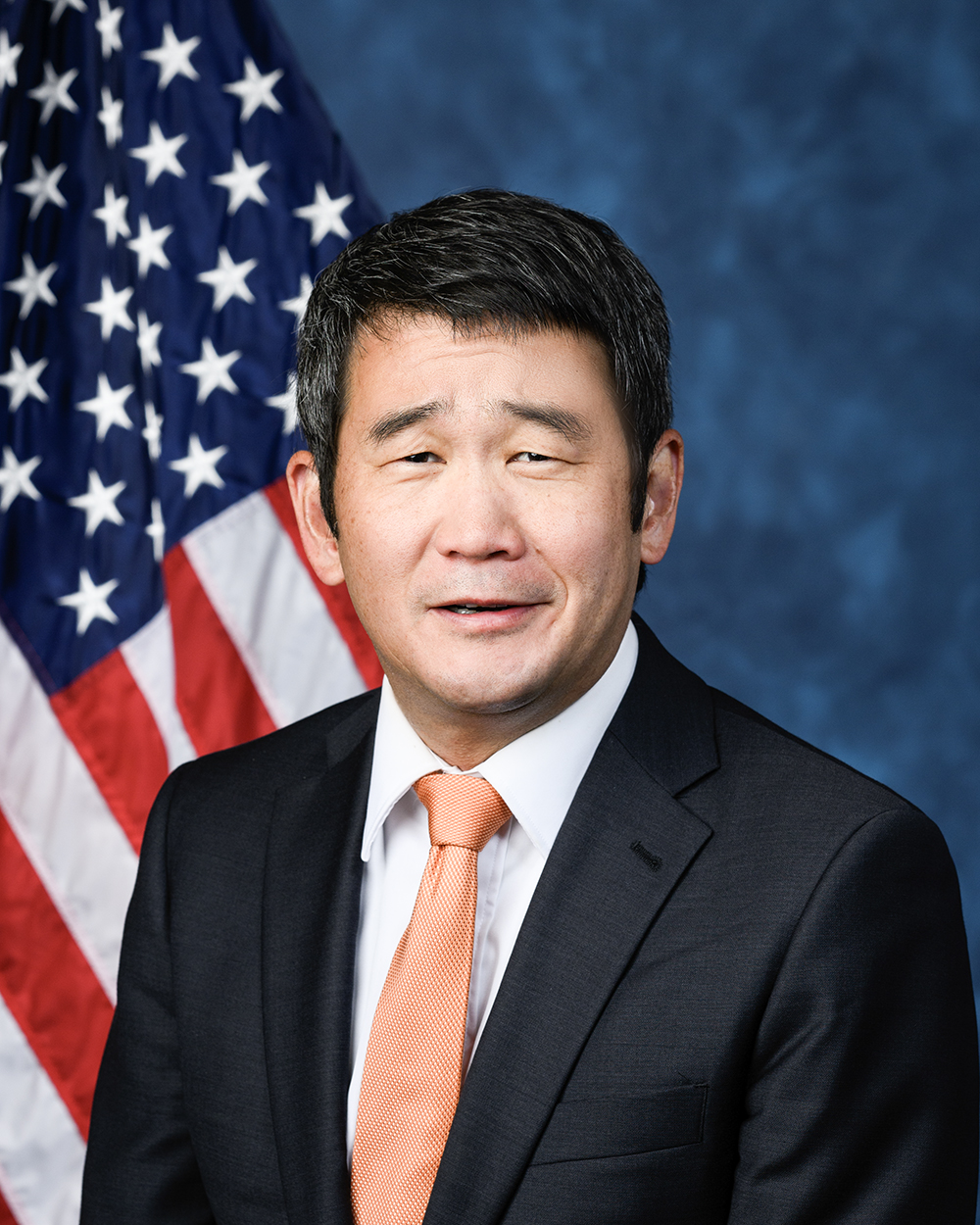
Rep. Dave Min
Sponsored bills
Maddy summaryThis bill extends the expiration date for a provision allowing certain vehicles to use High Occupancy Vehicle (HOV) lanes without meeting standard occupancy requirements. Specifically, it amends federal law to change the deadline from September 30, 2025, to September 30, 2031. The change directly affects drivers and vehicle operators who currently qualify for this exemption under existing rules. It is a procedural reauthorization, not a policy change, maintaining the current HOV lane exemption rules for an additional six years.
Maddy summaryHR 4917, the Expanding the VOTE Act, amends the Voting Rights Act to increase language access for voters. It expands the definition of "voting materials" to include digital formats and requires states to provide language assistance (both written and oral) for minority language groups, with special provisions for American Indian and Alaska Native languages when written translations aren't feasible. The bill creates grants to help jurisdictions provide voting materials in languages that don't currently trigger Section 203 coverage, and mandates a study on lowering population thresholds for language assistance requirements. This directly affects states, local election jurisdictions, and voters who speak minority languages, including those in communities not currently covered by existing language access rules.
Maddy summaryThe Election Mail Act (HR 4915) establishes new standards for handling voting-by-mail materials in Federal elections. It requires the Postal Service to process absentee ballots the same day received, add postmarks showing mailing dates, and treat election mail as first-class with free postage for completed ballots. States must provide ballot return envelopes with tracking barcodes and accept mailed ballots postmarked on election day if received within 7 days. These provisions apply to Federal elections starting in 2026, with some requirements taking effect sooner.
Maddy summaryHR 4903, the Plastic Health Research Act, directs federal agencies to fund and coordinate research on the health effects of plastic exposure, including microplastics and nanoplastics. It authorizes $10 million annually (2026-2030) for grants to academic institutions and nonprofits to develop standardized testing methods, improve research comparability, and fill gaps in understanding plastic-related health impacts. The bill also creates "Centers of Excellence" to advance this research, requiring annual public reports on findings and coordination with agencies like the EPA and FDA. This legislation directly affects researchers, federal health agencies, and public health policy by prioritizing scientific rigor in studying plastic exposure sources (e.g., food packaging, waste disposal) and health outcomes.
Maddy summaryThe Time Off to Vote Act requires employers with 25 or more employees to provide two hours of paid leave for federal elections. Employees can use this leave to vote in person, return mail-in ballots, or perform other voting activities during open polling hours. Employers may set the specific two-hour window (excluding lunch breaks) but cannot deny the leave, retaliate against employees who take it, or cause loss of accrued benefits. Violations could result in civil penalties up to $10,000 per violation, enforced by the Department of Labor.
Maddy summaryThe Sustaining Our Democracy Act establishes a federal program providing funding to states for election administration improvements, increased voter access, and protection of election workers. States must submit detailed plans for using funds to upgrade voting equipment, expand early and mail voting options, secure election infrastructure, and address disparities in voting access for underserved communities. The bill prohibits states from using funds for activities that restrict voting access or suppress participation, and creates an Office of Democracy Advancement and Innovation to administer the program. Funded through a $2.5 billion Trust Fund for fiscal years 2026-2035, this legislation directly affects all 50 states, the District of Columbia, and U.S. territories receiving federal election funding.
Maddy summaryHR 4860, the U.S.-Taiwan Defense Innovation Partnership Act, aims to create a formal partnership between the U.S. Department of Defense and Taiwan's defense authorities. It directs the Secretary of Defense to coordinate on defense industrial priorities, streamline research and development, and create market pathways for defense technology startups in both countries. The bill specifically targets collaboration on emerging technologies like drones, microchips, artificial intelligence, missile systems, and surveillance capabilities. This partnership directly affects U.S. and Taiwan-based defense technology companies, particularly startups, by enhancing market access and joint development opportunities.
Maddy summaryHR 4859, the DEAL Act of 2025, requires the Comptroller General to report within 180 days of enactment on any settlements between Executive Branch officials and law firms meeting specific criteria. The report must examine settlements entered between February 1 and April 30, 2025, involving legal services valued over $1 million, where services were directed toward causes approved by the Executive Branch or tied to policy changes. This applies to agreements providing legal services (including pro bono) that imply such alignment with government priorities. The bill aims to check for potential violations of the Miscellaneous Receipts Act (31 U.S.C. § 3302(b)) by reviewing these specific settlements.
Maddy summaryHR 4819, the Click to Cancel Act of 2025, makes the Federal Trade Commission's November 2024 "Negative Option Rule" permanent law. This rule directly affects businesses that use automatic renewal subscriptions (like streaming services or software) and their consumers, requiring clear, easy cancellation options. The bill codifies the FTC's existing rule, treating violations as unfair or deceptive practices under the FTC Act, and grants the FTC full authority to enforce it using existing powers and penalties. The key change is that businesses must now explicitly obtain consumer consent for recurring charges and provide straightforward cancellation methods, moving beyond the previous rule-based guidance.