

Maddy summaryHRES 463 is a House resolution (not a bill) condemning the international practice of "flag-of-convenience" shipping, where vessels register under foreign flags to avoid U.S. laws and regulations. It directly affects U.S. maritime industries, workers, and national security by highlighting how this practice undermines the U.S. merchant marine, enables illegal fishing ($50 billion annually), and facilitates crimes like forced labor and terrorism. The resolution calls for international action by urging the UN, International Maritime Organization, and International Labour Organization to condemn these practices and support global maritime standards. It also reaffirms support for U.S. shipbuilding, fishing, and tourism industries while emphasizing the need for stronger oversight to protect workers' rights and safety.
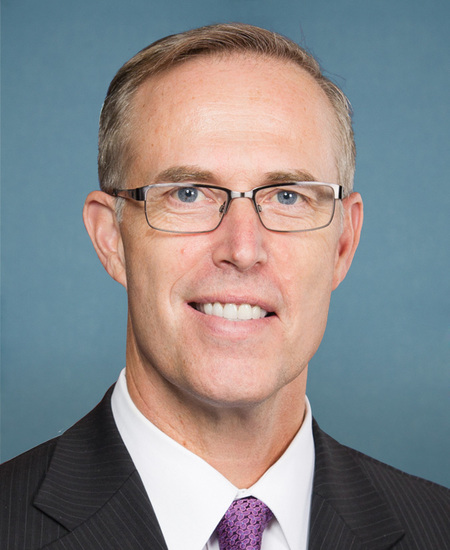
Rep. Jared Huffman
Sponsored bills
Maddy summary# Summary of Proposed Magnuson-Stevens Fishery Conservation and Management Act Amendments This comprehensive legislative proposal contains numerous amendments to the Magnuson-Stevens Fishery Conservation and Management Act, with the following key provisions: ## Fisheries Science and Data Modernization - Establishes a national strategic plan for fisheries data with user-centric systems - Mandates electronic monitoring and reporting in fisheries (replacing or complementing human observers) - Creates an electronic technologies innovation prize competition to accelerate data collection technology development - Requires standardized bycatch reporting program to assess bycatch across fisheries - Establishes a recreational data improvement program to improve timeliness, accuracy, and validation of recreational catch data ## Essential Fish Habitat and Ecosystem Management - Redefines "adverse effect" on essential fish habitat - Creates "habitat areas of particular concern" with specific criteria - Requires Councils to develop habitat protection plans with quantitative targets - Requires consideration of both fishing and non-fishing impacts on habitat ## Forage Fish Conservation - Defines "forage fish" (species that function as a main pathway for energy transfer in marine ecosystems) - Requires Councils to develop lists of unmanaged forage fish and recommend prohibitions on new directed fisheries - Mandates that annual catch limits for forage fish consider diet needs of higher trophic level species ## Bycatch Reduction - Requires conservation and management measures to minimize bycatch - Establishes a national standardized bycatch reporting program - Creates a bycatch reduction engineering program with technical assistance and outreach ## Fishery Management Improvements - Requires objective and measurable criteria for identifying overfished stocks - Mandates development of rebuilding plans with specific timeframes and measurable criteria - Requires consideration of climate change impacts in management decisions - Establishes a "Zeke Grader Fisheries Conservation and Management Fund" for research and adaptation ## International Fisheries Management - Proposes changes to U.S. representation on international fisheries commissions (Atlantic Tunas Convention, Western and Central Pacific Fisheries Convention, Inter-American Tropical Tuna Commission) ## Funding - Authorizes specific funding amounts for 2026-2030 ($698 million to $765 million annually) This legislation represents a significant modernization of U.S. fisheries management, with strong emphasis on data-driven decision making, ecosystem-based management, climate resilience, and technological innovation in fisheries monitoring and management.
Maddy summaryHR 3714, the Forage Fish Conservation Act of 2025, amends federal fisheries law to protect small schooling fish like herring, sardines, and anchovies that serve as critical food for larger marine species. It requires the Secretary of Commerce to define "forage fish" within 12 months and mandates that fishery management plans consider ecosystem needs - such as ensuring enough forage fish remain for predators like tuna and seabirds - when setting catch limits. The bill directs regional fisheries councils to identify unmanaged forage fish stocks and prohibit new commercial fisheries until conservation plans are approved, with specific timelines for action (e.g., adding river herring and shad to management plans within 180 days). These changes directly affect federal fisheries managers, commercial fishing industries targeting forage species, and marine ecosystems dependent on these fish. The law aims to prevent overfishing by linking catch limits to ecological roles, not just fishery yields.
Maddy summaryThis bill directs the National Oceanic and Atmospheric Administration (NOAA) to conduct a study on the financial costs of extreme heat events. The study will quantify economic impacts including health costs (emergency care, hospitalizations), property damage, insurance claims, labor productivity losses, infrastructure disruptions, energy expenses, and agricultural losses. NOAA must coordinate with multiple federal agencies (like Health, Agriculture, and Energy Departments) and publish findings on HEAT.gov within 4 years. The bill does not create new regulations or directly affect citizens; it solely authorizes a data-gathering study to inform future policy.
Maddy summaryThis bill establishes a federal interagency committee within NOAA to coordinate heat-health response across 15+ departments (including HHS, EPA, and FEMA) and requires a 5-year strategic plan to improve data sharing, research, and public communication about extreme heat. It creates the National Integrated Heat Health Information System (NIHHIS) to centralize heat-related data and forecasts, making it openly available for public use. The law mandates $5 million annually for 2025-2029 to fund these efforts, directly affecting federal agencies, state/local governments, Tribal nations, and communities facing heat risks. Key provisions include standardizing heat definitions, requiring agency coordination, and building public health preparedness tools to reduce heat-related illness and death.
Maddy summaryThe Excess Urban Heat Mitigation Act of 2025 creates a federal grant program to fund heat-reduction projects in communities most affected by urban heat islands, primarily low-income neighborhoods (defined as census tracts with ≥20% poverty rate) and areas with higher heat exposure for communities of color. It authorizes $30 million annually for grants to states, cities, tribes, or nonprofits for projects like planting native trees, installing cool roofs/pavements, building shaded transit stops, and creating community cooling centers. Grants require community engagement plans to ensure equitable participation and prioritize projects in underserved areas (75% of funds must target "covered census tracts"). The program mandates annual reporting to Congress and includes oversight to evaluate project success in reducing heat impacts.
Maddy summaryThis bill aims to stabilize rural hospitals by modifying Medicare payment policies. It eliminates sequestration for rural hospitals, reverses bad debt reimbursement cuts for critical access hospitals, and permanently extends payment levels for low-volume and Medicare-dependent hospitals. The bill also makes permanent telehealth enhancements for rural health clinics, restores state authority to waive the 35-mile rule for hospital designations, and creates flexibility grants for rural hospitals to transform services. These changes directly affect rural hospitals, critical access hospitals, and Medicare beneficiaries who face significant barriers to accessing care in rural areas. The bill addresses the closure of 151 rural hospitals since 2010 and the vulnerability of 432 more hospitals, aiming to prevent further loss of critical health care access.
Maddy summaryThis bill requires new passenger cars, SUVs, and light trucks (under 10,000 lbs) to have automatic emergency braking systems that detect cyclists in all lighting conditions and across diverse appearances. The rule must be finalized within 3 years of enactment, with manufacturers required to comply within two model years after the rule's release. It mandates systems that activate at appropriate speeds and recognize vulnerable road users like bicyclists, regardless of skin tone, clothing, or protective gear. The law directly affects vehicle manufacturers and aims to improve safety for cyclists through standardized vehicle technology.
Maddy summaryHR 3607, the MARSHALS Act, restructures the U.S. Marshals Service by moving it from the Department of Justice to the judicial branch of the federal government. It requires the Chief Justice, in consultation with a new oversight Board, to appoint marshals for each judicial district (with four-year terms) and establishes a Director to lead the Service. The bill expands the Marshals Service’s duties to include protecting judges, court officers, and witnesses from intimidation, and adds specific roles in assisting with sex offender investigations and locating missing children at the Attorney General’s request. These changes directly affect federal marshals, judicial branch operations, and law enforcement coordination with the Department of Justice.
Maddy summaryHR 3609, the "Remove the Stain Act," would rescind 20 Medals of Honor awarded to U.S. Army soldiers for their actions during the 1890 Wounded Knee Massacre, where unarmed Native Americans (including women and children) were killed. The bill directly affects the official records of these 20 soldiers by removing their names from the Medal of Honor Roll maintained by the military branches. Key provisions include requiring the Secretary of Defense to update the official rolls without requiring recipients to return their medals, and clarifying that this change does not deny any benefits to those individuals. The bill is based on findings that the massacre involved unarmed people and that awarding medals for it undermines the Medal of Honor's integrity.