Love Lives On Act of 2025 This bill extends entitlement for various benefit programs and services for surviving spouses of deceased members of the Armed Forces or veterans. The bill provides that the remarriage of a surviving spouse must not bar the furnishing of dependency and indemnity compensation or special pension benefits to such spouse. Additionally, the Department of Defense may not terminate the payment of an annuity for a surviving spouse under the Survivor Benefit Plan solely because the surviving spouse remarries. The bill also expands the definition of a dependent under TRICARE to include a remarried widow or widower whose subsequent marriage has ended due to death, divorce, or annulment.
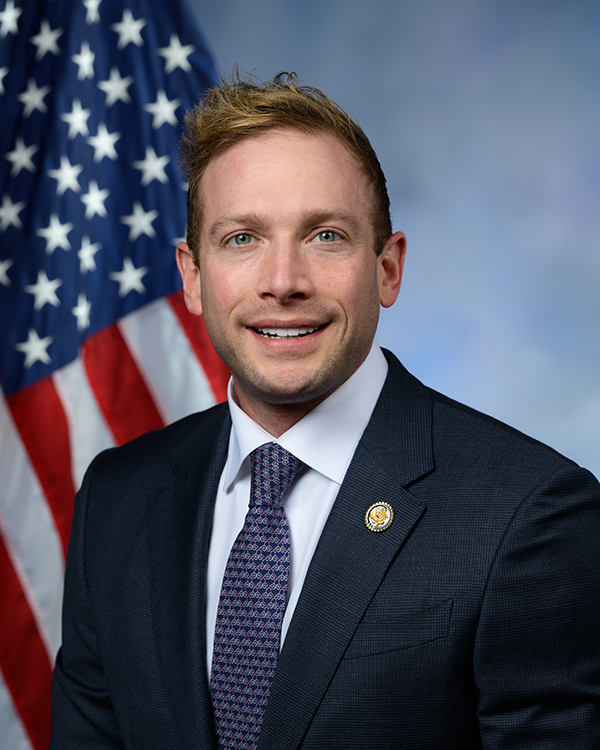
Rep. Max L. Miller
Sponsored bills
Maddy summaryThis resolution formally recognizes the 100th anniversary of the Sporting Arms and Ammunition Manufacturers' Institute (SAAMI), a trade organization founded in 1926. The bill commends SAAMI for developing industry standards that ensure firearms and ammunition are safe, reliable, and interchangeable. It acknowledges the organization's work in coordinating with government bodies, international standards groups, and industry stakeholders to maintain consistent safety practices. This measure is a ceremonial resolution that does not change any laws or regulations but serves to honor SAAMI's century of leadership in the firearms industry.
Maddy summaryThis resolution formally recognizes and honors six members of the Ohio Air National Guard who died in a KC-135 Stratotanker crash over Iraq on March 12, 2026. The bill specifically names the deceased service members and acknowledges their sacrifice during a refueling mission supporting Operation Epic Fury. It expresses the House's condolences to the families of the fallen and pledges that their service will not be forgotten.
Maddy summaryHR 556, the Protecting Access for Hunters and Anglers Act, prevents federal agencies from banning lead ammunition or tackle on public lands and waters managed for hunting or fishing. It directly affects hunters and anglers using federal lands (like national wildlife refuges, public forests, and BLM lands) by blocking nationwide restrictions on lead products. The bill allows limited exceptions only for specific locations where wildlife decline is directly linked to lead use, and the restriction must align with state law or get approval from the state wildlife agency. This changes how federal land managers can regulate lead, requiring state coordination for any local restrictions.
Maddy summaryHR 5688, the Non-Domiciled CDL Integrity Act, changes rules for issuing commercial driver's licenses (CDLs) to people who don't live in the state where the license is issued. It allows states to issue CDLs to foreign nationals with lawful U.S. immigration status and work-related visas (valid for up to one year or until their stay ends), requiring states to verify status before issuing and keep records for two years. For residents of U.S. territories like Puerto Rico, it requires proof of U.S. citizenship or permanent residency before issuing CDLs, with similar verification and record-keeping rules. The bill directly affects commercial drivers from foreign countries and U.S. territories seeking CDLs in states where they are not residents.
Enhanced Iran Sanctions Act of 2025 This bill imposes sanctions on certain foreign persons (individuals and entities) that are involved in Iran's petroleum sector as well as certain associated persons. The bill also requires or authorizes actions to facilitate the enforcement of sanctions on Iran. Specifically, the bill requires the President to impose visa- and property-blocking sanctions on any foreign person that, after the bill's enactment, knowingly engages in any transaction related to the processing, export, or sale of oil, condensates, gas, liquefied natural gas, or other petrochemical products in whole or in part from Iran. The President must also impose sanctions on certain foreign persons associated with a sanctioned individual or entity. For example, the President must sanction the subsidiaries and corporate officers of a sanctioned business. The bill provides certain exceptions to these sanctions, including specifying that sanctions do not apply to the importation of goods or to conducting or facilitating transactions for humanitarian assistance. The Department of State must establish an interagency working group that shall seek to establish a multilateral contact group to coordinate international efforts to enforce sanctions on Iran. The bill expands the State Department rewards program to authorize a reward payment to any individual who furnishes information leading to the identification of a person (1) subject to sanctions under this bill, or (2) that has attempted or is attempting to evade sanctions under this bill.
Maddy summaryThis bill, known as the Diabetes Foot Health Access and Modernization Act of 2026, makes two main changes to federal healthcare programs. First, it allows Medicaid to cover foot and ankle care services provided by podiatric physicians, ensuring patients have access to this specialized care. Second, it updates Medicare rules to clarify documentation requirements for diabetic shoes, specifying conditions under which patients can receive extra-depth or custom-molded footwear. The changes take effect on January 1, 2026, for Medicaid services and January 1, 2028, for Medicare shoe coverage.
Maddy summaryThis bill, known as the No Tax on Drill Pay Act, would exclude certain military compensation from federal income tax. It directly affects members of the U.S. military who receive pay for inactive-duty training, which includes weekend drills and other training activities outside of regular duty. The legislation amends the Internal Revenue Code to add inactive-duty training compensation to the list of qualified military benefits that are not subject to taxation. This change applies to any compensation received after the bill becomes law, meaning it would affect future training pay rather than past earnings.
Maddy summaryThis bill, titled the Stop Unemployment Fraud Act, requires states to verify the identity of unemployment compensation claimants using government-issued IDs and supporting documents like utility bills or lease agreements. It mandates that states use data-matching systems to cross-check claimant information against employment records, new hire directories, and databases of incarcerated or deceased individuals to detect and prevent fraud. The legislation also prohibits relying solely on a claimant's self-attestation to prove eligibility and strengthens work search requirements by mandating that claimants maintain and submit weekly records of job search activities. Additionally, the bill allows states to use up to 5% of recovered overpayments or collected contributions to fund fraud prevention efforts, technology modernization, and proper employment classification programs.
Maddy summaryHCONRES 72 is a procedural bill authorizing the use of Emancipation Hall in the Capitol Visitor Center for a specific Holocaust remembrance ceremony on April 14, 2026. It does not create new policies or affect any individuals or groups; it only permits the Capitol Visitor Center to host this commemorative event. The Architect of the Capitol will oversee any physical preparations required for the ceremony. This is a one-time authorization for a ceremonial purpose, not a substantive legislative change.