Maddy summarySB 1655 modifies Oklahoma's adoption confidentiality rules to allow limited sharing of identifying information under specific conditions. It permits biological and adoptive parents to mutually agree in writing to share identifying details, with court and agency notification. The bill also allows the Department of Human Services to share adoptive parent contact information with healthcare providers managing an adopted child's "Children’s Specialty Plan" for medical continuity. Most adoption records remain confidential, with exceptions only for these two scenarios, and the law takes immediate effect due to an emergency declaration.
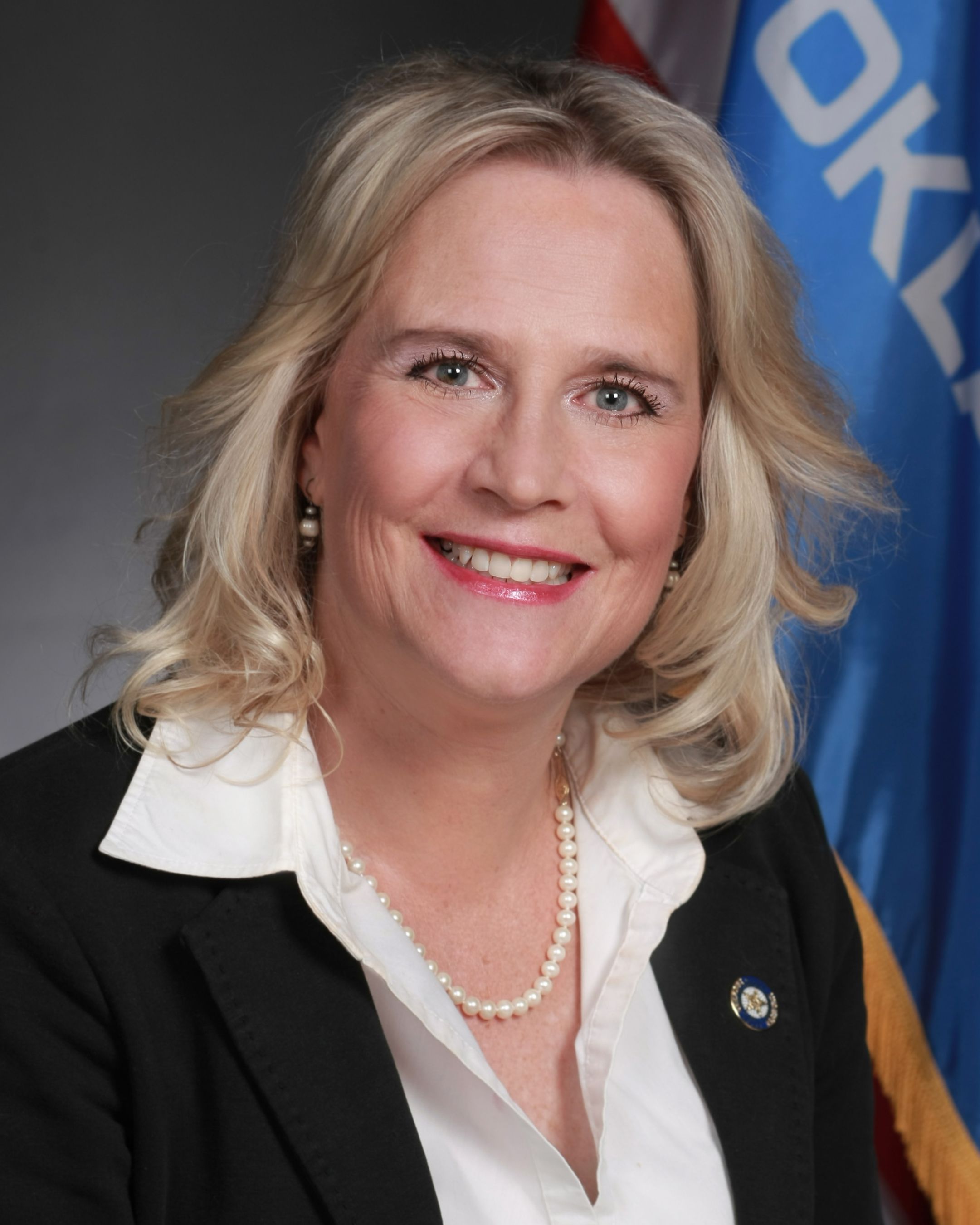
Rep. Nicole Miller
Sponsored bills
Maddy summarySB 1239 amends Oklahoma law governing how vehicle license fee funds are distributed. It locks the percentage of these funds going to school districts at 36.20% for fiscal years starting July 1, 2019, and beyond, with any excess above the 2015 apportionment amount redirected to the Rebuilding Oklahoma Access and Driver Safety Fund. Similarly, it maintains the 0.31% allocation for the State Transportation Fund with the same cap on excess funds. The bill updates statutory language for clarity and declares an emergency, but does not change the core funding formulas or create new programs.
Maddy summarySB 2026 amends Oklahoma law to allow veterans' grandchildren to access military discharge records (DD 214 forms) held by county clerks. The bill expands existing access rights, which previously permitted only veterans, spouses, children, or legal representatives, to explicitly include grandchildren. County clerks must still keep these records confidential and separate from public files, requiring proper identification or court orders for viewing. The change takes effect November 1, 2026, directly affecting veterans' grandchildren seeking access to these military service records.
Maddy summarySB 1975 requires Oklahoma public school districts to make Advanced Placement (AP) exams available to any student residing in the district and to post exam dates, registration details, and procedures on their websites by August 31 each year. It also mandates the Statewide Charter School Board to maintain an online learning platform offering AP courses, STEM subjects, foreign languages, and other high-quality courses for all Oklahoma students. The State Department of Education must provide information to students and parents about AP courses and their benefits for college readiness, scholarships, and financial aid opportunities. The bill takes effect July 1, 2026.
Maddy summarySB 1428 creates the Office of Alzheimer’s Disease and Related Dementia Service Coordination within Oklahoma’s State Department of Health, effective November 1, 2026. The office will coordinate statewide dementia services, eliminate duplicated efforts, collect data, support staff training, and identify grant opportunities to improve care for individuals with Alzheimer’s or related dementias and their caregivers. It requires the office to maintain a full-time dementia services coordinator position to manage operations. The bill repeals two outdated sections of Oklahoma law (63 O.S. 2021, Sections 1-879.2 and 1-879.3) related to dementia services.
Maddy summaryHB 4273 creates an income tax credit for Oklahoma employees working in the aerospace sector who hold ABET-accredited engineering degrees or are licensed Professional Engineers. It defines "qualified employees" as individuals with such credentials working for "qualified employers" (aerospace businesses or higher education institutions with dedicated aerospace research programs). The credit applies to tuition paid for qualifying engineering programs and is limited to five years per person. This policy directly affects aerospace workers and employers in Oklahoma's aerospace industry by reducing their state income tax liability. The bill takes effect January 1, 2027.
Maddy summaryHB 4272 creates Oklahoma's "Uniform Certificate of Title for Vessels Act," establishing a standardized system for titling boats, outboard motors, and other watercraft. It requires most vessels to have a title, defines key terms (like "barge" or "canoe"), and sets rules for applying, transferring, and replacing titles - especially for damaged vessels. The bill affects boat owners, dealers, insurers, and state agencies like Service Oklahoma, which must maintain electronic records and handle title applications. Key changes include requiring titles for certain vessels, streamlining electronic transfers, and clarifying security interests for lenders.
Maddy summaryHB 4392 is a procedural bill that names the "Aeronautics Reform Act of 2026" and sets its effective date as November 1, 2026. It does not create new regulations or affect specific groups, as it establishes a non-codified name for the act without substantive policy changes. The bill solely provides formal naming and timing details, with no mechanisms or provisions beyond this. It is not intended to alter existing law or impact stakeholders. This is a standard naming and effective date provision typical of procedural legislation.
Maddy summaryHB 4285 creates a dedicated revolving fund called the "Perinatal Quality Improvement Revolving Fund" within Oklahoma's State Treasury. The fund will receive state and federal appropriations, donations, and grants to support the Oklahoma Department of Health in reducing preventable maternal and infant deaths and health complications. It allows the Department to collaborate with research groups across Oklahoma to improve maternal safety and health outcomes using these pooled resources. The fund is designed as a continuous funding source, not limited to annual budgets, to sustain long-term quality improvement efforts in perinatal care. The bill takes effect on July 1, 2026.
Maddy summaryHB 4280 increases annual funding for Oklahoma's Rebuilding Oklahoma Access and Driver Safety Fund (ROADS Fund) to support road and bridge construction and maintenance. It sets specific annual funding levels: $575 million for fiscal year 2021, $590 million for 2022, $610 million for 2025, and $670 million starting in 2026. The bill requires the Department of Transportation to use these funds first for debt payments on highway obligations, then for road/bridge construction, maintenance, and matching federal funds. The legislation directly affects Oklahoma's highway infrastructure and the DOT's budget allocation process, with funding adjustments triggered by revenue shortfalls.