Maddy summaryThe Hydropower Licensing Affordability Act amends the Federal Power Act to modify how federal licenses for hydropower projects are issued. It requires project operators to reasonably mitigate direct adverse effects on Indian reservations and fish populations before a license is granted. These changes aim to ensure that environmental and tribal concerns are addressed as specific conditions within the licensing process. The bill directly affects hydropower developers and the agencies responsible for reviewing and issuing federal project licenses.
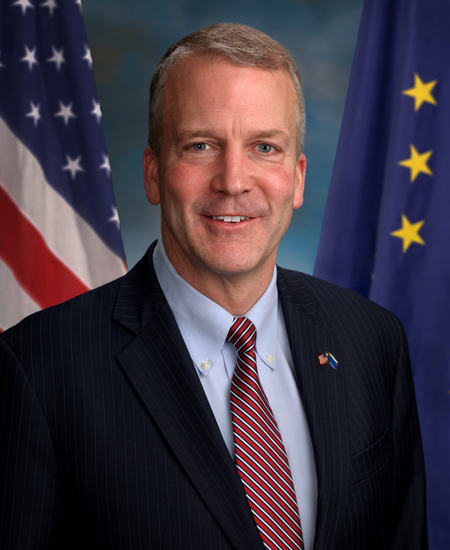
Sen. Dan Sullivan
Sponsored bills
Maddy summaryS 3456, the Law Enforcement Officer and Firefighter Recreation Pass Act, creates a free annual pass for eligible law enforcement officers and firefighters to use at national parks and federal recreational lands. The bill directly affects active officers and firefighters employed by federal, state, local, or tribal governments who perform duties related to crime prevention/detection or fire suppression. It amends existing law to require the Secretary to provide these passes at no cost, after verifying eligibility through proof of employment. The key mechanism is expanding the current pass program to specifically include these public safety professionals under defined roles.
Maddy summaryThis resolution honors the life and legacy of the late Senator Lindsey Olin Graham from South Carolina. It formally acknowledges his extensive career in the military, state government, and Congress, noting his service as a Senator and his roles as Chairman of the Judiciary and Budget committees. The Senate expresses its sorrow over his death and requests that this tribute be shared with the House of Representatives and Graham's family.
Maddy summaryThis bill establishes a comprehensive sanctions framework targeting the Russian government and its affiliated entities in response to ongoing military actions. It authorizes the President to block assets, revoke visas, and prohibit financial transactions for Russian officials, military leaders, and foreign persons supporting Russia's defense industry or undermining Ukraine. The legislation also bans U.S. investments in Russian energy sectors, prohibits the purchase of Russian sovereign debt, and imposes high tariffs on Russian imports while restricting crude oil purchases by specific foreign nations. Additionally, the bill prevents Russian companies from listing on U.S. stock exchanges and includes mechanisms for terminating sanctions only if Russia signs a peace agreement accepted by Ukraine and ceases hostilities.
Maddy summaryThe Alaska Native Landless Equity Act (S 2554) provides land rights to Alaska Native communities in Haines, Ketchikan, Petersburg, Tenakee, and Wrangell that were excluded from the Alaska Native Claims Settlement Act. The bill authorizes these communities to form Urban Corporations that will receive approximately 23,040 acres of federal land each, with specific parcels detailed in maps. It establishes shareholder eligibility, allowing enrolled Natives to receive shares in the Urban Corporations, and ensures continued public access for subsistence and recreational uses on the conveyed lands. The bill includes provisions for phased land conveyance, mutual use agreements for roads and transportation facilities, and requirements for the Secretary to respect existing rights during the land transfer process.
Maddy summaryThis resolution expresses support for designating July 10, 2026, as Journeyman Lineworkers Recognition Day to honor the workers who maintain the nation's electricity grid. The bill honors these employees for their critical role in keeping power running daily and for their dangerous work restoring service during disasters and extreme weather. It also commemorates the 130th anniversary of the death of Henry Miller, the first president of the International Brotherhood of Electrical Workers, who died while restoring power. Finally, the resolution encourages Americans to observe this day with reflection on the sacrifices made by lineworkers over the past century.
Maddy summaryThe SAFE Banking Act of 2026 aims to reduce legal risks for banks and credit unions that provide financial services to businesses operating marijuana or hemp industries under state laws. It establishes a "safe harbor" that prevents federal regulators from penalizing, terminating insurance for, or restricting these institutions solely because they serve state-sanctioned marijuana or hemp companies. The bill also clarifies that income from these businesses can be used to qualify for federally backed mortgages and protects banks from liability regarding money laundering charges when dealing with compliant state operations. Additionally, the legislation requires federal agencies to update guidance on how to handle suspicious activity reports for these sectors and mandates annual studies on access to financial services for minority and small businesses in the industry.
Maddy summaryThis bill establishes the Bycatch Reduction Act to lower the accidental catch of marine species and protect seafloor habitats in the Bering Sea, Aleutian Islands, and Gulf of Alaska. It requires fishing vessels using trawl nets to install specific technologies, such as seafloor contact detection systems and salmon excluders, to minimize damage to the ocean bottom and reduce the capture of salmon and other important species. The legislation also creates new research task forces and funding programs to study marine ecosystems and develop innovative gear, while mandating greater transparency in how fishery management councils make decisions. Additionally, the bill prohibits the import of seafood from foreign vessels that do not meet U.S. conservation standards and sets up a new fund to help fishermen purchase or modify equipment that reduces environmental impact.
Maddy summaryThis bill requires the Department of Housing and Urban Development to improve how it counts homeless individuals across the country. It mandates that local organizations conduct an annual count during the last ten days of April using standardized data systems, while also allowing optional counts at other times of the year. The legislation provides training and technical support for rural areas to help them collect accurate data and submit regular reports to Congress. Additionally, it requires organizations to update their data year-round and collect mid-year information to better track trends and plan services. A Government Accountability Office study will be conducted within a year of the bill's enactment to review the new counting methods and suggest further improvements.
Maddy summaryThe North Korean Human Rights Reauthorization Act of 2026 extends the funding and authority for the existing North Korean Human Rights Act through 2030 to support programs that document abuses, promote information access, and assist refugees. It mandates the appointment of a Special Envoy to coordinate human rights efforts and requires the State Department to report annually on efforts to appoint this role if the position remains vacant. The bill also directs the government to improve how humanitarian aid is distributed to ensure it reaches the general population rather than the North Korean elite, and it expands sanctions to penalize entities that forcibly return North Korean refugees to the country. Additionally, the legislation updates reporting requirements regarding the exploitation of humanitarian aid and clarifies that sanctions exemptions should be granted for genuine relief efforts.