

Maddy summaryThis bill amends the Help America Vote Act to require voters casting ballots in person for federal elections to present a valid physical photo identification. It allows individuals who cannot show ID to cast a provisional ballot, provided they either present the ID within three days or submit a state-approved affidavit stating a religious objection to being photographed. The law also mandates that states make digital imaging devices available at public buildings like libraries and police stations so voters can print copies of their IDs for free. Acceptable forms of identification include state-issued driver's licenses, state ID cards, U.S. passports, military IDs, and tribal government IDs with photos. States must also notify all voter registration applicants, including those registering online, about this new requirement before they complete the process.
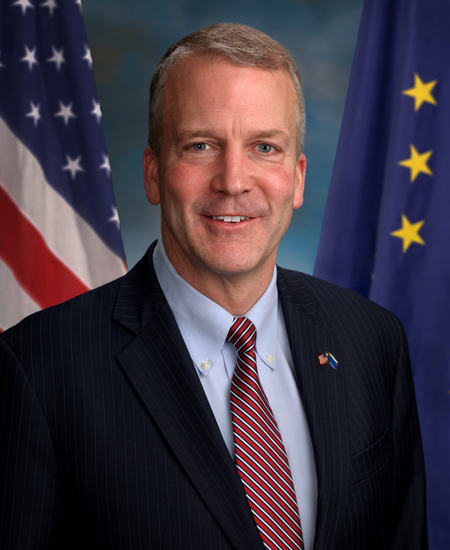
Sen. Dan Sullivan
Sponsored bills
Maddy summaryThis joint resolution seeks to disapprove a specific rule issued by the Environmental Protection Agency regarding pollution control standards for nonroad engines used in ocean-going vessels while they are at berth. If passed, the measure would legally void the EPA rule, preventing it from taking effect or continuing to apply to the shipping industry. The bill directly impacts the Environmental Protection Agency and maritime operators subject to these emission regulations by removing the federal mandate associated with the California standards.
Maddy summaryThis resolution designates August 16, 2026, as National Airborne Day to honor the history and contributions of U.S. airborne military forces. The bill calls on the American people to observe the day with programs and ceremonies celebrating the bravery and achievements of paratroopers and air assault units. It highlights the legacy of these forces, which began with the first official Army parachute jump on that date in 1940 and have since served in numerous conflicts worldwide. The measure serves as a commemorative recognition rather than a change to federal law or military operations.
Maddy summaryThe Native American Housing Assistance and Self-Determination Modernization Act of 2026 reauthorizes federal housing assistance for Indian tribes and Native Hawaiians through fiscal year 2033 while expanding eligibility to include families with incomes up to 120 percent of the area median. The bill grants tribes greater autonomy by allowing them to set their own rent, procurement, and environmental review policies, and it streamlines regulatory processes by consolidating environmental reviews and exempting certain small-scale projects from specific federal requirements. Additionally, the legislation establishes new grant programs for homeless American Indians, Alaska Natives, and Native Hawaiians, creates a rental assistance program for homeless Indian veterans, and extends leasehold interests on trust lands to 99 years to improve financing options.
Maddy summaryThe Fisheries Science Modernization Act of 2026 directs the National Oceanic and Atmospheric Administration (NOAA) to integrate environmental DNA (eDNA) sampling into federal fishery stock assessments through a multi-year pilot study and subsequent implementation plan. To support this transition, the bill establishes the National Aquatic Biomolecular Coordination Network, a multi-agency body tasked with developing national standards for eDNA collection, analysis, and data sharing across various aquatic environments. Additionally, the legislation authorizes funding to expand NOAA’s workforce and laboratory capabilities, encourages partnerships with private-sector technology developers, and amends the Magnuson-Stevens Act to formally incorporate eDNA methods into fisheries management.
Maddy summaryS 1735, the Permitting Transparency and Accountability Act, requires government agencies that issue permits (like environmental or construction permits) to publish detailed online status updates for each application. Covered agencies must display on their websites: the stages completed in the review process, how long each stage took, the current status and time spent in that stage, contact information for reviewers, the full process steps needed, and an estimated timeline for a final decision. This directly affects permit applicants by providing clear, real-time tracking of their applications instead of opaque waiting periods. The bill mandates these specific, standardized details to make the permitting process more transparent and accountable for all involved parties.
Maddy summaryThis bill allows Congress to reject a specific rule issued by the Environmental Protection Agency that concerns vehicle pollution standards in California. The measure would effectively cancel the EPA's decision to reinstate a waiver that previously let California set its own stricter air quality rules for cars. If passed, the rule would have no legal force, meaning California would lose the ability to enforce its Advanced Clean Car Program under the current framework. The legislation directly impacts the relationship between federal environmental regulations and state-level automotive policies.
Maddy summaryThis joint resolution seeks to overturn a specific rule issued by the Environmental Protection Agency that allowed California to set its own stricter greenhouse gas emission standards for new vehicles. By disapproving this waiver, the bill aims to restore federal preemption, ensuring that all states must follow the same national emission rules rather than California's unique requirements. If passed, the measure would effectively cancel the EPA's decision, forcing automakers to comply with uniform federal standards for vehicle pollution control.
Maddy summaryThe Kids Online Safety Act (S 1748) requires major social media platforms, online video games, and other "covered platforms" to implement specific safety features for minors (under 17). These features include default privacy settings that limit harmful design features like infinite scrolling and auto-play, parental controls for managing minors' accounts, and restrictions on advertising illegal products to minors. The bill also mandates annual transparency reports about how platforms are used by minors and requires platforms to provide clear notices about their content algorithms. It creates a Kids Online Safety Council to advise Congress on online safety issues for children. The law applies to platforms with more than 10 million monthly users in the U.S. and takes effect 18 months after enactment.
Maddy summaryThis bill, known as the State-Based Education Loan Awareness Act, clarifies that state-run student loan programs are not subject to certain federal rules about preferred lender arrangements. It directly affects state agencies, nonprofit organizations, and other entities that offer private student loans without federal government backing. The legislation defines these state programs by requiring that they offer interest rates and fees at least as favorable as federal Direct PLUS loans and that borrowers are informed about federal loan options before taking out private loans. By making this exclusion explicit, the bill ensures state programs operate under different regulatory requirements than federally backed lending arrangements.