

Law-Enforcement Innovate to De-Escalate Act This bill removes less-than-lethal projectile devices (e.g., certain TASERs) from regulation under the Gun Control Act. The term less-than-lethal projectile device means a device that (1) is not designed or intended to expel (and may not be readily converted to discharge) commonly used ammunition or projectiles exceeding a velocity of 500 feet per second; (2) is designed and intended to be used in a manner not likely to cause death or serious bodily injury; and (3) does not accept (and cannot be readily modified to accept) an ammunition feeding device. The bill also requires the Bureau of Alcohol, Tobacco, Firearms and Explosives to determine whether a device satisfies the definition of a less-than-lethal projectile device within 90 days of a request.
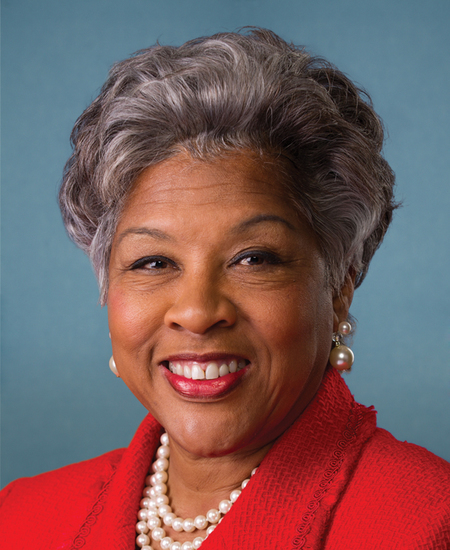
Rep. Joyce Beatty
Sponsored bills
Maddy summaryHRES 1071 is a non-binding resolution recognizing the historical desegregation efforts at Girard College in Philadelphia and the civil rights leaders involved. It highlights how the college, founded in 1848 to admit only poor white male orphans, rejected African-American students in 1954, leading to legal challenges led by figures like Raymond Pace Alexander and Cecil B. Moore. The resolution notes the U.S. Supreme Court’s 1957 ruling that the racial ban was unconstitutional, followed by Girard College’s eventual admission of seven students in 1968 after further court action. The resolution formally acknowledges these events and the leaders’ contributions to expanding civil rights and integration.
Maddy summaryThe Head Start for America's Children Act amends the Head Start Act to enhance early childhood education services for low-income children, with specific provisions to improve culturally responsive programming for Native American and Native Hawaiian communities. It increases funding for Head Start programs, including $91.575 million for transportation, $37.5 million for workforce development, and $863 million for extended operations to provide full calendar year services. The bill updates definitions throughout the law to use more inclusive language, replacing "limited English proficient" with "children who are developing English proficiency," and establishes new requirements for staff compensation and benefits to improve recruitment and retention. Native American Head Start programs and migrant/seasonal programs are exempt from certain requirements, such as the full calendar year service requirement.
Maddy summaryThis bill directs U.S. agencies to support Iranian people's access to uncensored information and hold Iranian officials accountable for human rights abuses. It requires the State Department and FCC to report on technologies (like satellite networks and mesh systems) that could bypass internet restrictions in Iran, and authorizes $2 million annually to develop such tools. The bill also establishes a new "Iran Kleptocracy Initiative" at FinCEN to track corruption, freeze assets of Iranian regime officials and state-owned businesses, and coordinate with international partners. These measures apply to U.S. policy toward Iran but do not alter Iran's domestic laws; they focus on U.S. sanctions, technology development, and anti-corruption efforts targeting the Iranian regime.
Maddy summaryHR 7599 creates a federal framework for extreme risk protection orders (ERPOs), allowing family members or law enforcement to petition courts to temporarily prohibit individuals from possessing firearms when they pose a risk of harm to themselves or others. The bill establishes a process for issuing ex parte orders (up to 14 days) followed by a hearing within 72 hours to determine if a longer-term order (up to 180 days) should be issued, requiring respondents to surrender firearms to U.S. Marshals or designated law enforcement. Courts must consider specific factors like recent threats, violence, substance abuse, or cruelty to animals before issuing orders, with no fees for petitioners. The law requires law enforcement training to address bias, includes annual reporting requirements, and ensures firearms are returned once the order expires and the individual is eligible to own firearms under federal law.
Maddy summaryThis bill requires most employers to provide workers with earned paid sick leave. Employees would earn 1 hour of paid sick time for every 30 hours worked, up to 56 hours per year, which can be used for their own illness, medical care, caring for family members (including children, parents, spouses, domestic partners, or other family-like relationships), or addressing domestic violence, sexual assault, or stalking situations. The bill prohibits employers from retaliating against workers who use this leave and requires employers to inform employees about their rights. It ensures that workers who leave and return to the same employer within a year can reinstate their unused sick leave. This law would not override more generous state or local paid leave policies.
Maddy summaryThis bill establishes a 12-member National Council on African American History and Culture within the National Endowment for the Humanities (NEH). The Council, appointed by the President with Senate approval, will include experts in African American history and culture who are not federal employees, with balanced representation (6 Democrats, 6 Republicans) and attention to diversity. Its duties include evaluating NEH programs related to African American history, preparing annual reports, and making recommendations to improve preservation and celebration efforts. The Council will operate for 10 years, with members serving five-year terms and receiving partial compensation for their service.
Maddy summaryHR 7500, the Responsible Firearms Marketing Act, directs the Federal Trade Commission (FTC) to study whether firearm advertising or marketing practices are unfair or deceptive, particularly those targeting minors, implying illegal use, or promoting semiautomatic assault weapons. After a two-year study, the FTC must report to Congress and then create enforceable regulations within 18 months to ban such practices. The law specifically prohibits manufacturers, dealers, and importers from using ads that appeal to people under 18, suggest illegal activity, or market assault weapons. Violations would be enforced under existing FTC authority, treating them as unfair or deceptive acts under current law. This bill directly affects firearm industry marketing practices but does not regulate gun sales or ownership.
Maddy summaryThis resolution (HRES 1043) is a symbolic congressional expression of support for designating February 2026 as "American Heart Month," an annual designation previously established by presidential proclamation since 1964. It does not create new programs or funding but affirms Congress's backing for existing awareness efforts focused on cardiovascular disease (CVD), citing CVD as the leading cause of death in the U.S. and highlighting statistics about its impact, costs, and risk factors. The resolution encourages public education about CVD prevention and recognizes ongoing efforts by organizations like the American Heart Association and National Heart, Lung, and Blood Institute. It directly affects no specific group but supports nationwide public health awareness campaigns during February.
Maddy summaryHR 7417 reauthorizes and expands the WISEWOMAN program to include heart health screenings and education for low-income women. The bill directs the CDC to award grants for blood pressure and cholesterol screenings, health education, and referrals for heart disease prevention, building on existing breast and cervical cancer services. It specifically targets low-income women who are already served by the WISEWOMAN program or meet new eligibility criteria set by the Secretary. The expansion is funded with $250 million over five fiscal years (2027-2031), with services to be provided by current WISEWOMAN grantees or approved alternative providers.