

In committee Sep 24, 2026
1 co-sponsor
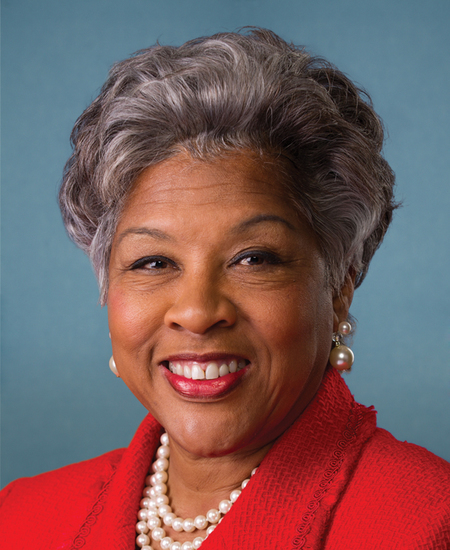
Rep. Joyce Beatty
Total votes
2,837
all sessions
Attendance
97%
72 missed
Lower than 82% of chamber peers
With party
98%
of cast votes
Higher than 84% of chamber peers
Bipartisan score
1%
crosses aisle rarely
Lower than 85% of chamber peers
Sponsored
1,297
bills & resolutions
Higher than 77% of chamber peers
Committees
3
assignments
1,297 bills and resolutions
Sponsored bills
Total
1,297
Primary
82
Co-sponsor
1,215
This page
1,297
matching current filters
To designate the facility of the United States Postal Service located at 189 East Main Street in Xenia, Ohio, as the "Gil Whitney Post Office Building".
This bill designates the facility of the United States Postal Service located at 189 East Main Street in Xenia, Ohio, as the "Gilman 'Gil' Whitney Post Office Building".
Passed Sep 17, 2026
1 co-sponsor
Expressing support for the recognition of Nigerian Heritage Month and celebrating the heritage, culture, and contributions of Nigerians and Nigerian Americans in the United States.
Maddy summaryThis House resolution expresses support for recognizing Nigerian Heritage Month to celebrate the history, culture, and contributions of Nigerians and Nigerian Americans in the United States. It highlights the strong bilateral relationship between the two nations and notes that Nigerian Americans are a highly educated immigrant group making significant impacts in fields such as medicine, technology, and business. The bill encourages federal, state, and local governments, along with educational institutions, to observe this month through programs and ceremonies that highlight Nigerian heritage.
In committee Sep 16, 2026
1 co-sponsor
Glaucoma Vision Act of 2026
Maddy summaryThe Glaucoma Vision Act of 2026 mandates that private health insurance plans, Medicare, Medicaid, and Federal Employees Health Benefits programs cover annual glaucoma screenings for specific high-risk individuals starting in 2027. These covered individuals include adults aged 40 or older with African, Hispanic/Latino, or Asian ancestry, those with clinical risk factors such as diabetes or family history, and all adults aged 60 or older. The bill also directs the Centers for Disease Control and Prevention to award $10 million in grants over two years to provide free or low-cost screenings and treatment to uninsured high-risk populations, with priority given to underserved communities. Additionally, it authorizes $10 million for research into glaucoma treatments, including optic nerve regeneration and gene therapies.
In committee Sep 16, 2026
1 co-sponsor
In committee Sep 16, 2026
1 co-sponsor
Food for Thought Act of 2026
Maddy summaryThe Food for Thought Act of 2026 establishes a competitive grant program administered by the Department of Agriculture to provide free meals and snacks to low-income college students at eligible institutions, including community colleges, historically Black colleges and universities, and other minority-serving schools. To qualify, an institution must have at least 20 percent of its undergraduate students eligible for Federal Pell Grants, and grants are awarded for a maximum duration of two years with funds restricted to meal preparation, outreach, and limited equipment purchases. Recipients are required to prioritize students who receive Pell Grants or report food insecurity, while also evaluating institutional policies that may create barriers to enrollment and referring students to other federal benefit programs like SNAP. The bill authorizes appropriations for fiscal years 2027 through 2032 and mandates that the Secretary of Agriculture submit reports to Congress on the program's impact on student retention and completion rates.
In committee Sep 16, 2026
1 co-sponsor
Foreign Robocall Elimination Act
Maddy summaryHR 6152, the Foreign Robocall Elimination Act, establishes an interagency task force to address foreign robocalls entering the United States. The task force, composed of the FCC, FTC, DOJ, and private sector representatives, will study the origins, impacts, and potential solutions to foreign robocalls and must submit a report to Congress within 360 days. The bill also modifies existing law to require FCC notices about robocall mitigation every three years instead of annually, and introduces a bond requirement for providers using the Robocall Mitigation Database. This legislation affects telecommunications providers, federal agencies, and all U.S. telephone users who receive unwanted calls. The bill aims to improve coordination between U.S. agencies and foreign countries in combating illegal robocalls through concrete policy changes.
In committee Sep 16, 2026
1 co-sponsor
TRAPS Act
Maddy summaryThe TRAPS Act establishes a federal Task Force on Payment Scams, chaired by the Treasury Secretary, to coordinate efforts across agencies like the FTC, Federal Reserve, and consumer groups. The Task Force will study current scam tactics (such as fake text messages or fraudulent payment platforms), evaluate prevention strategies, and develop recommendations to help consumers avoid and report scams. It must submit an initial report within one year and annual updates, focusing on improving federal-state coordination and education programs. This bill directly affects government agencies and stakeholders participating in the Task Force, with the goal of protecting consumers from evolving payment scams.
In committee Sep 16, 2026
1 co-sponsor
Tyler’s Law
Maddy summaryHR 2004, titled "Tyler’s Law," requires the Secretary of Health and Human Services to study how often hospital emergency departments test for fentanyl during overdose cases (beyond standard drug tests), including associated costs, patient benefits/risks, and impacts on privacy and patient-physician relationships. The study must be completed within one year of the bill's enactment. Based on the study results, the Secretary must issue guidance within six months on whether emergency departments should routinely test for fentanyl, how to inform clinicians about test contents, and how such testing may affect future overdose risks and health outcomes. This bill directly affects hospital emergency departments and patients experiencing overdoses by shaping future testing protocols.
Passed Sep 16, 2026
1 co-sponsor
AM Radio for Every Vehicle Act of 2025
Maddy summaryThis bill requires all new passenger vehicles manufactured for sale in the U.S. to include AM radio as standard equipment (not an optional add-on) by 2027-2028, depending on manufacturer size. It mandates that AM radio receivers must be easily accessible to drivers and allows compliance through digital AM broadcast technology. During a transition period, manufacturers must clearly label vehicles without AM radio but cannot charge extra for this feature. The bill also mandates a GAO study on AM radio's role in emergency alerts and includes a 10-year sunset provision for the rule. It preempts state laws regarding AM radio access in vehicles.
Passed Sep 16, 2026
1 co-sponsor
Ask Maddy
·
AI policy assistant
Ask Maddy about Joyce Beatty
Scope: ohio
Hi! I can help you understand Joyce Beatty's legislative record. What would you like to know?
Try one of these
i
Maddy answers using official bill text and legislative records. Always verify before sharing.
Sources cited inline