

Maddy summaryThe Momnibus Act is a comprehensive legislative bill designed to improve maternal health outcomes across the United States by addressing social determinants of health, expanding access to care, and reducing disparities among pregnant and postpartum individuals. The bill establishes a federal task force to coordinate efforts between agencies and stakeholders to eliminate preventable maternal mortality and severe morbidity, while providing sustained funding to community-based organizations to address nonclinical factors like housing, nutrition, and transportation. Key provisions include extending WIC eligibility to 24 months postpartum, creating grants to grow and diversify the perinatal workforce, implementing respectful maternity care training for all healthcare employees, and establishing compliance programs to track and address bias in maternity care settings. The legislation also includes specific measures for incarcerated mothers, veterans, and vulnerable populations affected by climate change, alongside funding for maternal mental health services and technology-enabled care models to expand access in underserved areas.
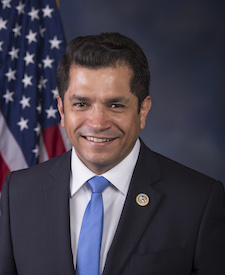
Rep. Jimmy Gomez
Sponsored bills
Maddy summaryThis concurrent resolution (HCONRES 40) directs the President to remove U.S. military forces from hostilities with Iran, as required by the War Powers Resolution. It applies directly to U.S. Armed Forces deployed in conflict with Iran, except for forces needed to defend the U.S. or allies from imminent attack. The bill mandates removal unless the President complies with War Powers Resolution reporting requirements for self-defense actions, without needing new congressional authorization. As a procedural resolution, it does not create new law but compels executive action under existing legal framework.
Maddy summaryThe Water Access and Affordability Act establishes a federal program, administered by the EPA, to provide financial assistance to low-income households for their drinking water and sanitary sewer bills. States, large water systems, or Indian Tribes can receive grants to implement these programs, offering aid for bill payments, debt relief, and water efficiency improvements. The bill includes provisions to simplify enrollment, such as automatic enrollment and self-attestation, and prohibits service disconnections for participating households. Additionally, it revises federal State Revolving Loan Fund programs for water infrastructure, requiring states to increase transparency, public engagement, and prioritize assistance for disadvantaged communities. This includes public review of funding plans, reporting on the socioeconomic impact of projects, and expediting aid to communities with affordability challenges.
Maddy summaryThe HELP Act of 2026 creates a federal database to track evictions from housing units receiving federal assistance, requiring landlords and local agencies to report detailed information about tenants facing eviction proceedings. The bill establishes a grant program to provide free legal assistance to low-income tenants at risk of eviction, prioritizing organizations with experience serving vulnerable populations and ensuring rural areas receive proportional support. Additionally, the act modifies the Fair Credit Reporting Act to include eviction records in consumer reports and requires landlords to provide tenants with written information about their eviction rights and available local resources. These measures aim to improve data collection on housing instability, increase access to legal representation for tenants, and enhance tenant awareness of their rights under federal and state laws.
Maddy summaryThis bill would prevent the sitting President's signature from appearing on U.S. currency and securities while they hold office. It directly affects the Treasury Department and the Bureau of Engraving and Printing by requiring them to stop using the current President's signature on new bills and bonds. The law allows for a waiver only if Congress passes a specific law explicitly authorizing the use of the President's signature. This change would mean that any money or government bonds printed after the bill takes effect would feature a different official's signature instead.
Maddy summaryThis resolution expresses support for recognizing April as National Language Access Month to highlight the importance of language services for individuals with limited English proficiency. It directly affects millions of Americans who speak languages other than English at home and rely on translation and interpretation services to access public services. The bill does not create new laws or funding but serves as a symbolic gesture to raise awareness about existing federal requirements for language access in areas like healthcare, employment, and voting. It encourages federal agencies, state and local governments, and community organizations to promote awareness of language access rights and resources during the designated month.
Maddy summaryThis concurrent resolution formally recognizes the ongoing disparity between wages paid to men and women in the United States and reaffirms Congress's commitment to supporting equal pay. It highlights statistical data showing that women earn approximately 81 cents for every dollar earned by men, with significant variations across racial and ethnic groups, and notes that the gender wage gap has widened over the past two years. The document also identifies contributing factors such as occupational segregation, lack of family-friendly workplace policies, and workplace harassment, while emphasizing the economic impact on women's retirement security and family incomes.
Enhanced Iran Sanctions Act of 2025 This bill imposes sanctions on certain foreign persons (individuals and entities) that are involved in Iran's petroleum sector as well as certain associated persons. The bill also requires or authorizes actions to facilitate the enforcement of sanctions on Iran. Specifically, the bill requires the President to impose visa- and property-blocking sanctions on any foreign person that, after the bill's enactment, knowingly engages in any transaction related to the processing, export, or sale of oil, condensates, gas, liquefied natural gas, or other petrochemical products in whole or in part from Iran. The President must also impose sanctions on certain foreign persons associated with a sanctioned individual or entity. For example, the President must sanction the subsidiaries and corporate officers of a sanctioned business. The bill provides certain exceptions to these sanctions, including specifying that sanctions do not apply to the importation of goods or to conducting or facilitating transactions for humanitarian assistance. The Department of State must establish an interagency working group that shall seek to establish a multilateral contact group to coordinate international efforts to enforce sanctions on Iran. The bill expands the State Department rewards program to authorize a reward payment to any individual who furnishes information leading to the identification of a person (1) subject to sanctions under this bill, or (2) that has attempted or is attempting to evade sanctions under this bill.
Maddy summaryThis bill, known as the Fair Wages for Home Care Workers Act, would change federal labor rules to require overtime pay and minimum wage protections for certain babysitters. It specifically targets casual babysitting work that is irregular or intermittent, while excluding trained medical professionals like nurses and home health aides from these changes. The law would also allow babysitters to perform up to 20% of their work time on unrelated household tasks without losing their protected status. These amendments would apply to workers covered by the Fair Labor Standards Act of 1938 who provide custodial care for infants or children in private homes.
Maddy summaryHR 7827 restricts the Department of Defense from purchasing or selling military-style assault weapons and certain high-capacity ammunition (like .223 Remington) in commercial markets. It imposes strict requirements on dealers selling firearms or ammunition, including mandatory NICS background checks, limits on high-volume sales, security measures (like surveillance systems), and electronic recordkeeping for transactions. Dealers must also meet crime trace limits (fewer than 24 crime guns traced annually) and implement training on recognizing straw purchases and preventing illegal sales. Government-owned weapons plants must annually report commercial sales data to Congress, including customer locations and revenue.