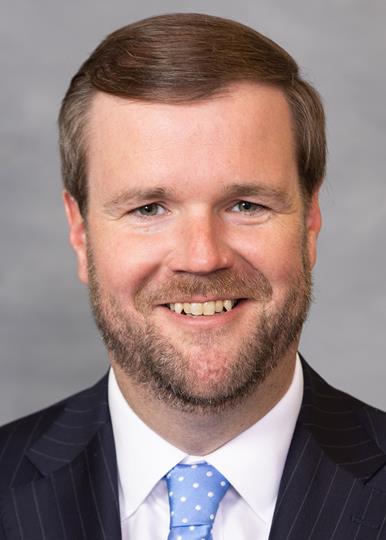
Photo of Kyle Hall
R North Carolina House · District 91 On the 2026 ballot

Rep. Kyle Hall

Compare
Total votes
1,056
all sessions
Attendance
95%
54 missed
Near the chamber average
With party
97%
of cast votes
Near the chamber average
Bipartisan score
1%
crosses aisle rarely
Near the chamber average
Sponsored
187
bills & resolutions
Near the chamber average
Committees
13
assignments
187 bills and resolutions

Sponsored bills

Total
187
Primary
69
Co-sponsor
118
This page
187
matching current filters
Co-sponsor HB 1068
In committee · North Carolina House · Co-sponsor
King Satellite Annexation/Rural Hall Fire District.

Maddy summaryHB 1068 removes a specific restriction that currently limits the total size of satellite annexations for the City of King in North Carolina. Under the existing law, King could not expand its noncontiguous areas beyond 10% of its main city limits, but this bill explicitly exempts King from that cap. This change allows the city to annex additional noncontiguous land without being constrained by the previous percentage limit. The legislation directly affects the City of King and applies only to its future annexation plans.

In committee Jun 2, 2026 1 co-sponsor
Primary HB 443
Passed · North Carolina House · Lead sponsor
Constitutional Amendment: Council of State Vacancies.

Maddy summaryHB 443 proposes a constitutional amendment requiring the Governor to appoint a replacement for certain state officers (Secretary of State, Auditor, Treasurer, etc.) from a list of three nominees provided by the vacating official's political party, if the party submits recommendations within 30 days. This change would apply to vacancies occurring after the amendment's approval and would modify the current process where the Governor appoints without party input. The amendment must be approved by voters in the November 2026 general election to take effect. It directly affects the Governor's appointment authority and the political parties of the affected offices.

Passed May 20, 2026 0 co-sponsors
Co-sponsor HB 144
died · North Carolina House · Co-sponsor
Elect State Board of Education/Superintendent as State Board of Education Chair.

Maddy summaryHB 144 is a proposed constitutional amendment that would change how North Carolina's State Board of Education is structured. It requires voters to elect all board members (except the Lieutenant Governor and Treasurer, who are Council of State members) from districts established by the General Assembly, with terms of four years. The Superintendent of Public Instruction would automatically serve as the board's chair (ex officio member) without needing separate election. This amendment must be approved by voters in the 2026 election and would take effect for terms beginning January 1, 2029. It does not change the current composition of the board but alters how members are selected and who serves as chair.

died May 19, 2026 1 co-sponsor
Primary HB 1176
In committee · North Carolina House · Lead sponsor
North Carolina-Ireland Trade Commission.

Maddy summaryThis bill establishes a new North Carolina-Ireland Trade Commission to strengthen economic and cultural connections between the state and Ireland. The commission will be composed of seven members appointed by state legislative leaders and the governor, including representatives from business, education, and Irish-American civic organizations. Its primary responsibilities include encouraging trade and investment, facilitating exchanges, and submitting annual reports to the state legislature. The state will allocate $10,000 for administrative support, and the commission is set to begin operations in October 2026.

In committee May 4, 2026 0 co-sponsors
Primary HB 1146
In committee · North Carolina House · Lead sponsor
2026 Governor's Budget.

Maddy summaryHB 1146 establishes the 2026 Governor's Budget for North Carolina by allocating specific funding amounts to state departments, institutions, and agencies for the 2025-2027 fiscal biennium. The bill directly affects public education, health and human services, agriculture, justice, and general government entities by setting their operational budgets for the upcoming fiscal year. Key provisions include detailed dollar amounts for various programs, such as funding for public instruction, university operations, and health services, while also allowing for savings to revert to the state fund if not fully utilized. This legislation provides the financial framework necessary for state agencies to carry out their mandated duties and services during the specified period.

In committee May 4, 2026 0 co-sponsors
Primary HB 1167
In committee · North Carolina House · Lead sponsor
2026 Governor's Budget.

Maddy summaryHB 1167 establishes the 2026 Governor's Budget for North Carolina by providing specific funding amounts to state departments, institutions, and agencies for their current operations. The bill directly affects a wide range of public services, including education, health and human services, agriculture, justice, and general government functions. Key provisions include allocating funds for public schools, universities, healthcare programs, and law enforcement, with detailed dollar amounts specified for each fiscal year of the 2025-2027 biennium. Any unused funds from these appropriations will revert to the appropriate state funds at the end of the fiscal year.

In committee May 4, 2026 0 co-sponsors
Primary HB 125
Signed into law · North Carolina House · Lead sponsor
Continuing Budget Operations.

Maddy summaryHB 125 establishes budget operations for North Carolina's 2025-2027 fiscal biennium, primarily allocating $142 million in one-time funds for agricultural disaster relief related to 2024 crop losses. It requires recipients to first seek insurance or federal aid before using state funds, and to return state funds if alternative sources are secured. The bill directly affects farmers, institutions of higher education, and other entities receiving disaster aid, mandating transparency through reporting to the State Auditor. Crucially, it prohibits the Governor from using these disaster funds for general budget adjustments or reallocations.

Signed into law Aug 6, 2025 0 co-sponsors
Co-sponsor HB 402
Signed into law · North Carolina House · Co-sponsor
Limit Rules With Substantial Financial Costs.

Maddy summaryHB 402 requires North Carolina state agencies to assess the financial impact of proposed permanent rules. If a rule would cost affected individuals or businesses $20 million or more over five years, it must be approved by the General Assembly before taking effect. For rules with a $1 million or more annual cost impact, agencies must prepare a fiscal note for review by the Office of State Budget and Management. The bill also mandates a two-thirds vote by agency boards to adopt rules exceeding the $1 million cost threshold. This directly affects state agencies creating regulations and the businesses or residents who would bear the costs of those rules.

Signed into law Jul 29, 2025 1 co-sponsor
Co-sponsor HB 318
Signed into law · North Carolina House · Co-sponsor
The Criminal Illegal Alien Enforcement Act.

Maddy summaryHB 318 requires North Carolina county jails and detention facilities to check the immigration status of individuals charged with specific offenses (including certain felonies, misdemeanors, and impaired driving) and to notify U.S. Immigration and Customs Enforcement (ICE) if a detainer is issued. If ICE issues a detainer, facilities must hold the person for up to 48 hours (or until ICE takes custody) and notify ICE 2 hours before the person would otherwise be released. For pretrial defendants facing similar charges, the bill mandates a two-hour hold to allow ICE to issue a detainer; if none is received, the defendant must be released. The law also shields state officials from liability when following these procedures.

Signed into law Jul 29, 2025 1 co-sponsor
Co-sponsor HB 559
Signed into law · North Carolina House · Co-sponsor
Elevators/Interim Code Council Appointment.

Maddy summaryHB 559 modifies fees for elevator and amusement device inspections in North Carolina to address a backlog of over 3,000 overdue inspections and staffing shortages. It establishes new, capped fee schedules for routine elevator inspections ($200-$300 depending on building size), amusement rides, and related services, effective July 2025. Fees will automatically adjust annually based on the Consumer Price Index (CPI) starting in 2026, with increases published 60 days in advance. The bill ensures all fees are collected directly from building owners/operators and used exclusively to fund inspections, permitting, and training - without new taxpayer costs or fee reversions.

Signed into law Jul 7, 2025 1 co-sponsor
Showing 11 to 20 of 187 bills