Maddy summaryHB 958 updates North Carolina's election laws with several key changes. It prohibits the State Board from using voter education to influence party affiliation (Section 1), requires most challenged ballots to still count unless the voter died before election day (Section 2), and mandates at least one early voting site per 30,000 registered voters with specific security and staffing rules (Section 4). The bill also requires random hand-counting of ballots for statewide elections to verify electronic results (Section 5) and clarifies timelines for counting provisional ballots (Section 6). These changes directly affect voters, county election boards, and the State Board of Elections in administering elections.
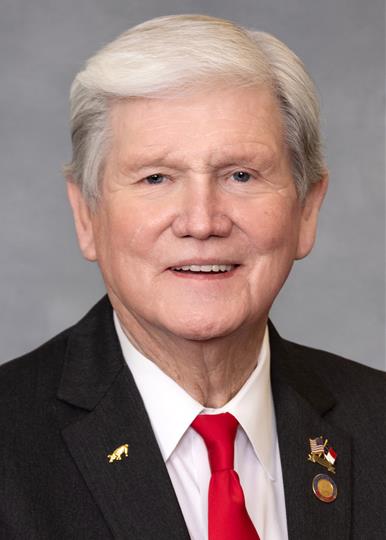
Rep. Jimmy Dixon
Sponsored bills
Maddy summaryThis bill honors the life and memory of Louis Milford Pate Jr., a former North Carolina state legislator and retired Air Force navigator. It formally recognizes his military service, public service career, and community contributions while extending sympathy to his family following his death. The resolution directs the Secretary of State to send a certified copy of the document to Pate's family as a final tribute.
Maddy summaryHB 600 officially recognizes the Tuscarora Indians of Kahtenuaka Territories as a tribe under North Carolina law, effective July 1, 2025. The bill designates them as eligible for federal programs and services available to Native American tribes, based on historical treaties and their continuous presence in the state. It requires two Tuscarora representatives to serve on the State Commission of Indian Affairs and one to serve on the American Indian Heritage Commission. This recognition grants the tribe formal standing and representation in state-level tribal affairs.
Maddy summaryThis House Resolution honors the life and memory of James Michael "Mike" Clampitt, a former member of the North Carolina House of Representatives from District 119. The bill formally recognizes his extensive background in public service, which included decades as a firefighter and deputy sheriff in North Carolina before his election to the state legislature. It expresses the House's appreciation for his legislative work and extends condolences to his family, with a copy of the resolution sent to them.
Maddy summaryHB 171 prohibits North Carolina state agencies from implementing diversity, equity, and inclusion (DEI) programs, including in hiring, employment practices, or training. It defines DEI broadly as any initiative influencing hiring or benefits based on protected characteristics (like race or gender) beyond merit-based processes. The bill mandates state auditor compliance audits, imposes civil penalties up to $5,000 per violation, and allows employees to file lawsuits after submitting a grievance to their agency. It explicitly excludes compliance with existing anti-discrimination laws (such as Title IX and the ADA) and protects First Amendment rights.
Maddy summaryThis House Resolution honors the Carolina Hurricanes hockey team for winning the 2026 Stanley Cup and recognizes their contributions to the state of North Carolina. The bill formally acknowledges the team's historic season, including their record-breaking regular performance and playoff victory, while also praising the owner, management, and coaching staff for their leadership. It directs the Principal Clerk to send a certified copy of the resolution to the team, its owner Tom Dundon, and head coach Rod Brind'Amour. This measure serves as a commemorative gesture rather than establishing new laws or funding.
Maddy summaryThis bill establishes a regulatory framework for North Carolina banks and credit unions to offer digital asset services, such as custody, staking, and transaction processing. It requires these financial institutions to notify state regulators before starting custody services and obtain specific approval if they intend to manage customer assets in a fiduciary capacity. The legislation also mandates clear written agreements between institutions and customers, explicitly stating that digital assets held by the bank are not insured deposits or liabilities of the institution. By defining key terms like digital assets and staking, the act aims to provide legal clarity and safety standards for the growing digital asset market within the state.
Maddy summaryThis North Carolina joint resolution urges the U.S. Congress to eliminate the United States Department of Education by returning control of education to the states. The bill argues that federal involvement has led to excessive regulations and mandates without improving student reading scores, asserting that states are better equipped to handle education based on local needs. It also states that removing the department would not stop federal funding programs from reaching states but would instead allow taxpayer dollars to be used more efficiently. As a non-binding resolution, it does not directly change laws or allocate funds but serves as a formal statement of support for federal efforts to abolish the department.
Maddy summaryThis bill proposes a constitutional amendment that would require the North Carolina legislature to establish a statewide limit on how much local property tax levies can increase each year. The measure also mandates that any local government wanting to raise property taxes beyond this limit must first obtain approval from a majority of voters in that specific area. Because this change alters the state constitution, it will not take effect immediately but will instead be placed on the November 3, 2026, ballot for voters to decide whether to adopt. If approved by the public, the amendment would legally bind the General Assembly to create the specific tax increase caps mentioned in the text.
Maddy summaryThis bill, known as the Mike Clampitt 1st Responder Tax Fairness Act, aims to expand tax exemptions for volunteer fire departments and rescue squads in North Carolina. Specifically, it allows these independent groups, which have two or fewer paid employees and are already exempt from state income tax, to avoid paying a highway use tax on specific emergency vehicles like fire trucks, forest firefighting units, and other emergency service vehicles. The change applies to vehicles when a certificate of title is issued on or after July 1, 2026, ensuring these organizations can acquire necessary equipment without incurring this particular tax. By broadening the existing exemption, the legislation directly benefits volunteer responders who operate outside of local government units.