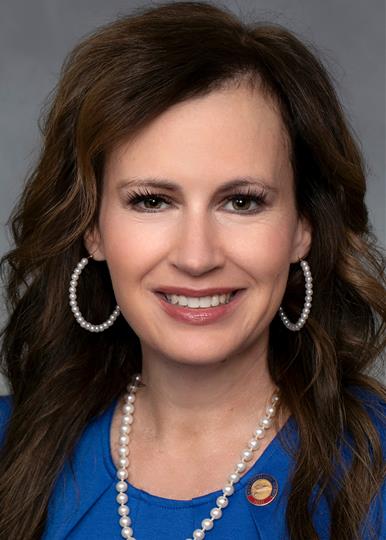
Photo of Tricia Cotham
R North Carolina House · District 105 On the 2026 ballot

Rep. Tricia Cotham

Compare
Total votes
541
all sessions
Attendance
81%
104 missed
Lower than 77% of chamber peers
With party
99%
of cast votes
Near the chamber average
Bipartisan score
0%
crosses aisle rarely
Near the chamber average
Sponsored
253
bills & resolutions
Near the chamber average
Committees
11
assignments
253 bills and resolutions

Sponsored bills

Total
253
Primary
58
Co-sponsor
195
This page
253
matching current filters
Co-sponsor HB 268
Signed into law · North Carolina House · Co-sponsor
2026 Budget Technical Corrections - II.

Maddy summaryHB 268 authorizes the University of North Carolina system to finance specific capital projects at UNC Chapel Hill and UNC Wilmington using alternative funding sources like gifts, grants, and revenue bonds - instead of state general funds. It specifically covers major projects including Chapel Hill's electrical system upgrade and Fetzer Hall addition, plus Wilmington's parking deck and student housing. The bill allows the university board to issue special obligation bonds up to 5% over the project costs to cover expenses, with potential adjustments approved by the state budget director. This directly affects the two universities by enabling them to fund these infrastructure improvements through non-state appropriations.

Signed into law Aug 11, 2026 1 co-sponsor
Co-sponsor HB 328
Passed · North Carolina House · Co-sponsor
Regulate Hemp-Derived Consumables.

Maddy summaryHB 328 bans delta-8, delta-9, and other hemp-derived consumables (including CBD products and vapor devices) on all North Carolina public school grounds, buildings, and school-sponsored events. It requires schools to adopt written policies prohibiting these products, including posting signs, notifying students/parents, and enforcing the ban, with definitions explicitly covering "delta-8," "delta-9," and vaping products. The policy applies to all students, staff, and visitors, though it allows hemp/tobacco use in supervised instructional or research settings without ingestion. The bill takes effect for the 2025-2026 school year and aligns with existing tobacco product restrictions.

Passed Jul 30, 2026 1 co-sponsor
Co-sponsor HB 1173
Signed into law · North Carolina House · Co-sponsor
Jaleeyah's Law.

Maddy summaryThis bill, known as Jaleeyah's Law, strengthens North Carolina's anti-gang laws by updating definitions of criminal gangs and increasing penalties for soliciting minors to participate in gang activity. It creates new offenses for encouraging people under 18 to join gangs and for gang members possessing firearms, with stricter penalties for those under 18. The legislation also allocates funding to hire additional prosecutors and investigators specifically focused on criminal gang cases. These changes will take effect in 2026 and aim to provide clearer legal tools for prosecuting gang-related crimes.

Signed into law Jul 7, 2026 1 co-sponsor
Co-sponsor HB 1104
Signed into law · North Carolina House · Co-sponsor
Improve Involuntary Commitment Process and Enhance Public Safety.

Maddy summaryThis bill requires the North Carolina Department of Health and Human Services, the Department of Information Technology, and the Administrative Office of the Courts to study the state's involuntary commitment process. The agencies must identify gaps in the current system and submit a report with recommendations by February 1, 2027. Key areas for improvement include ensuring judges receive timely clinical data, training legal officials on community-based treatment options, and updating electronic forms to capture consistent data. The legislation also aims to increase data sharing between health and court systems to support more effective legal and clinical outcomes.

Signed into law Jul 7, 2026 1 co-sponsor
Co-sponsor HB 56
Signed into law · North Carolina House · Co-sponsor
2026 Budget Technical Corrections.

Maddy summaryHB 56 (incorrectly titled "UNC Enrollment" in the query; actual focus is school transparency) requires North Carolina local school boards to publicly post detailed compensation and position information for central office staff on their websites by August 15, 2025. It mandates publishing total compensation (salary, bonuses, travel reimbursements), position titles, department assignments, and creation dates for each role. The law applies directly to all central office employees, including administrators, finance staff, and third-party contractors working at school districts. This transparency measure aims to make school district spending and staffing more visible to the public, with records updated annually. The bill does not affect student enrollment or university operations (UNC system).

Signed into law Jul 7, 2026 1 co-sponsor
Primary HB 1121
In committee · North Carolina House · Lead sponsor
Added Fee for Sexually Oriented Businesses.

Maddy summaryThis bill imposes a $10 fee on every customer entering sexually oriented businesses in North Carolina that also hold an alcohol permit. The collected fees must be remitted quarterly to the Department of Revenue and deposited into a fund designated for sexual assault and rape crisis services. Businesses are required to keep daily records of customer counts without collecting personal names, and they must submit these records for audit upon request. The legislation aims to address secondary impacts on public health and safety by funding support services rather than targeting the businesses' expressive content.

In committee Jun 30, 2026 0 co-sponsors
Co-sponsor HB 34
Passed · North Carolina House · Co-sponsor
Strengthen Medicaid Provider Controls.

Maddy summaryHB 34 creates a new criminal offense for stealing or misusing someone else's mail, directly affecting individuals who unlawfully take, control, or transfer mail intended for others. The bill defines "mail" broadly to include letters, packages, or valuable items sent to another person and prohibits two specific actions: stealing mail to deprive the owner, or transferring mail to benefit someone not entitled to it. Punishments range from a Class A1 misdemeanor for first-time, low-value thefts (under $200) to a Class D felony for repeat offenses or high-value thefts (over $2,000). This law, effective December 1, 2025, applies to offenses committed after that date.

Passed Jun 25, 2026 1 co-sponsor
Co-sponsor HB 315
Signed into law · North Carolina House · Co-sponsor
Prohibit Litigation Investments/Amend Workers' Compensation Benefits.

Maddy summaryHB 315 creates new criminal offenses for wrongfully entering restricted business areas (like secure storage rooms) and for stealing or fraudulently obtaining gift cards. It directly affects businesses (by protecting secure areas), gift card holders (by criminalizing theft of their cards), and individuals who commit these acts. Key provisions include classifying unauthorized building entry as a misdemeanor or felony based on prior offenses, defining gift card theft as a Class 1 misdemeanor for cards under $1,000 (or felony for higher value), and expanding "organized retail theft" to include conspiracy around gift cards with penalties tied to total value stolen. The law takes effect December 1, 2025, and applies to offenses committed after that date.

Signed into law Jun 22, 2026 1 co-sponsor
Co-sponsor HB 1123
Signed into law · North Carolina House · Co-sponsor
UNC Omnibus and Capital Contracting Law Changes.

Maddy summaryThis bill authorizes the University of North Carolina system to finance specific capital improvement projects, such as dormitory renovations and new construction, using non-state funds like gifts, grants, and hospital receipts. It allows the university to issue special obligation bonds to cover these costs and includes a mechanism for the Director of the Budget to adjust project funding if necessary. Additionally, the legislation standardizes the residency determination process for admission to the North Carolina School of Science and Mathematics and revises tuition grant rules for graduates of that school and the UNC School of the Arts. These changes aim to support university infrastructure development and ensure equitable access to specialized science and arts programs for North Carolina residents.

Signed into law Jun 19, 2026 1 co-sponsor
Co-sponsor HB 657
died · North Carolina House · Co-sponsor
Duke's Rescue Act.

Maddy summaryHB 657, the "Duke's Rescue Act," sets minimum care standards for domestic dogs and cats in North Carolina, directly affecting pet owners and caretakers. The bill requires owners to provide adequate food, water, shelter, space, exercise, and veterinary treatment, with detailed definitions (e.g., shelter must protect from extreme weather like temperatures above 85°F or below 32°F). Exceptions are included for activities like hunting, herding livestock, and agricultural work, where certain standards do not apply. This law establishes concrete, measurable requirements for animal welfare without specifying enforcement mechanisms.

died Jun 16, 2026 1 co-sponsor
Showing 1 to 10 of 253 bills
1 2 3 26 Next