Maddy summaryThis bill extends the New York State Department of Environmental Conservation's authority to regulate bluefish (a specific fish species) through 2028, instead of ending in 2025. It allows the department to continue setting rules for catch limits, size restrictions, fishing seasons, and other management measures for bluefish. These regulations must remain at least as strict as current requirements and align with both federal fishing laws and regional management plans. The extension directly affects commercial and recreational fishermen who harvest bluefish in New York waters. The bill passed the legislature and was signed into law in July 2025.
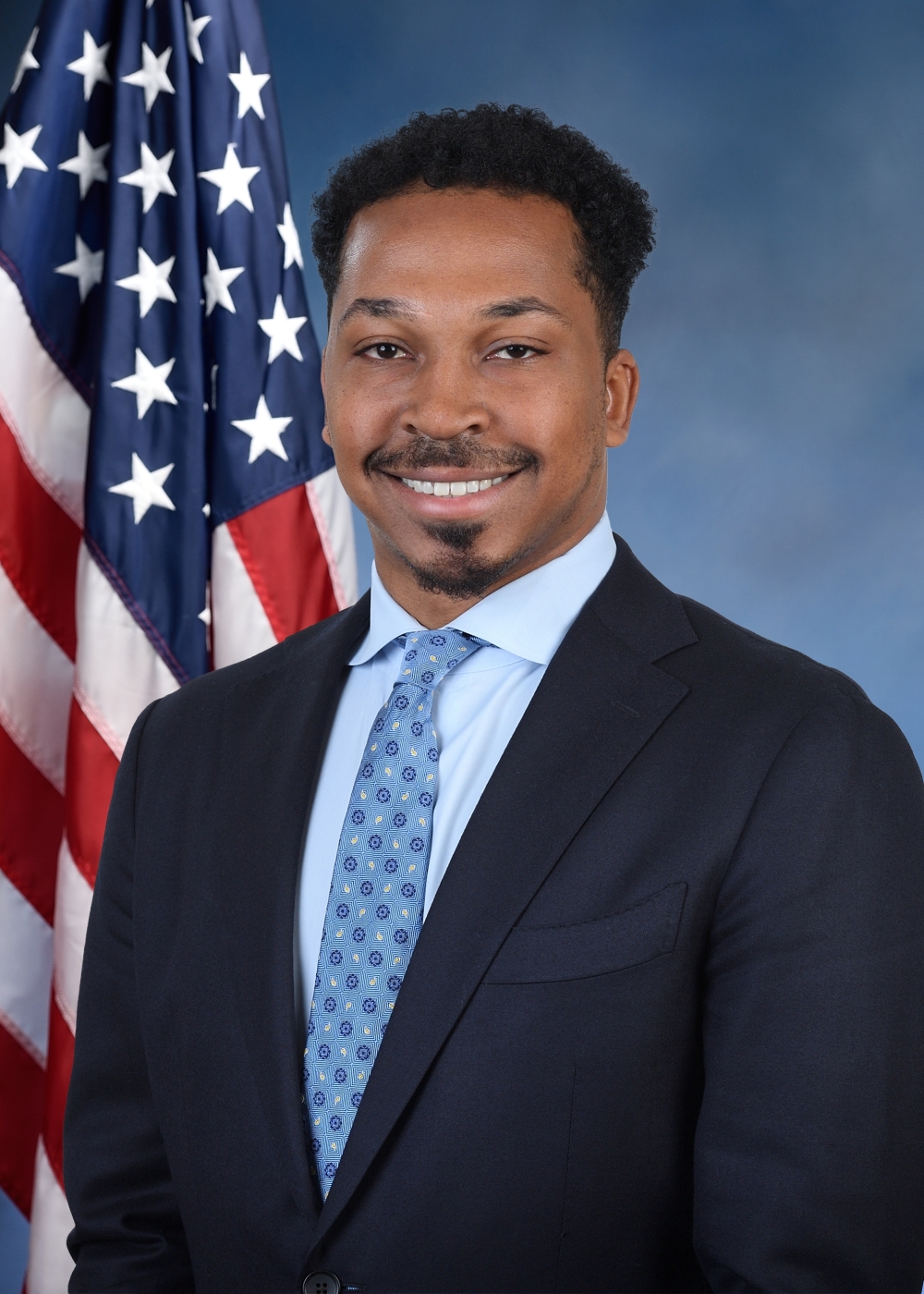
Rep. Jordan Wright
Sponsored bills
Maddy summaryThis bill creates tax credits for businesses relocating to New York City (population over 1 million) from outside New York State. It requires qualifying businesses to maintain a minimum number of employee work hours at eligible locations (10,000+ square feet in NYC) and obtain annual city certifications from the mayor or designated agencies. Businesses must document eligibility, including proof of relocation after July 2025 and meeting specific employment thresholds, with new applications barred after July 1, 2028. The policy directly affects businesses moving operations to NYC, offering tax relief tied to sustained local employment.
Maddy summaryThis bill authorizes New York City to sell or lease approximately 77 acres of parkland within Flushing Meadows Corona Park to Queens Future, LLC for development including a gaming facility, commercial spaces, and related infrastructure. It requires the city to dedicate funds equal to the land's market value toward new parkland or improvements in Queens, specifically mandating at least 20 acres of new parkland (including a north-south connection) within the park. The bill excludes Citi Field from the affected area. The law was enacted in June 2025 (Chapter 138).
Maddy summaryThis bill empowers New York's Council on the Arts to officially designate the Harlem Renaissance Cultural District, defined as the area bounded by 110th Street (south), the Hudson River (west), 155th Street (north), and 5th Avenue (east). It directly affects cultural institutions within this designated district by enabling the Council to provide them with grants, technical assistance, or other support. The law also allows the Council to designate additional culturally significant regions that are compact, contiguous, and share a unified cultural heritage. The bill amends existing arts law to formalize this designation process and support system.
Permits on-premises retail licensees to purchase wine and liquor from off-premises retail licensees and off-premises retail licensees to purchase wine and liquor from on-premises retail licensees.
Enacts the "fostering affordability and integrity through reasonable (FAIR) business practices act", to expand the attorney general's ability to protect New Yorkers from unfair, deceptive and abusive business practices.
Maddy summaryThis bill authorizes New York City to transfer a parcel of city-owned land at 727 Greene Avenue in Brooklyn (described as Block 1614, Lots 1, 79, and 80) to the Bedford-Stuyvesant Volunteer Ambulance Corps (BSVAC) at no cost. The transfer allows BSVAC to establish a permanent facility for providing emergency medical services, ambulance response, community health programs, and EMS training to the Bedford-Stuyvesant neighborhood. The land must be used solely for these purposes, and if BSVAC stops using it for emergency medical services, ownership reverts to the city. This is a property transfer bill directly affecting BSVAC and the community it serves.
Requires peer-to-peer car sharing programs provide insurance coverage in amounts equal to the financial responsibility requirements set forth in section three hundred eleven of the vehicle and traffic law; removes requirements relating to requiring additional insurance coverage.
Maddy summaryThis bill requires health insurance plans to cover backup cochlear implant devices for patients who need them, including during device upgrades or replacements after the initial implant. It directly affects patients with cochlear implants who currently lose access to backup equipment after 3-5 years, as insurers only cover backups at the time of initial surgery. The law mandates that insurance must cover the backup device (external components like a processor) whenever prescribed by a qualified healthcare provider, as long as the patient is using the implant. Coverage will follow standard insurance terms like deductibles and copays but must remain available throughout the patient's need for the device, effective January 2027.
Directs the metropolitan transportation authority and the New York city transit authority to rename the 110th Street - Central Park North subway station to the 110th Street - Malcolm X Plaza station.